Commercial Metal Roofs

Hopkinsville Metal Roof Coating

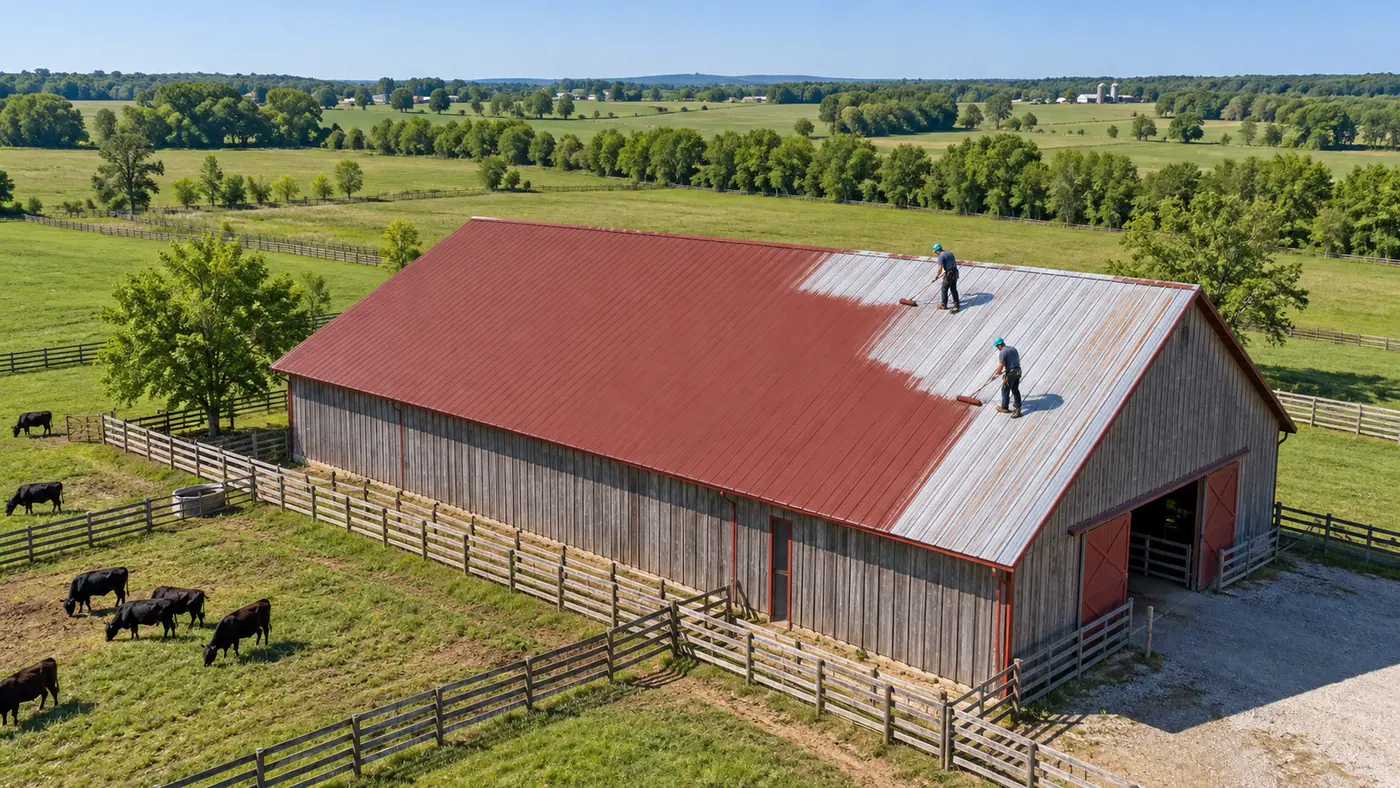
We coat commercial metal roofs in Hopkinsville, KY and nearby towns. Every job starts with a roof walk, then screw, lap, and rust repairs before the coat goes on.

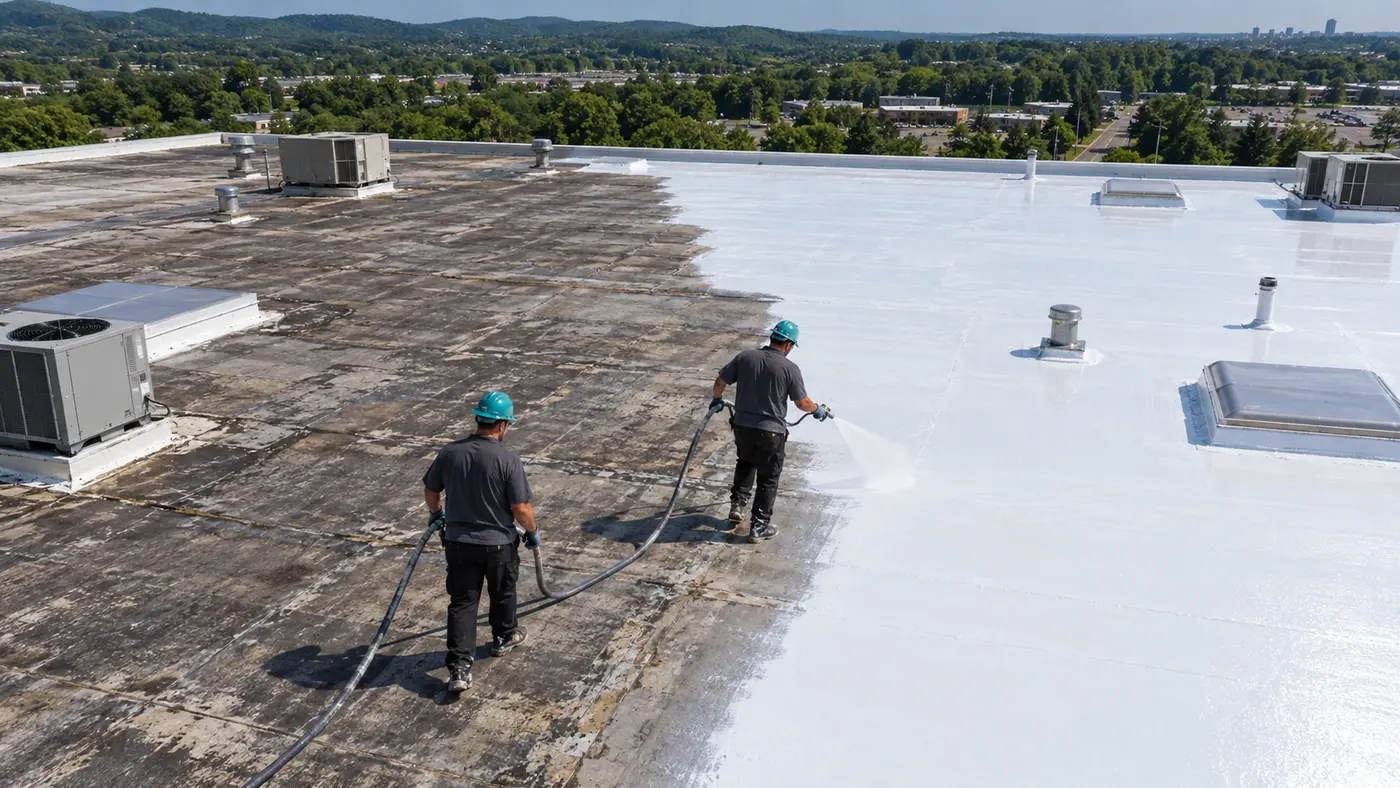
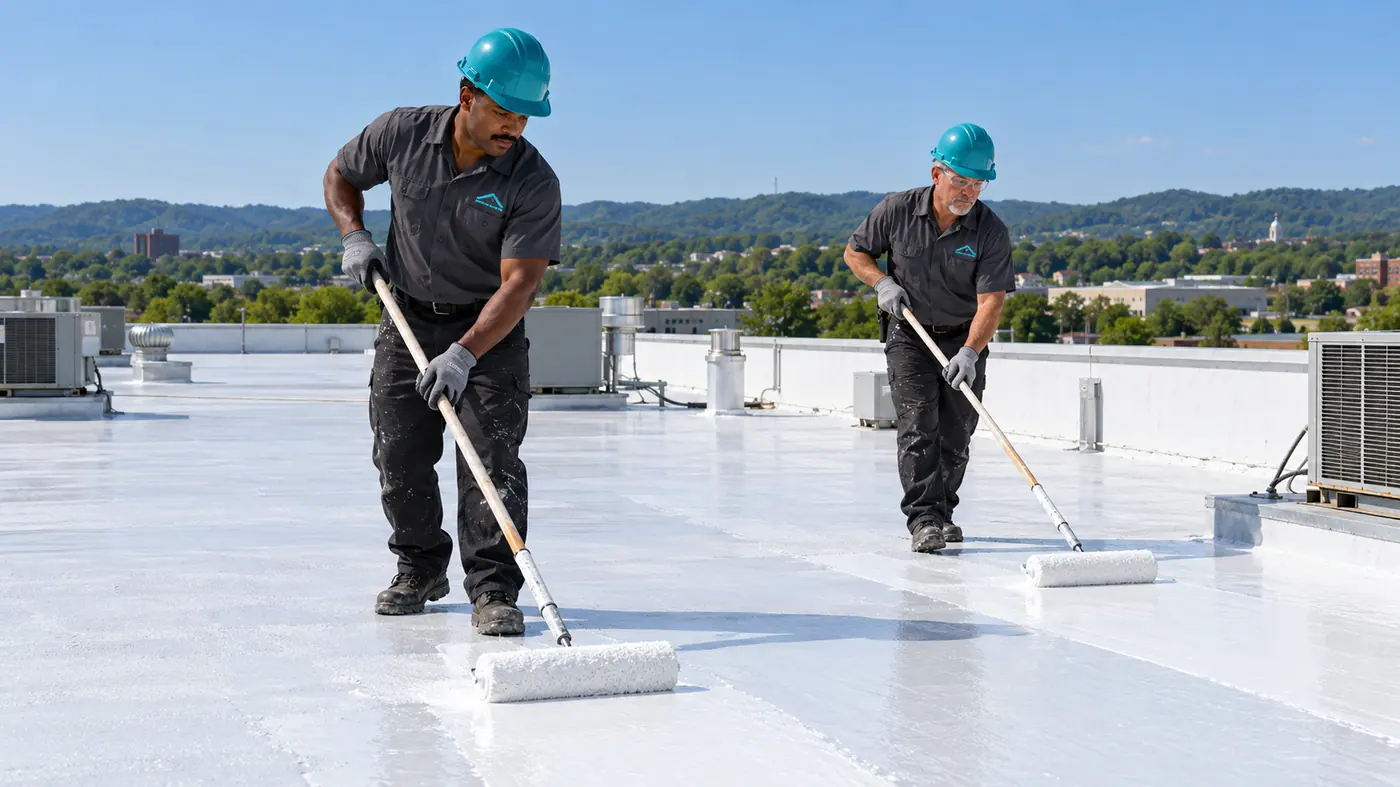
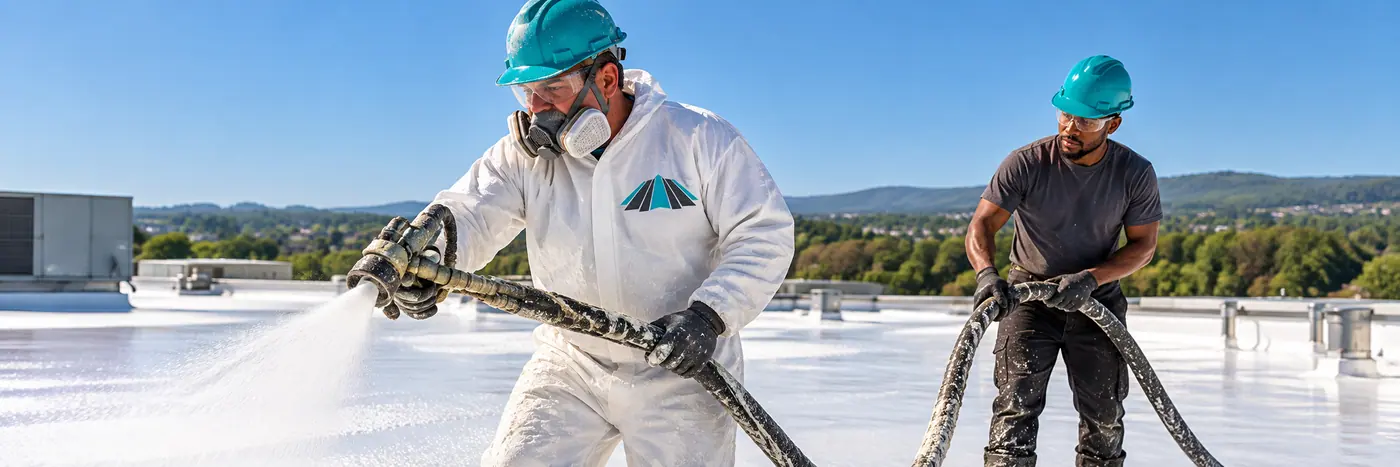
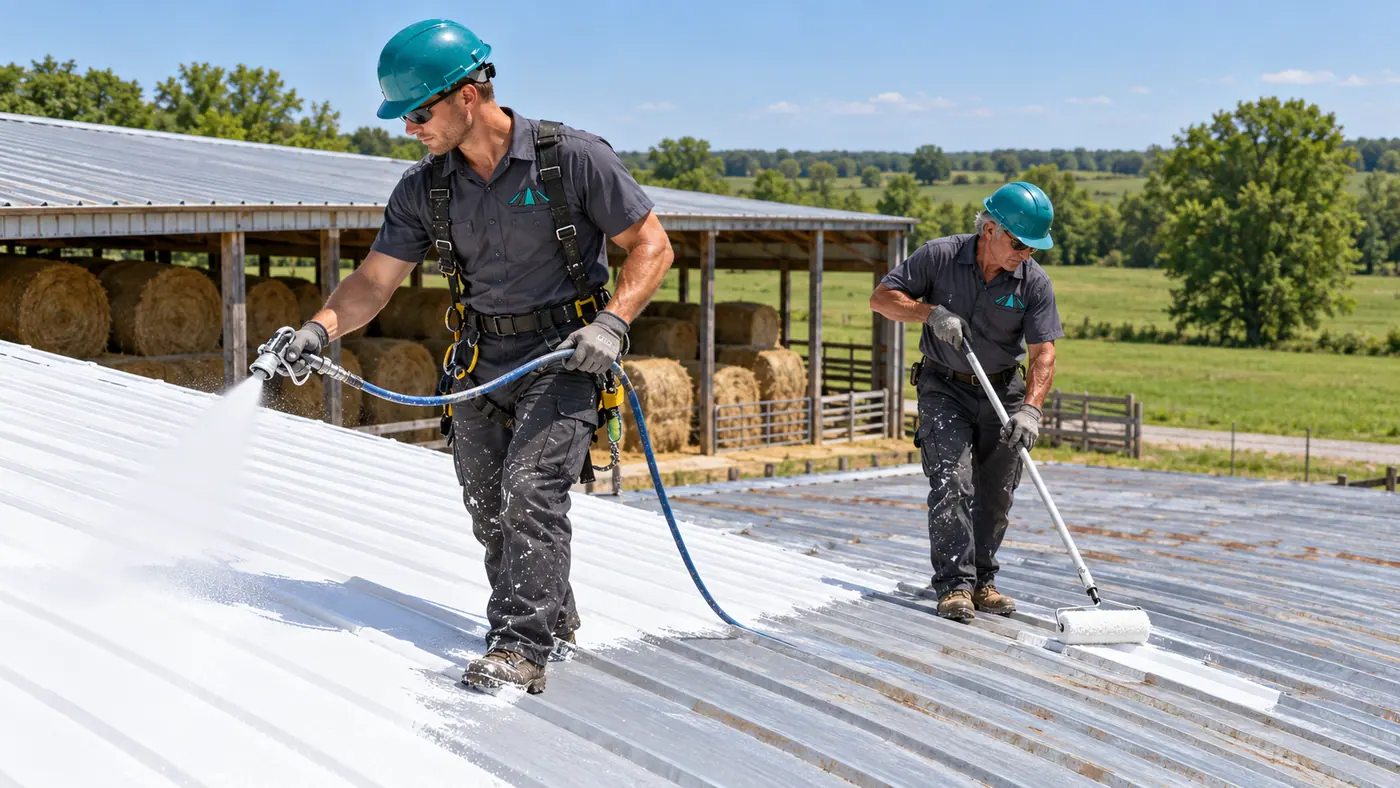
Roofing crew applying coating to a commercial metal roof
  • Roof walk before any coating
  • Screws and laps fixed first
  • Five coating systems
  • Commercial buildings only

What We Find On Hopkinsville Metal Roofs

Most metal roofs we walk show the same few problems. Each card names what you can see from a ladder and what it means for the coating job.

Heat Cycling

Backed-Out Screws And Cracked Washers

You See
Screw heads standing proud of the rib, with rubber washers split around the edge.
What It Means
Water follows the screw shank into the building. Each loose screw gets tightened, upsized, or replaced before any coating.
Humidity

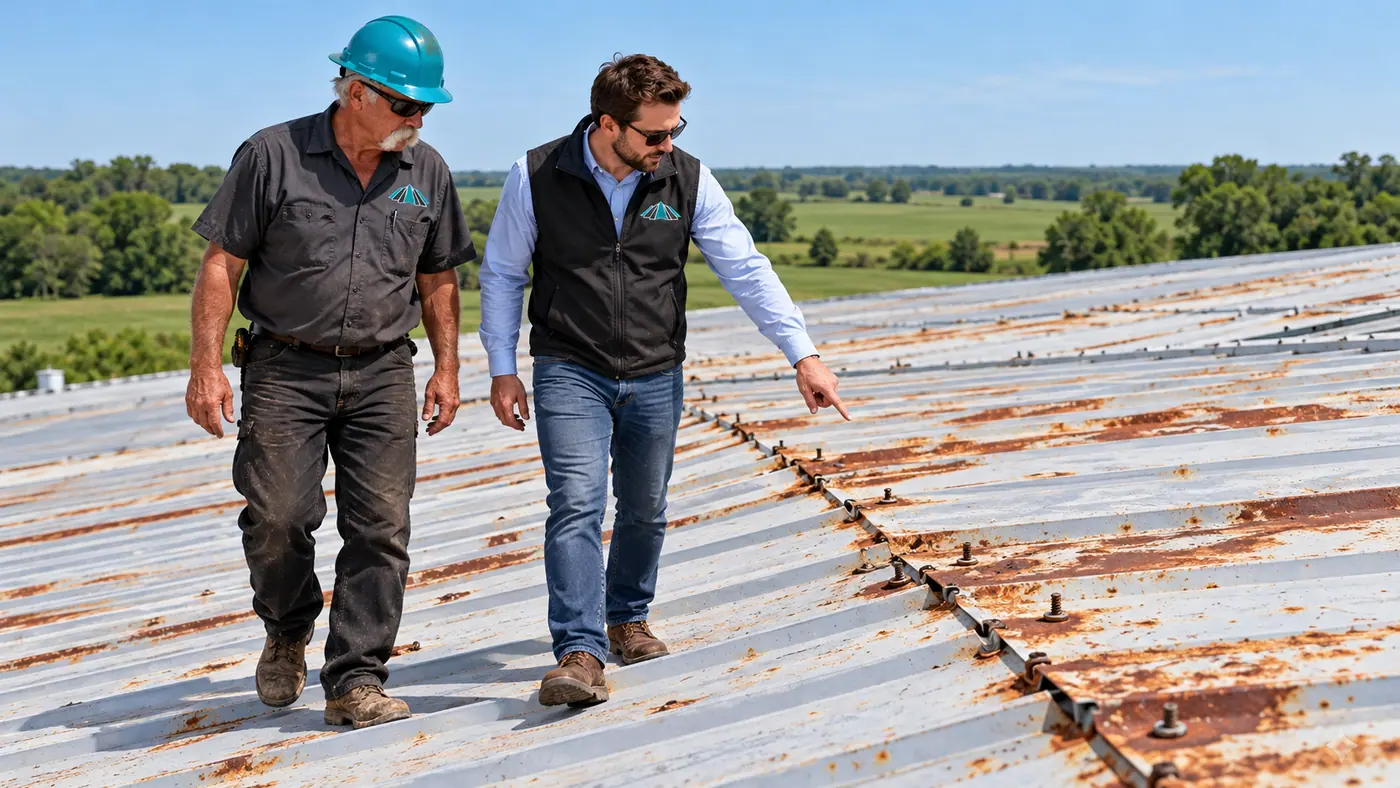
Red Rust At The End Laps

You See
Orange streaks running downslope from the overlap where two panel runs meet.
What It Means
Moisture sits inside the lap and rust starts there first. We grind it to firm steel, prime it, and reinforce the lap with fabric.
Age

Chalky, Faded Panels

You See
White powder on your hand after touching a panel, with light rust bloom across its face.
What It Means
The factory paint is wearing away, yet the steel under it is often solid. This is the easiest metal roof to coat.
Storms

Lifted Ridge Caps And Loose Trim

You See
Ridge caps or rake trim that rattle in wind, with foam closure strips poking out.
What It Means
Wind-driven rain gets under trim that has worked loose. Stitch screws and closures are reset before the field coat.
Debris

Packed Gutters And Overflow

You See
Rain spilling over the gutter face and streaking the wall below the eave.
What It Means
Leaves and grit hold water against the drip edge. Gutters are cleared, and their seams are sealed where the coating stops.
Equipment

Leaks Around Curbs And Pipe Boots

You See
Ceiling stains under a rooftop unit, an exhaust fan, or a vent pipe.
What It Means
Flashing has opened where the metal changes direction. Each curb and boot is wrapped with fabric before the coat.

How We Coat A Metal Roof

Five steps, in this order, on every roof we coat. Skipping one is the most common reason a coating peels.

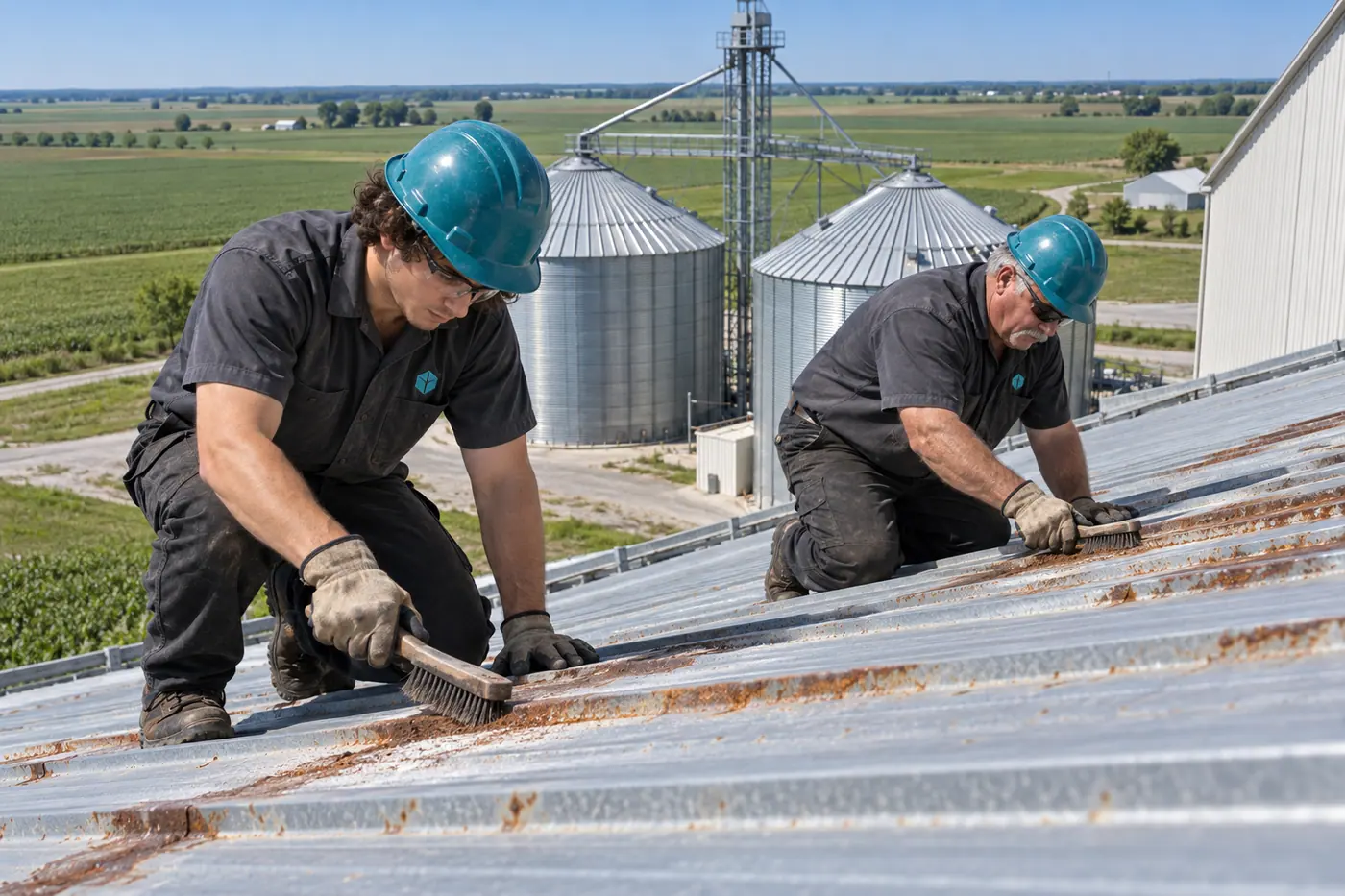
  1. Roofers walking a metal roof to check panels, laps, and screws

    Step 1: Inspect Your Roof

    We walk every panel and mark loose screws, rust-through, open laps, and cracked skylight panels. Inside, ceiling stains are matched to the seams above them, so the leak source is known before work starts.

  2. Crew preparing a metal barn roof before coating

    Step 2: Repair Screws And Panels

    Backed-out and stripped screws are tightened, upsized, or replaced. Panels rusted through get patched or swapped, and loose flashing and gutters are fixed while the roof is still bare.

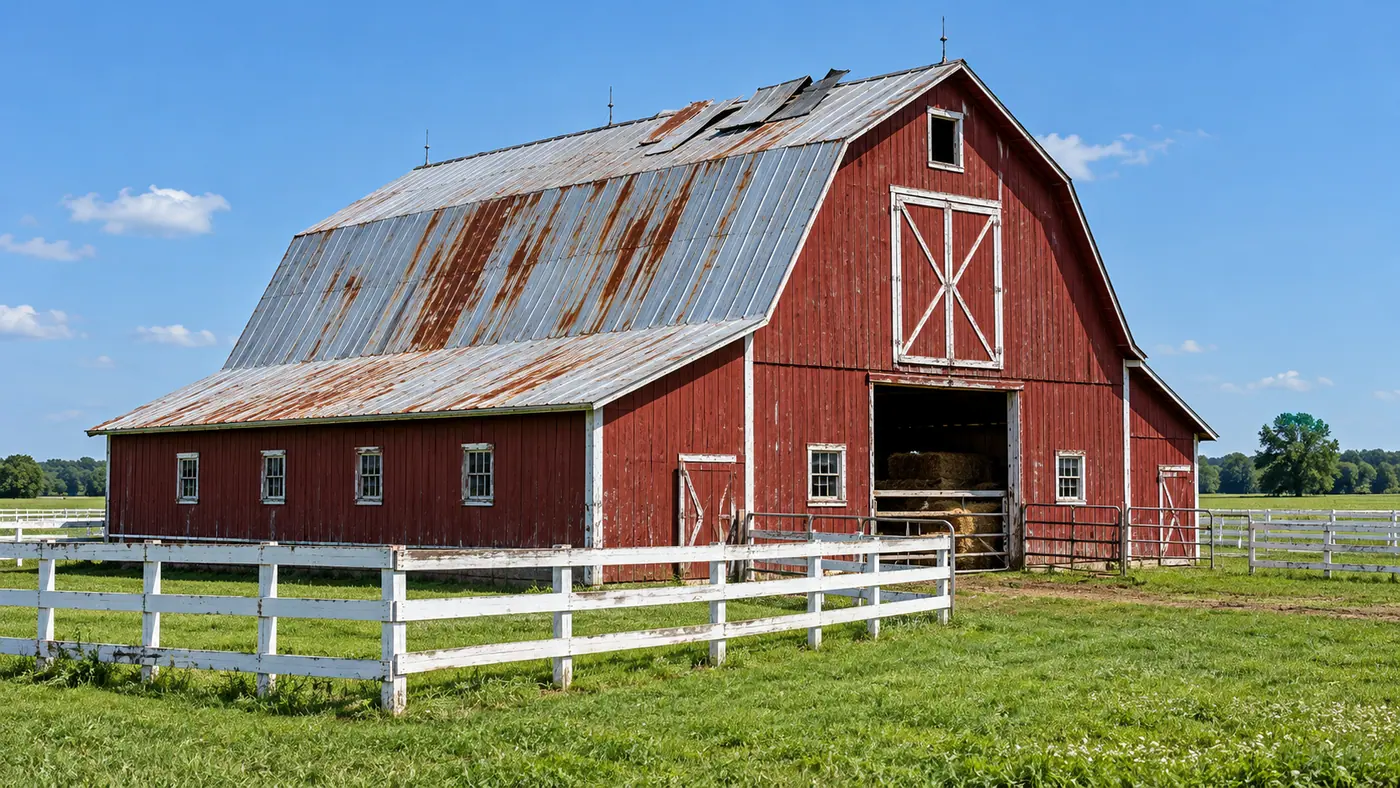
  3. Faded and rusted metal panels on an older farm building roof

    Step 3: Wash And Prime Rust

    Pressure washing removes dirt, chalk, and mill oil, and the steel dries fully. Flaking rust is brushed or ground to firm metal and covered with a rust-inhibiting primer.

  4. Roofer sealing the seams on a metal barn roof

    Step 4: Seal Laps And Details

    Side laps, end laps, curbs, ridge caps, and pipe boots get reinforcing fabric or seam sealer. These details stretch as panels expand on hot afternoons and shrink on cold nights.

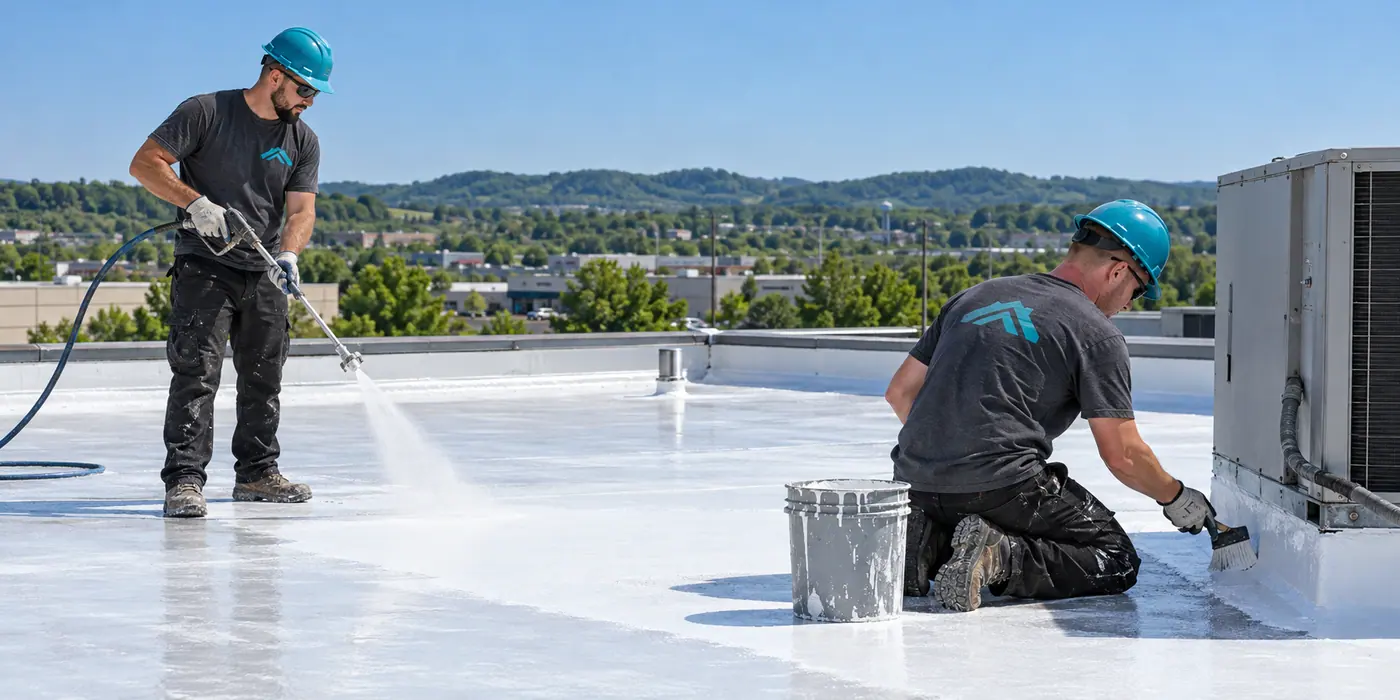
  5. Crew applying silicone coating to a commercial roof

    Step 5: Coat And Check Thickness

    The field coat is sprayed or rolled to the thickness the product calls for. Thin spots are measured and touched up, and gutter edges and skylight laps get a last look.

Commercial Roof Coatings We Install

We coat commercial roofs five ways. Each card shows the layers under the finished coat, so you can see what stays in place.

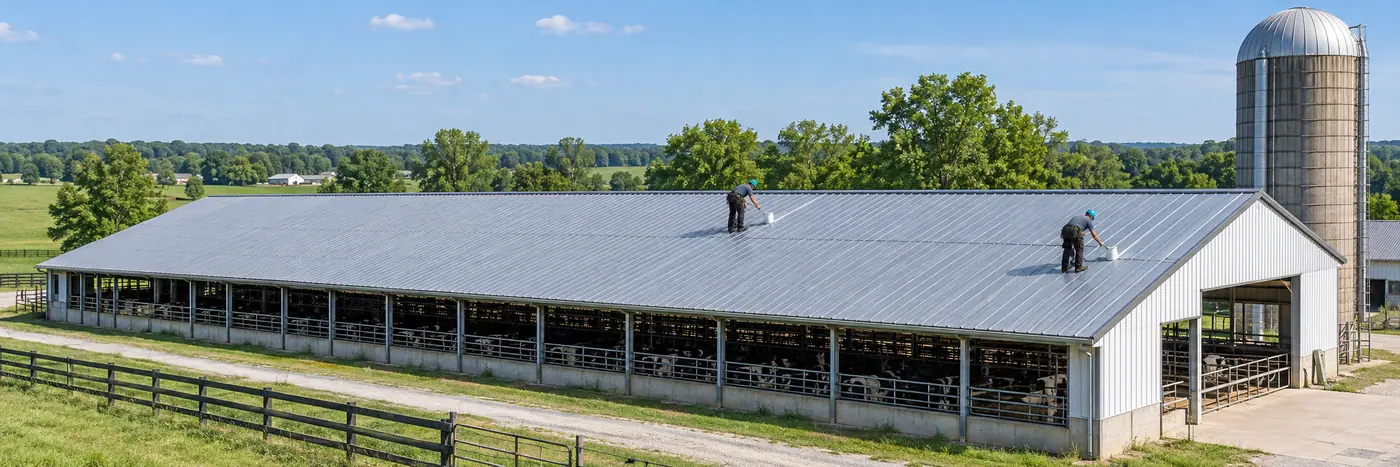
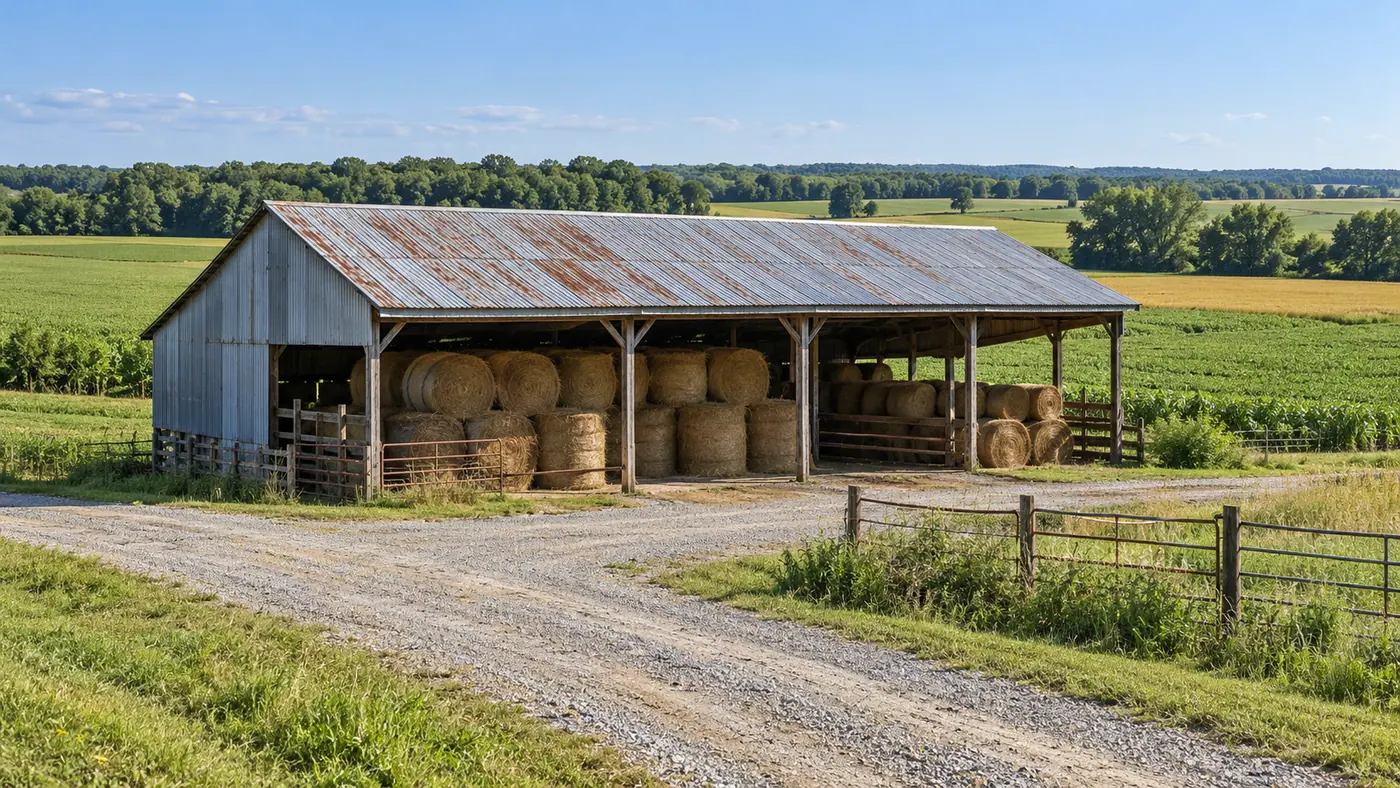
Aerial view of a long metal roof on a farm building

Metal Roof Coating

  1. Coating
  2. Primer at rust spots
  3. Steel roof panel
  4. Purlin

Exposed-fastener R-panel and standing seam roofs on shops, warehouses, and storage buildings. Every screw and lap is fixed before a coat goes over the panels.

Best For
  • Faded or chalky R-panel roofs
  • Rust at laps on solid steel
Check First
  • Panels that flex underfoot
  • Wet or sagging purlins
Metal roof coating in Hopkinsville
Aerial view of a white silicone coating on a low-slope commercial roof

Silicone Roof Coating

  1. Silicone coat
  2. Lap fabric and primer
  3. Low-slope metal roof
  4. Deck or purlin

Low-slope roofs where water lingers behind curbs, at a sagging purlin, or in slow gutters. Silicone holds up in those wet spots and is recoated with silicone later.

Best For
  • Low-slope warehouse sections
  • Water around curbs and gutters
Check First
  • Why the water is standing
  • A clean surface for adhesion
Silicone coatings for low-slope metal
Crew applying acrylic coating to a pitched metal roof

Acrylic Roof Coating

  1. Acrylic topcoat
  2. Acrylic base coat
  3. Primed steel panel
  4. Purlin

Pitched metal shops, barns, and equipment buildings that shed rain within minutes. Acrylic cleans up with water, has a mild odor, and takes acrylic recoats easily.

Best For
  • Steeper panels that drain fast
  • Occupied space below the roof
Check First
  • Spots behind curbs that hold water
  • Cool, damp weeks that slow curing
Acrylic coatings for pitched metal roofs
Crew spraying foam over a commercial roof

Spray Foam Roofing

  1. Protective topcoat
  2. Spray foam layer
  3. Existing metal panels
  4. Purlin

Foam sprayed over the old panels fills the ribs and insulates the building. It fits uninsulated shops, cold storage, and noisy roofs where owners want a new surface without tear-off.

Best For
  • Uninsulated metal shops
  • Cold storage buildings
Check First
  • Gutter and trim heights after foam
  • Dry panels before spraying
Spray foam over existing metal panels
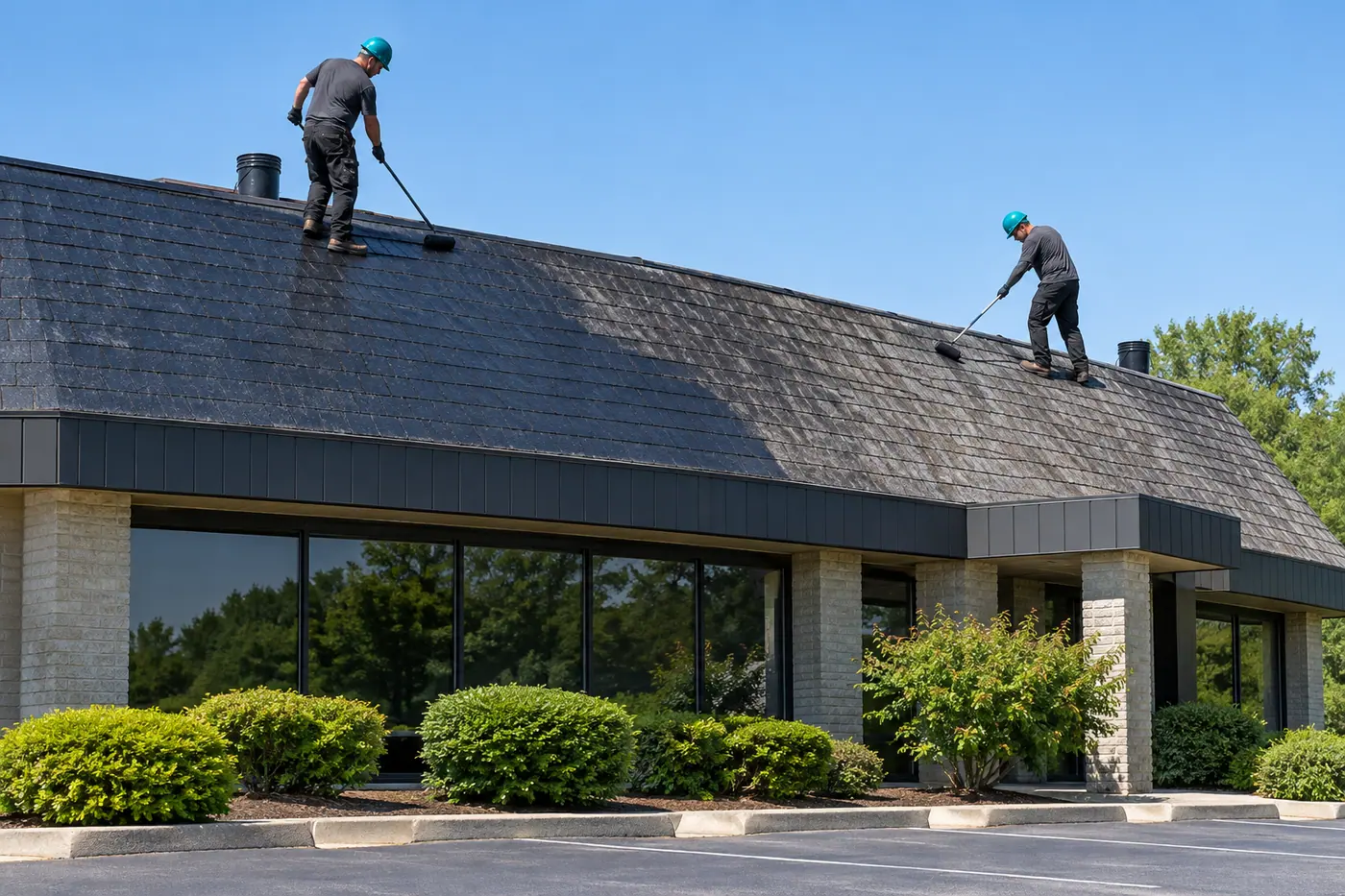
Crew coating the shingle roof of a commercial building

Shingle Roof Coating

  1. Shingle coating
  2. Flat shingles with granules
  3. Underlayment
  4. Roof deck

Offices, churches, and strip centers whose shingles still lie flat and hold their granules. Curled or bald shingles call for replacement, and we tell you so.

Best For
  • Shingles lying flat with granules
  • Roof spaces with good ventilation
Check First
  • Shingle maker terms on coatings
  • Curling, cracking, or bald spots
Coating asphalt shingle roofs on commercial buildings

Roof Dripping Onto Your Floor?

Call us and tell us where the water lands and what sits above it: a lap, a curb, a skylight, or a gutter. That detail tells us where to look first.

Call Us

Coat, Restore, Re-Panel, Or Replace?

How much solid steel is left decides the job. These rows match what we see on the roof walk to the work that fits.

What We See On The RoofCoatRestore (Repair, Then Coat)Re-Panel SectionsReplace
Chalking, faded paint, light rust bloomYesOnly where laps leakNoNo
Loose screws, open laps, red rust at lapsAfter repairsYesNoNo
Pinholes and rust-through on a few panelsAfter patchesYes, with patchesYes, for the worst panelsNo
Rust-through across large areas, sagging purlinsNoNoNoYes

Panels that flex underfoot, and ceiling stains that follow the framing instead of the seams, push a roof toward the right-hand columns.

What A Coating Does For A Metal Roof

These are the gains owners in the Pennyrile ask about most, on the buildings we coat most often.

  • Warehouses
  • Metal Shops
  • Farm And Equipment Buildings
  • Boat Storage
  • Grain And Farm-Supply Buildings
  • Storefronts
  • Churches And Halls
  • Storage Buildings

Joints Closed In One Skin

Bare steel leaks at screws and laps far more than through the middle of a panel. A cured coating covers every screw head and overlap with one continuous rubber-like layer.

Slower Rust On Bare Steel

Cut edges, scratched paint, and primed rust spots stay out of rain and morning dew, so new rust starts more slowly than on an uncoated roof.

Cooler Panels In Summer

A white or light coat reflects more sunlight than faded or rusted steel, which lowers panel temperature over shops and warehouses with little insulation. We make no promise of a set energy saving.

Panels Stay On The Building

Your structure, insulation, and roof line stay put, so there is no tear-off debris and the building stays in use while the weather surface is renewed.

Our Metal Roof Coating Service Area

Not sure your building is in our area? Call us or send us a message. We coat commercial metal roofs in Hopkinsville and the six towns listed here.

Commercial metal building with a long low-slope metal roof
Christian County and five neighboring counties
  • Hopkinsville

    Hopkinsville and unincorporated Christian County share one local building inspector, so a permit question here starts with a single call.

  • Oak Grove

    Retail, storage, and service buildings coated while they stay open, with permits through Oak Grove’s own inspector.

  • Cadiz

    Boat storage and marine shops near Lake Barkley, where damp laps and mildew change the prep.

  • Princeton

    Caldwell County farm shops on wood purlins, where old nails are swapped for screws before coating.

  • Elkton

    Older Todd County shops where a count of solid panels decides between a coat and a tear-off.

  • Dawson Springs

    Repaired roofs that mix new and original panels, each cleaned and primed for its own surface.

  • Guthrie

    Grain and farm-supply buildings cleaned of dust and chaff, with lift work timed around harvest trucks.

Metal Roof Coating Questions From Hopkinsville Owners

Short answers to what owners ask us first. The full FAQ covers permits, rust, and costs town by town.

Coating Basics

What does a coating do on a commercial metal roof?

It closes the joints. A metal roof leaks at screws, side laps, and end laps far more often than through a panel, and a cured coating covers all of them with one continuous skin. It also shields cut edges from rain, slows new rust, and covers chalky paint, while the panels, insulation, and roof line stay in place.

Can you coat a roof that already has an old coating on it?

Often, yes. An old coating that still grips the panels is washed and checked with a small adhesion test patch before anything new goes on. Peeling or blistered areas are scraped back to firm material first. Silicone over old silicone works; acrylic over old silicone does poorly, so the first job is learning what is already up there.

Weather And Heat

Does a white coating keep a Hopkinsville building cooler?

A white or light coat reflects more sunlight than faded or rusted steel, so the panels run cooler on sunny afternoons. The difference shows most over shops, warehouses, and farm buildings with little insulation. Rated products can be compared in the Cool Roof Rating Council directory. Dirt lowers reflectance over time, and we never quote a set energy saving.

Can you coat a metal roof during a Kentucky winter?

Repairs can, and the coat waits for the right days. Coatings need dry steel and temperatures inside the product’s limits, so cold, damp months shrink the working window. Screws, panels, and gutters can be fixed in winter, then the coat goes on during a dry, mild stretch. Silicone tolerates a wider weather window than acrylic.

Cost And Planning

What drives the cost of coating a metal roof?

Roof size, the repairs before coating, and the number of details drive most of it. A clean roof with few penetrations costs less per square foot than a rusty one crowded with curbs and skylights. Screw count, rust grade, the coating and thickness chosen, lift access, and any panel replacement also count, and the roof walk measures each one.

What should I tell you when I call about a leak?

Tell us where the water lands inside, what sits above that spot, and when it drips: in every rain, only in wind-driven storms, or on cold mornings with no rain at all. That last pattern often points to condensation under the panels instead of a roof leak, and it changes the plan for the building.

Get A Price Range For Your Metal Roof

Enter your roof size for a free ballpark number, or call and talk through what you see on the panels.

Call (270) 236-5496