Foam Over Metal

Hopkinsville Spray Foam Roofing

We install spray foam roofing over existing commercial metal roofs in Hopkinsville, adding insulation and one smooth surface topped with a protective coating.

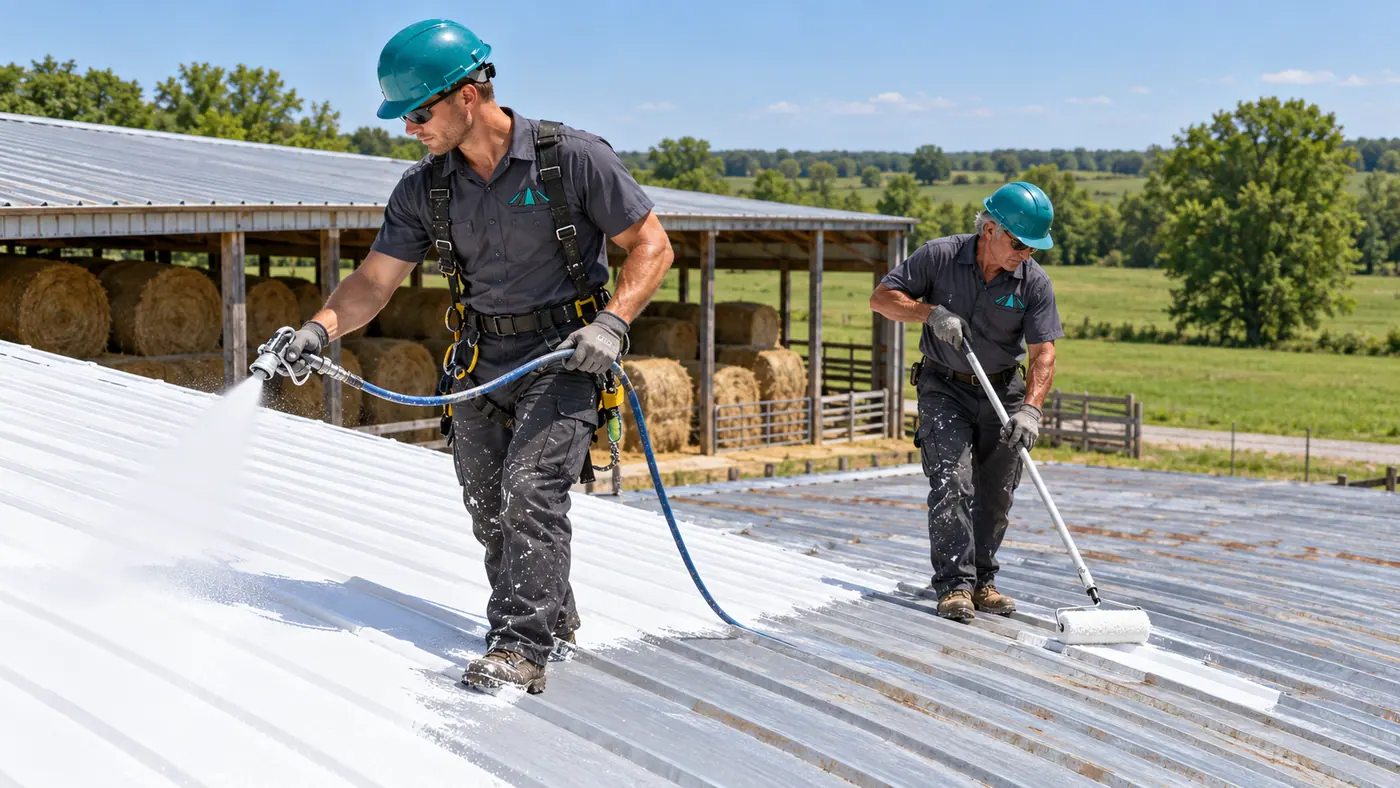
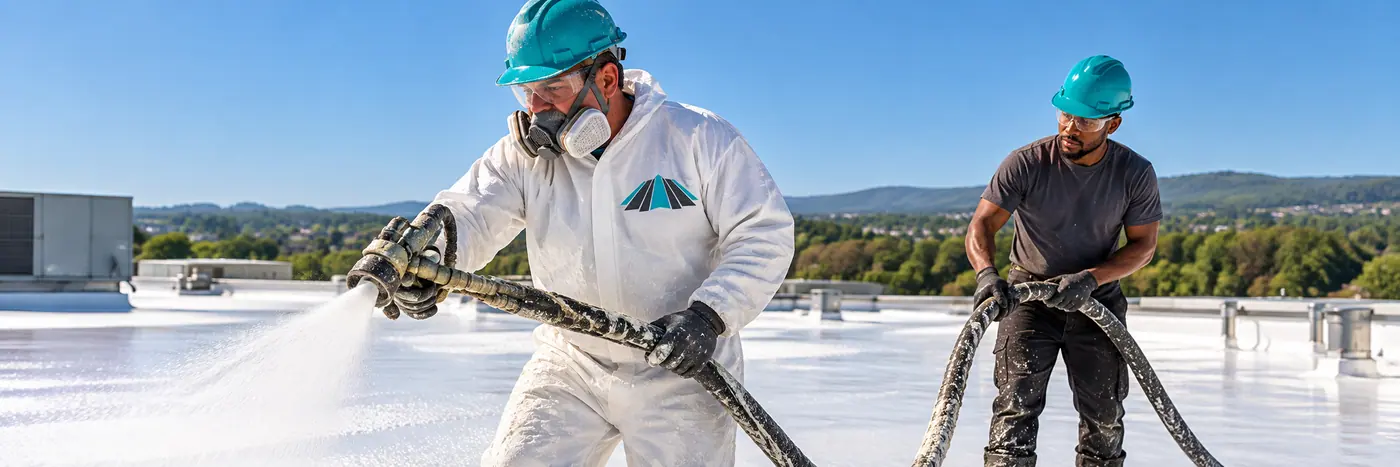
Crew spraying foam over a commercial roof
  • Insulation added on top
  • Panel ribs filled smooth
  • Edge heights measured
  • Topcoat kept up

Is This Roof A Fit?

Foam and a plain coating solve different problems on a metal roof. Compare them before choosing.

QuestionSpray Foam Over MetalCoating Only
Adds insulationYes, the foam layer insulatesVery little
Panel ribsFilled for a smoother surfaceCoating follows the ribs
Added weight and heightSome; check edge and gutter heightsVery little
UpkeepTopcoat checked and renewedRecoat when worn
Best fitUninsulated shops, cold storage, noisy roofsInsulated buildings with a solid roof

Foam needs dry panels and careful edge detailing at gutters and ridge caps.

Metal Buildings That Call For Foam

These conditions are what lead owners from a plain coating toward foam over the panels.

Condensation

Steel Sweating On Cold Mornings

You See
Drips inside on dry, cold mornings that land in rows under the purlins.
What It Means
Bare steel over a heated space collects moisture. Foam insulates the panel from the outside, and the inside moisture source is checked too.
Heat And Cold

Bare Steel Over A Work Area

You See
Hot panels you can feel from the floor in July and frost on the underside in winter.
What It Means
The building has little or no insulation. A foam layer adds it without opening the roof.
Rain And Hail

A Roof That Drums In Rain

You See
Loud rain and hail noise over a shop or office with an open ceiling.
What It Means
Foam over the panels deadens much of that racket. A coating by itself adds very little quieting.
Age

Leaks Scattered Across Old Panels

You See
Rusted laps and screws all over the roof on a building that is otherwise straight.
What It Means
Foam covers every lap and fastener in one layer, provided the panels are dry and the framing still holds.
Edges

Low Trim Or Shallow Gutters

You See
Gutters set just under the drip edge and trim with little height above the panels.
What It Means
Foam raises the roof surface. Edge and gutter heights are measured so water still lands in the gutter.

Commercial Roof Coating Options for Hopkinsville

Foam is one of three ways we cover an old metal roof. These are the combinations we put down most.

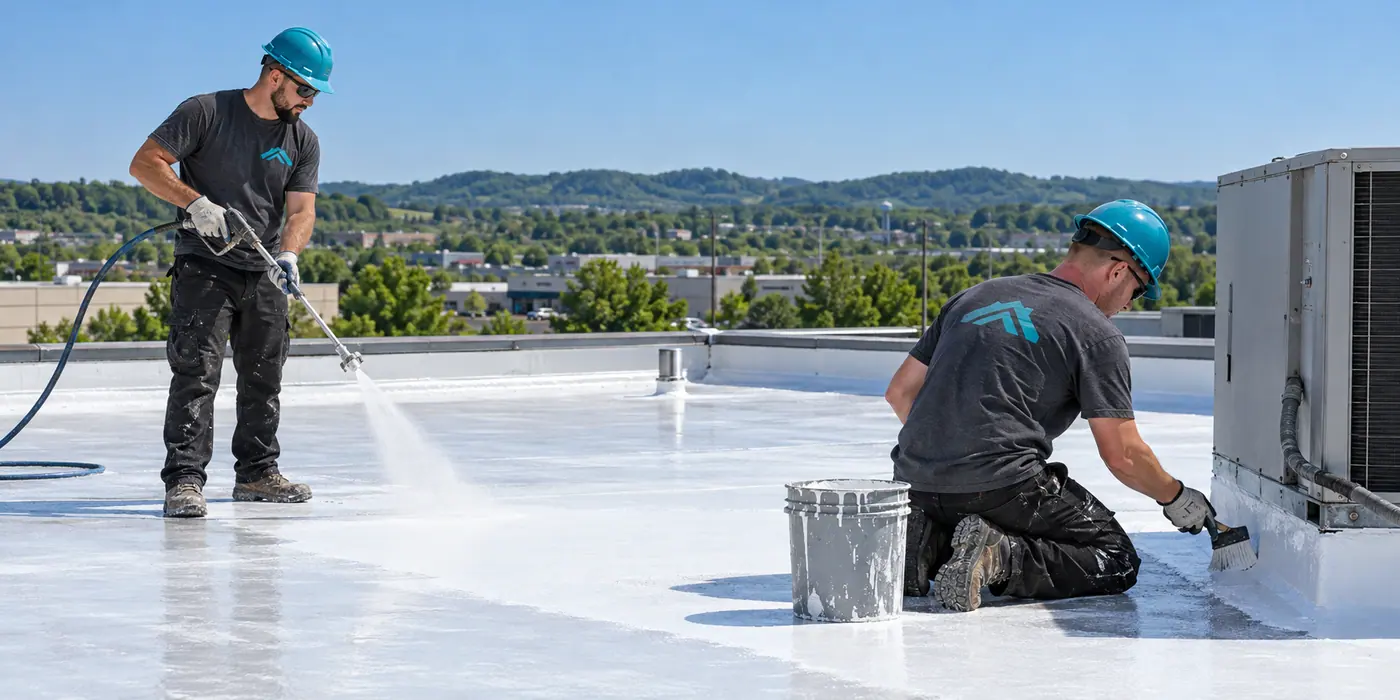
Crew applying silicone coating to a commercial roof

Foam With A Silicone Topcoat

Spray foam goes over the dry panels, then a silicone topcoat protects it from sun and weather. Silicone fits foam areas that hold a little water near drains and curbs.

Silicone roof coating
Roofing crew applying coating to a commercial metal roof

Foam With An Acrylic Topcoat

On a foam roof with good slope, an acrylic topcoat protects the foam and recoats with acrylic later. The topcoat is the part that wears and gets renewed.

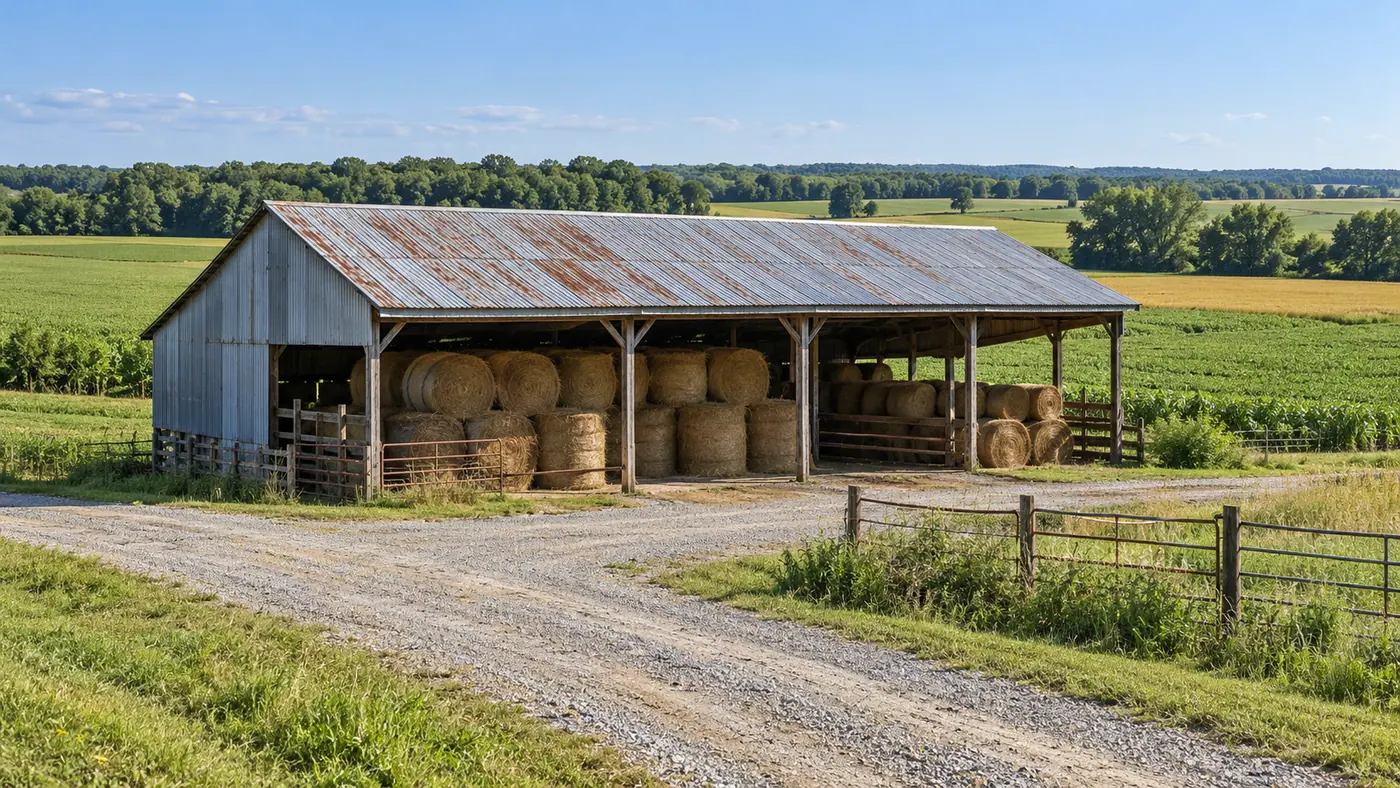
Commercial metal building with a long low-slope metal roof

Coating Alone For Insulated Buildings

If the building already has insulation and the steel is firm, a metal roof coating closes the screws and laps without adding foam height at the edges.

Benefits of Coating Your Roof

Foam brings these gains to metal buildings whose panels are dry and whose framing is straight.

  • Uninsulated Metal Shops
  • Cold Storage
  • Equipment Buildings
  • Workshops
  • Storage Buildings

Insulation Without Tear-Off

The foam layer insulates the building from the roof side, so the panels stay in place and nothing inside is opened up during the work.

One Continuous Surface

Foam fills the ribs and covers every screw and lap in a single layer, closing the joints that leak most on an old metal roof.

Steadier Temperatures Inside

Workers below a foamed roof feel less of the summer heat and winter cold that comes through bare steel. We make no promise about energy bills.

A Renewable Top Layer

Topcoat is the wearing surface. When it thins, it is cleaned and recoated, which keeps the foam underneath protected from sunlight.

Panels Dripping With No Rain Outside?

Call us and describe when the drips start. Cold-morning drips under bare steel point to condensation, and foam is one way we address it.

Call Us

How A Foam Roof Goes On

Four stages take an old metal roof to a foam surface with its protective topcoat.

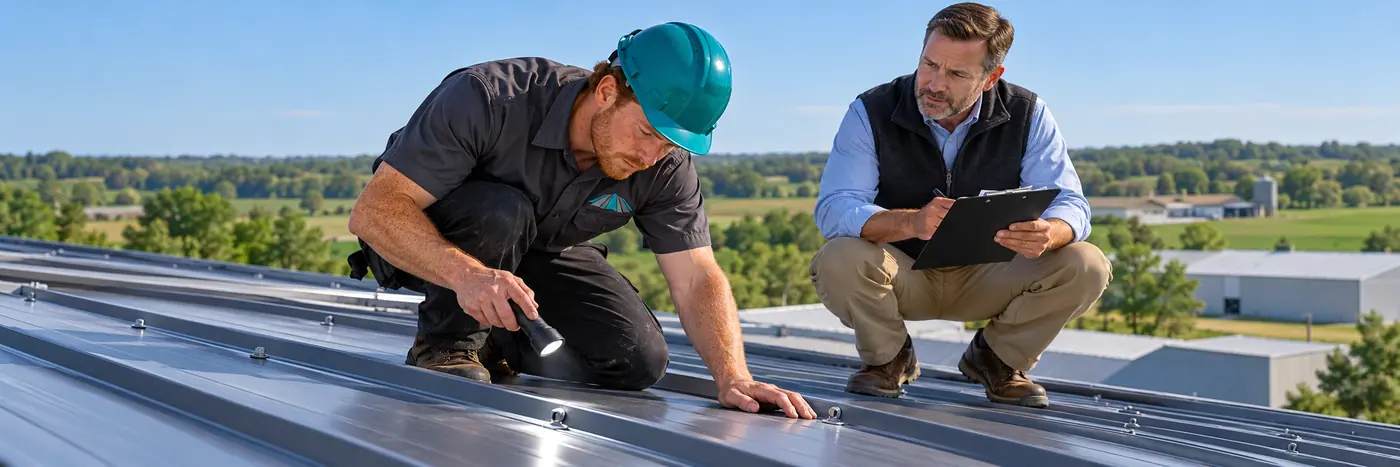
  1. Roofer inspecting metal roof panels and fastener rows

    Step 1: Inspect Your Roof

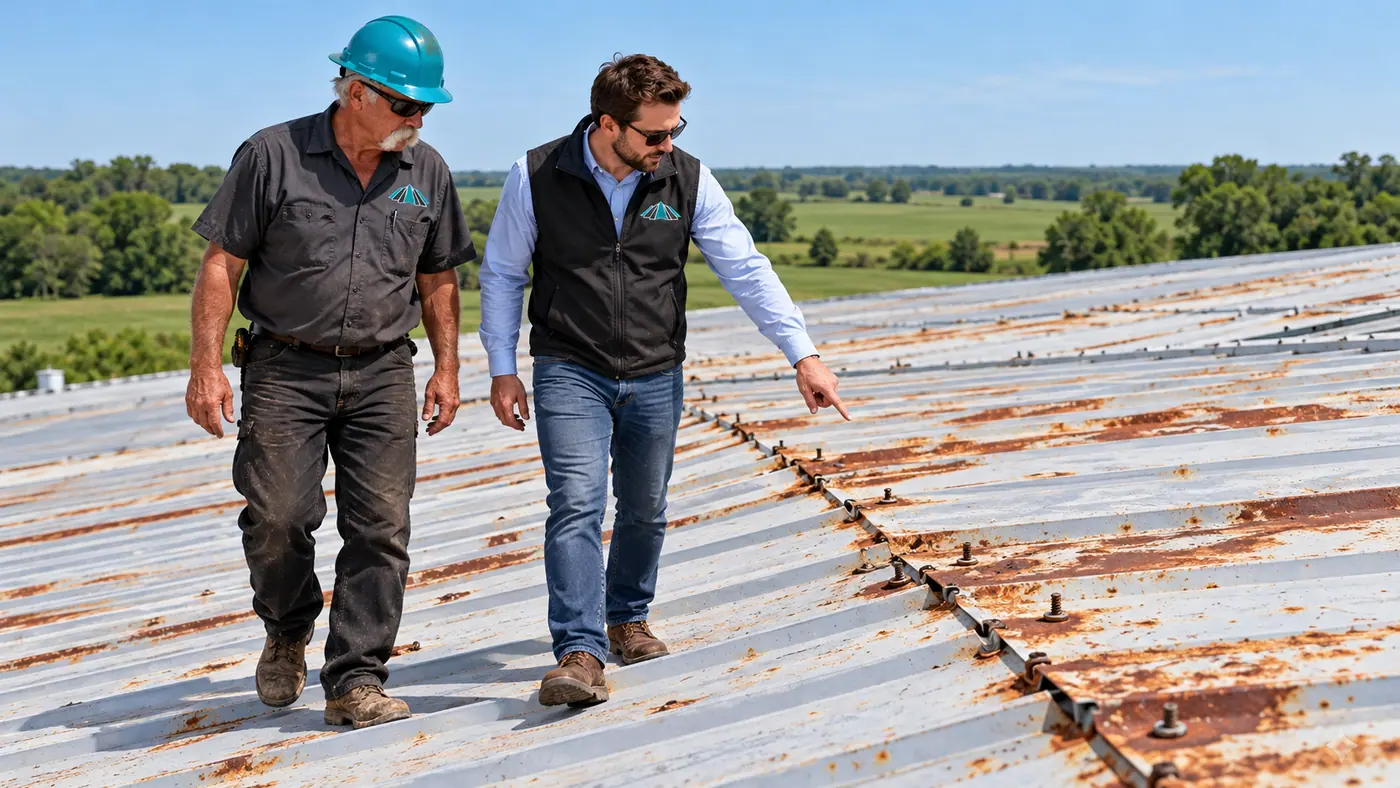
    We walk the panels for loose screws, rust-through, and soft spots, measure gutter and trim heights, and check that the framing is straight enough to carry the added layer.

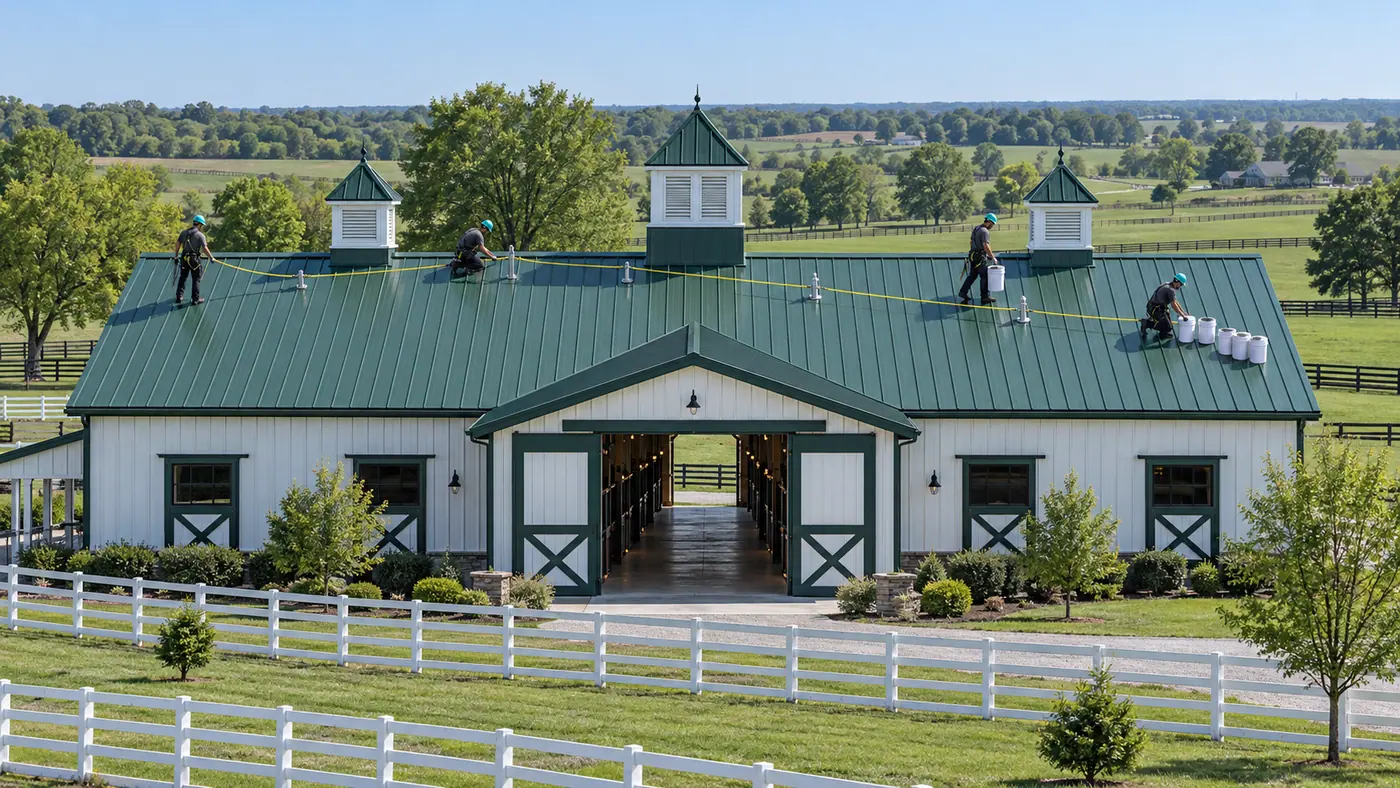
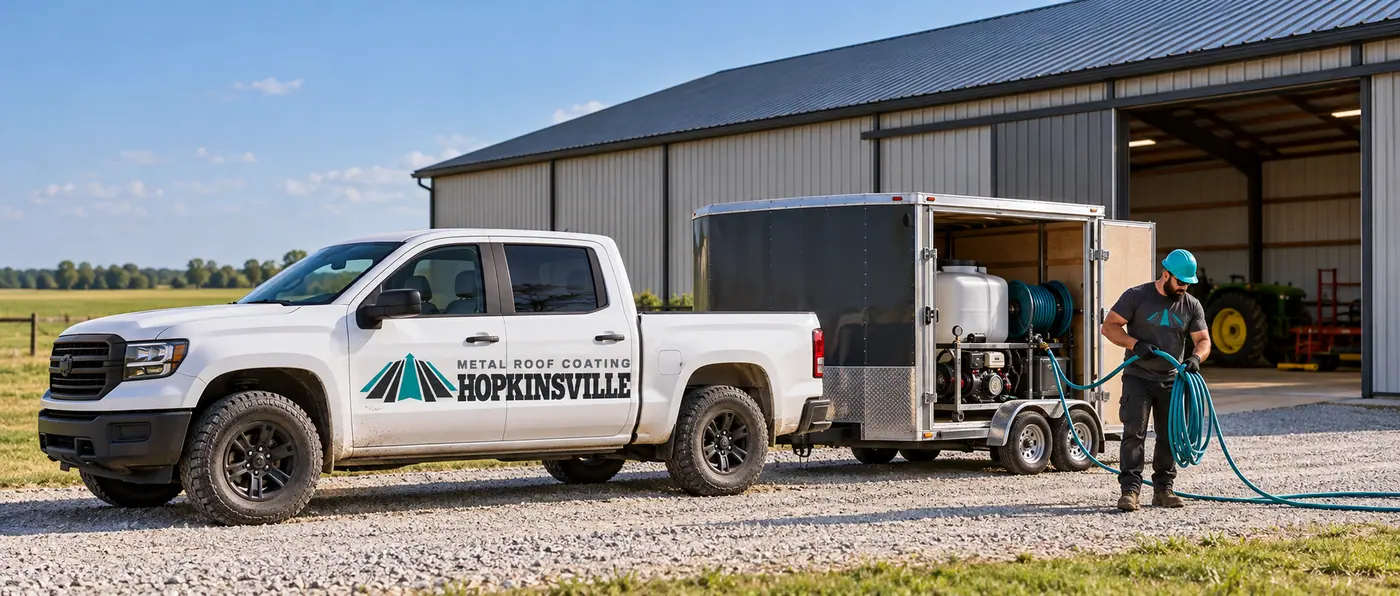
  2. Roofing crew staging equipment beside a commercial building

    Step 2: Repair And Dry The Panels

    Rusted-through panels are patched or replaced and loose screws tightened. Foam needs dry steel, so wet laps and damp areas are dried before any spraying.

  3. Roofers walking a metal roof to check panels, laps, and screws

    Step 3: Spray The Foam Layer

    Foam is sprayed over the panels to the planned thickness, filling the ribs. Rooftop unit intakes are covered, and edges at gutters and ridge caps get careful detailing.

  4. Roofing work truck parked beside a commercial metal building

    Step 4: Apply The Protective Topcoat

    Silicone or acrylic is applied over the foam at the specified thickness. That topcoat shields the foam from sunlight and is the layer checked and renewed later.

When Foam Is More Than You Need

Insulated buildings often need only a coating. These systems close the joints without foam.

Spray Foam Roofing Questions For Hopkinsville Owners

Answers on foam over metal panels, from thickness to upkeep.

Foam Basics

Can spray foam be installed over an old metal roof?

Yes. Spray polyurethane foam goes directly over existing metal panels, filling the ribs and creating a new insulated surface topped with a protective coating.

It fits buildings where the owner wants added insulation and one continuous surface without tearing off the old steel. The panels must be dry, and edges at gutters and ridge caps need careful detailing.

How thick does the foam go on?

Thickness is set for each roof from the insulation the owner wants and the edge heights the building allows.

Every added inch raises the surface at gutters, trim, and curbs, so those heights are measured on the roof walk. The thickness is checked as the foam is sprayed, and the topcoat goes on at its own specified thickness.

Inspection And Equipment

What happens during a metal roof inspection?

An inspection is a walk of the whole roof with photos of each problem area. The inspector counts loose or missing screws, checks side laps and end laps, probes rusted spots for soft steel, and looks at skylights, ridge caps, gutters, and curbs.

Inside, stains are matched to the seams above them, and you get a marked roof plan with a plain explanation of what was found.

Do rooftop units need to be shut off during foam work?

Units near the spraying are shut down or their intakes covered, so odor and overspray stay outside the building.

That is planned with you ahead of time, unit by unit, and the work moves across the roof so each one is off only while foam goes on near it. Curbs are flashed into the foam afterward.

Upkeep

What upkeep does a foam roof need?

Mostly care of the topcoat. Walk the roof once or twice a year and after hail, looking for thin areas, cuts, or bare foam showing through.

Sunlight breaks down exposed foam, so those spots get patched promptly, and the whole topcoat is recoated when it wears thin. Keep gutters clear, since foam raised the roof edge.

Can a foam roof be repaired after damage?

Yes, damaged foam is cut out, refilled, and topcoated. A puncture from a dropped tool or a hail bruise is patched in the area around it, so the rest of the roof stays as it is. Repairs work best when caught early, before water reaches the metal panels underneath.

Price A Foam Roof Over Your Panels

Enter your roof size for a free ballpark range, or call to talk through insulation and edge heights.

Call (270) 236-5496