Granules Collecting In Gutters
- You See
- Gritty granules piled in the gutters and at downspout outlets.
- What It Means
- The shingles are shedding their surface. Light loss can still be coated; heavy loss means the shingles are near the end.

We apply shingle roof coating to commercial buildings in Hopkinsville, such as offices, churches, and strip centers, when the shingles still lie flat and hold their granules.
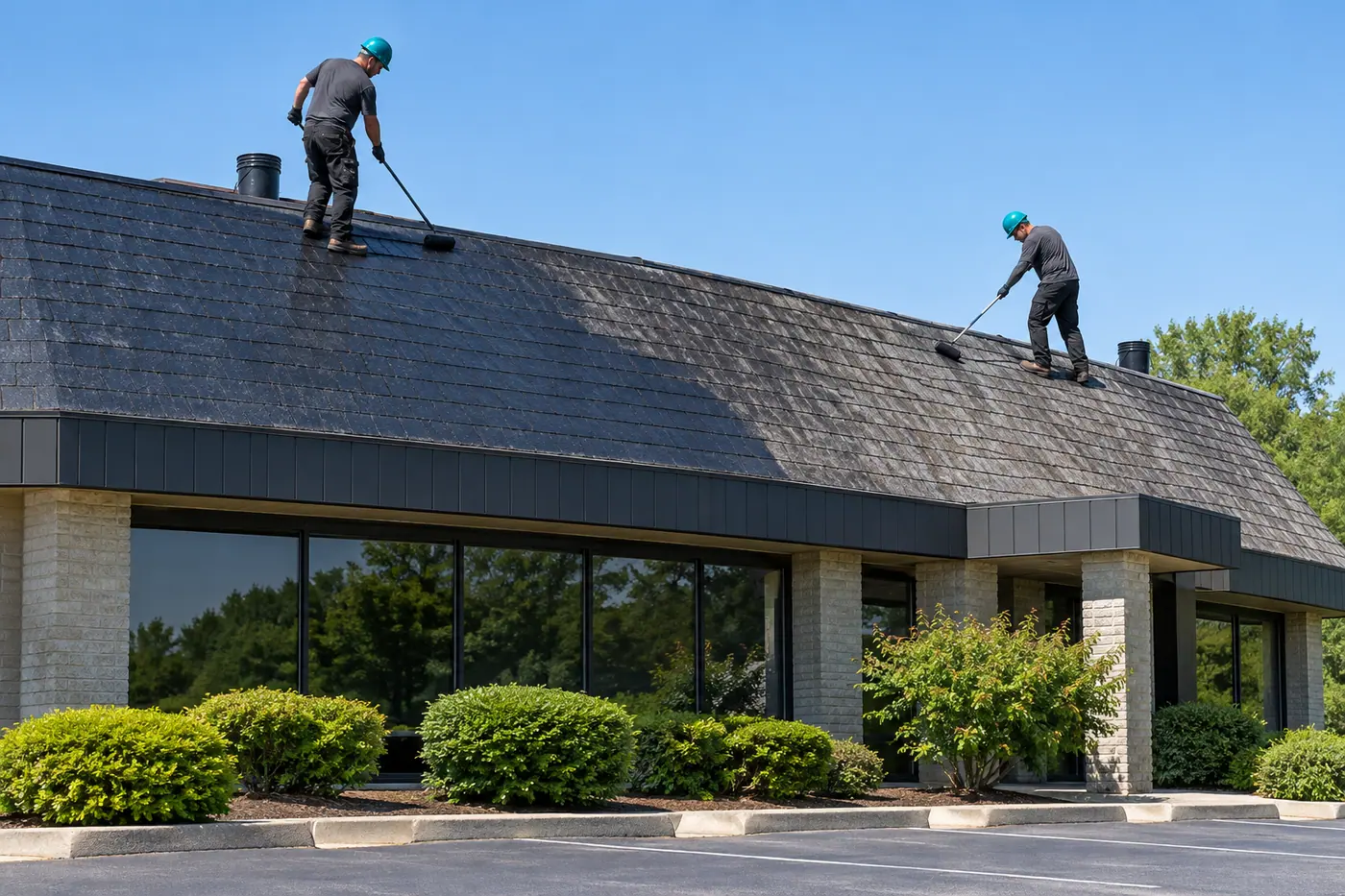
Shingle coating has a narrow gate. These rows show what passes and what points to a new roof instead.
| What We See | Coating Fits | Replacement Fits |
|---|---|---|
| Shingles flat with granules in place | Yes | No |
| Light granule loss in a few areas | After repairs | No |
| Curled, cupped, or cracked shingles | No | Yes |
| Bald areas with the mat showing | No | Yes |
| Shingle maker terms restrict coatings | Hold until reviewed | Often the better path |
| Poor roof-space ventilation | Fix venting first | Sometimes |
Coating curled or bald shingles only delays a replacement, so on those roofs we recommend the replacement.
A coating protects shingles that still have life left. These are the signs we check before saying yes.
Many commercial buildings carry more than one roof type. These coatings pair with a shingle roof.
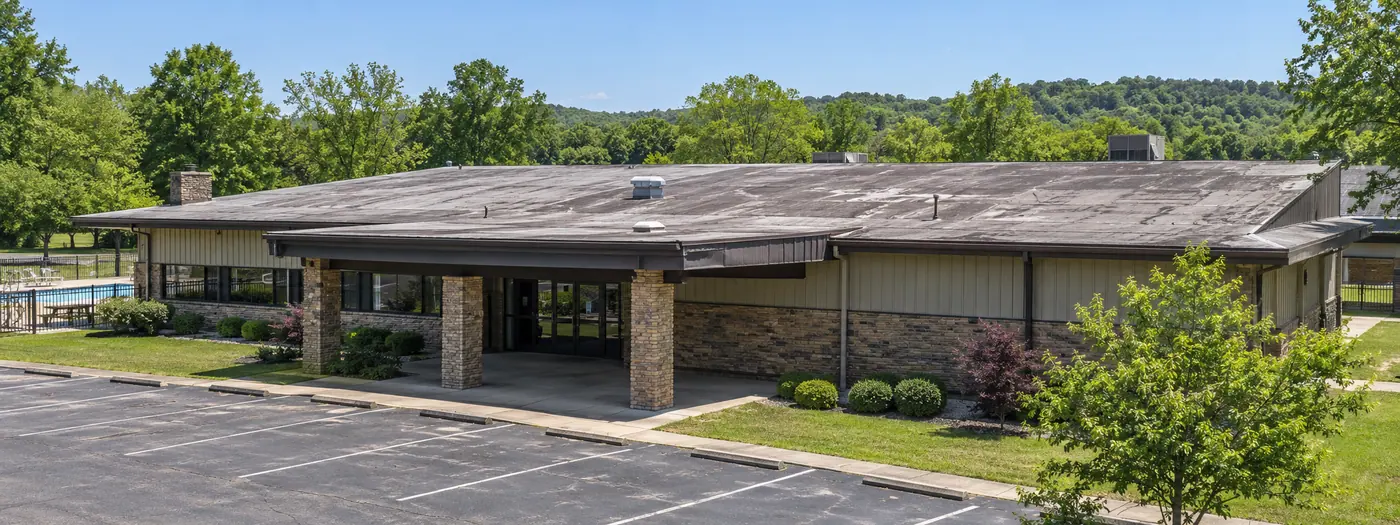
Offices and halls with steep shingled sections get cleaned shingles, detailed valleys and ridge caps, and a coating made for asphalt shingles, once maker terms and ventilation check out.
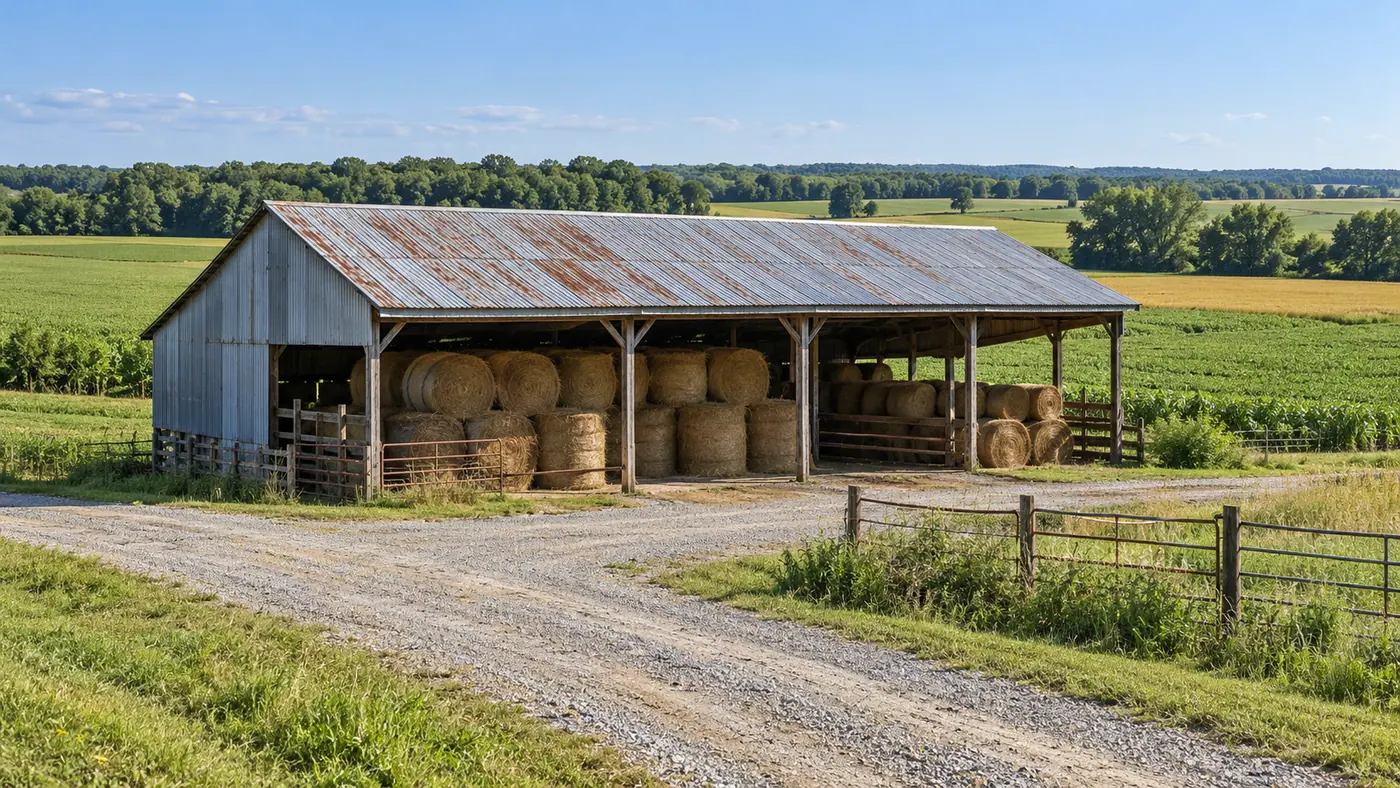
Plenty of churches and offices have a metal-roofed addition or canopy. That section gets metal roof coating prep, with screws and laps fixed first.
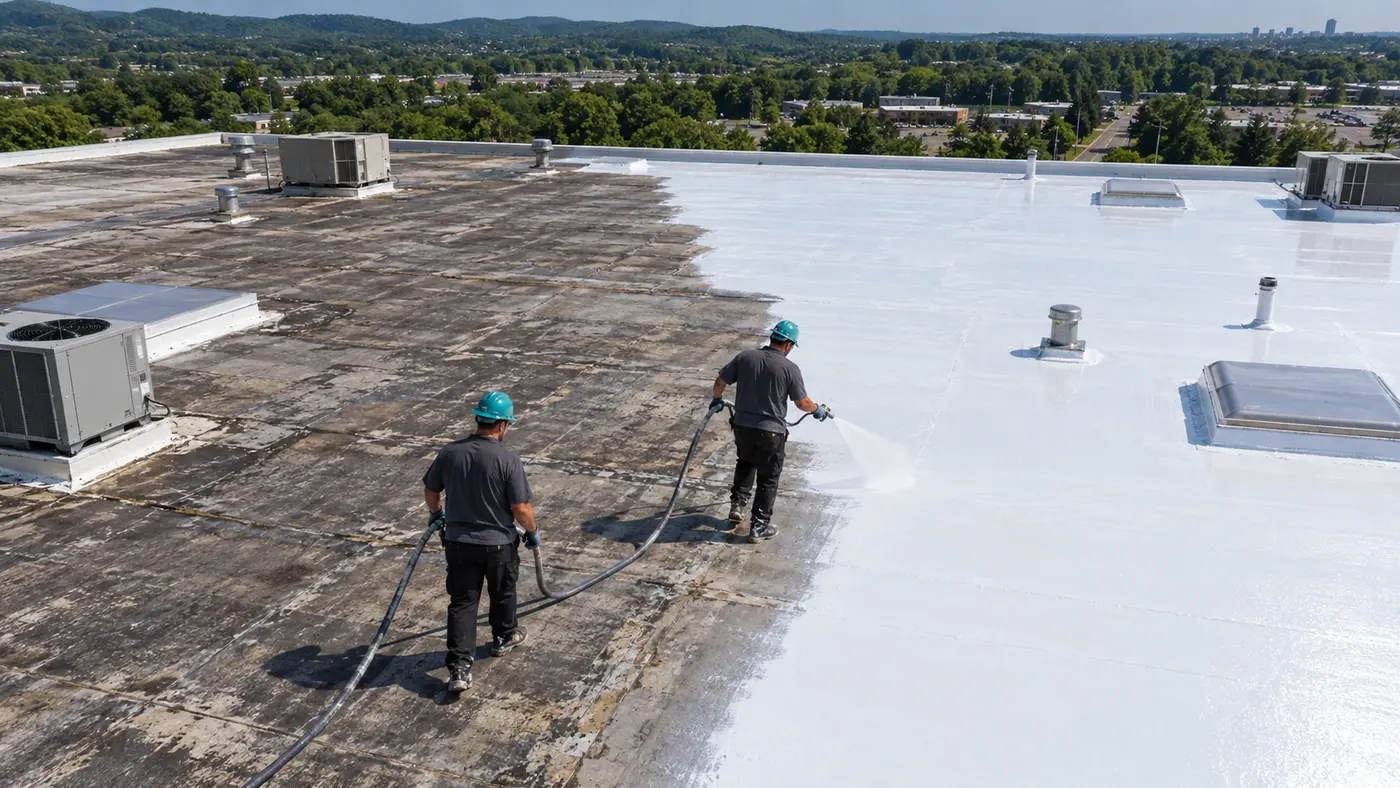
Flat or low-pitch areas behind a shingled front, common on strip centers, hold water and take silicone coating instead of a shingle product.
These gains apply only to shingles that pass the inspection gate.
A coating over shingles that still lie flat protects their surface from sun and rain, which can push back the date of a full replacement.
Coating a qualifying roof keeps the shingles on the building instead of in a dumpster, and the space below stays in use during the work.
Valleys, ridge caps, and wall flashing get reinforced before the coat, so the spots that leak first on a shingle roof are covered.
Call us and describe what the shingles look like from the ground. Curling or bald patches usually mean replacement, and we will tell you so.
Call UsFour stages, with an honest replacement call possible at the first one.
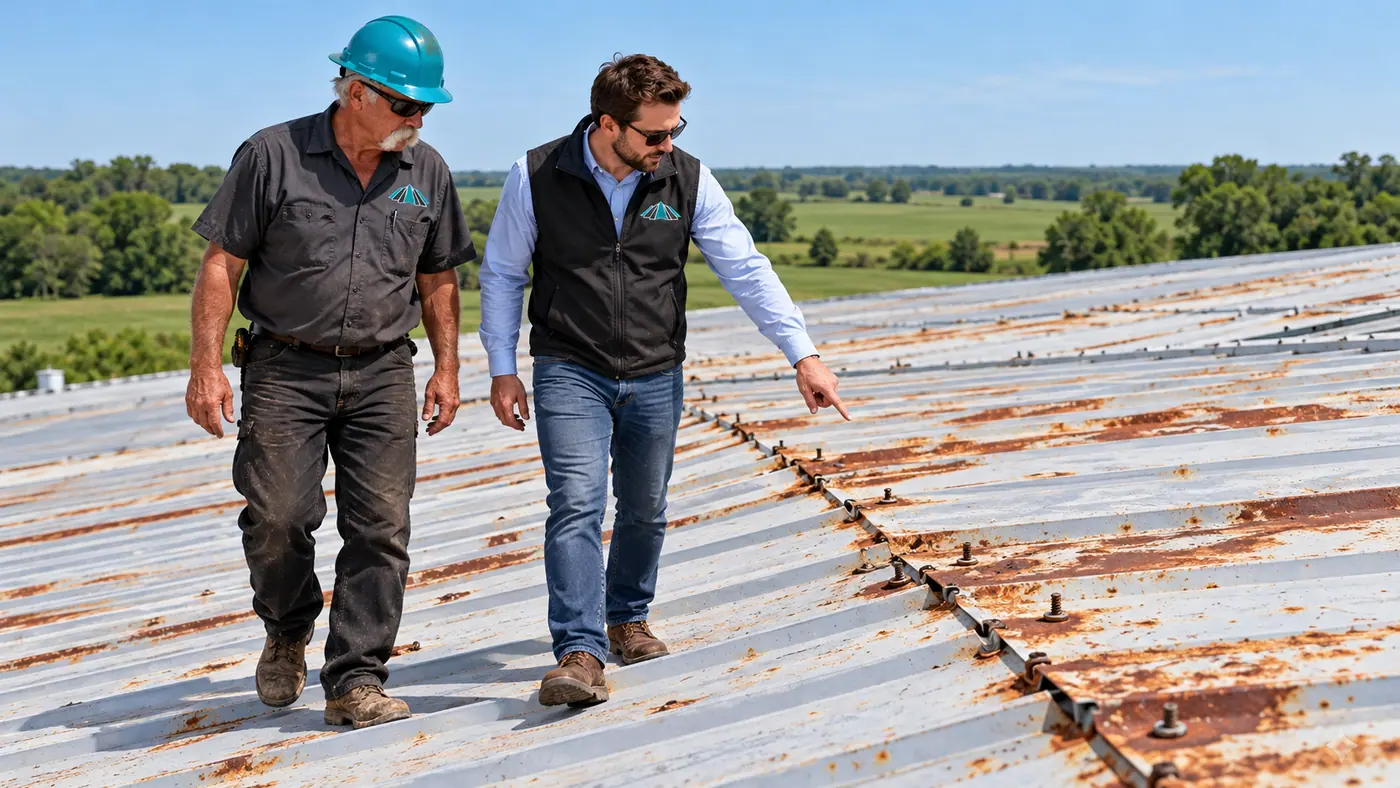
We check shingle condition across every slope, look for curling, cracking, and bald spots, review the roof-space ventilation, and note the shingle brand so maker terms can be read.
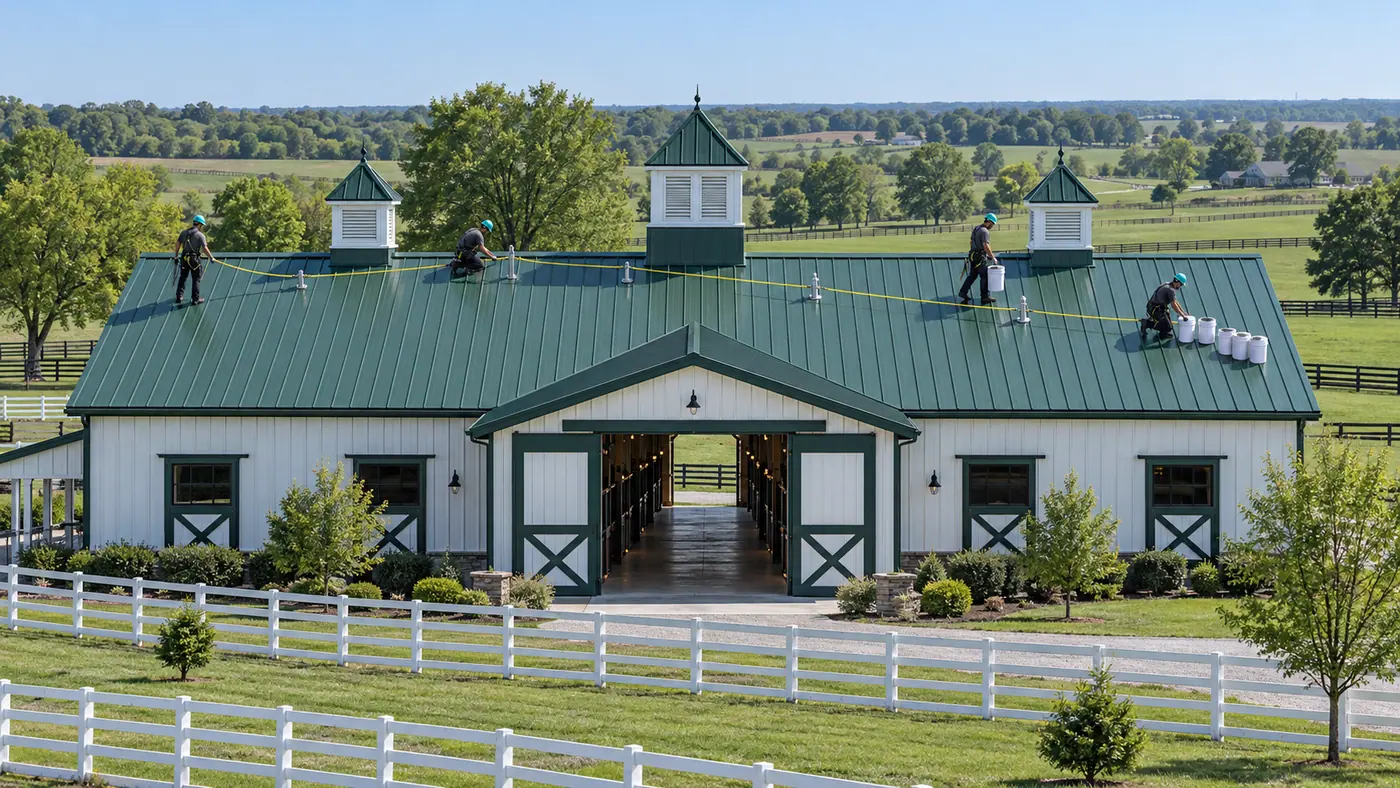
Missing or creased shingles are replaced to match, and loose ridge caps, valley metal, and wall flashing are secured before anything is cleaned.
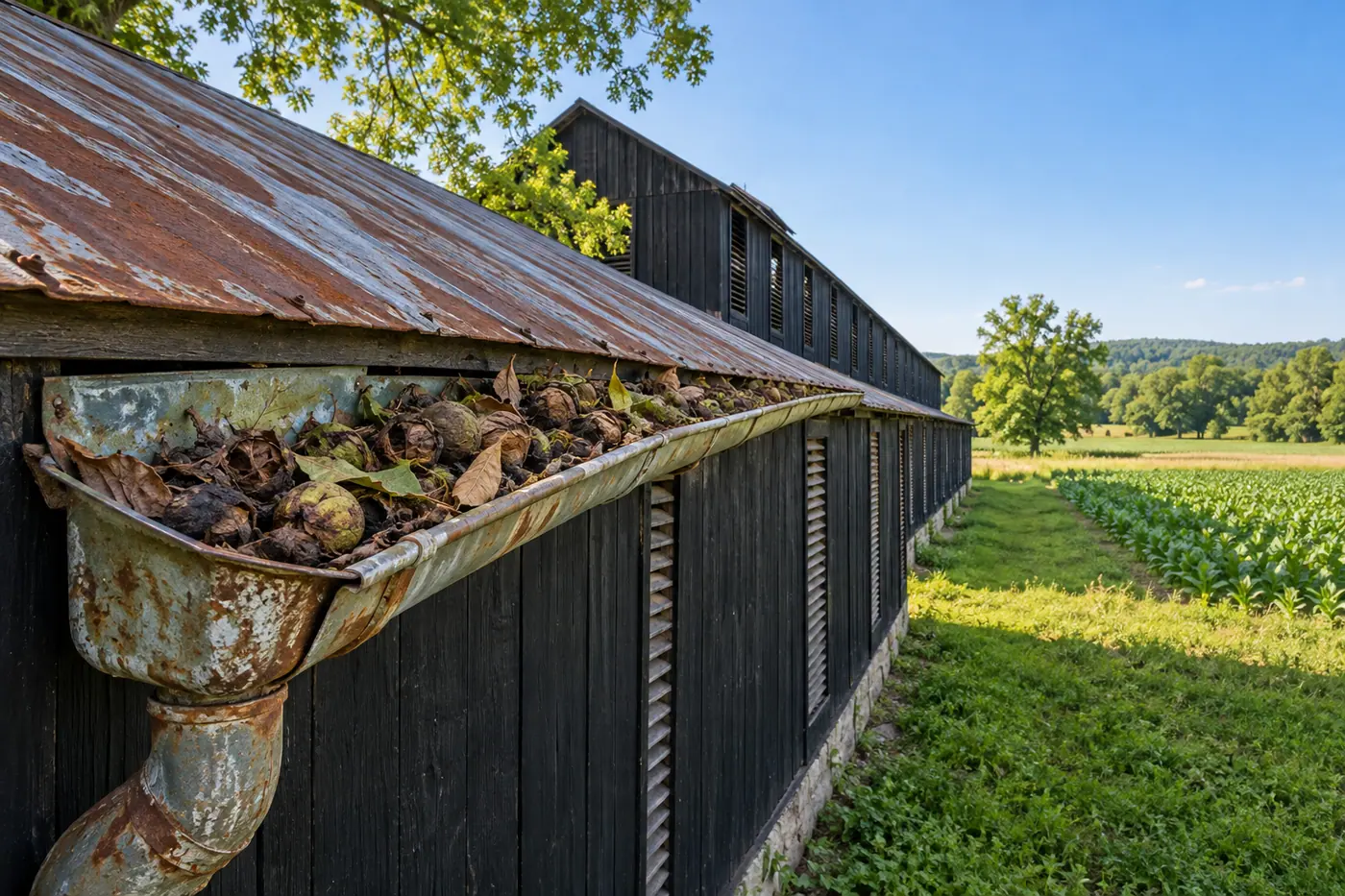
Dirt, moss, and loose granules are washed off at low pressure so the shingles stay intact, and gutters are cleared of the grit that collects in them.
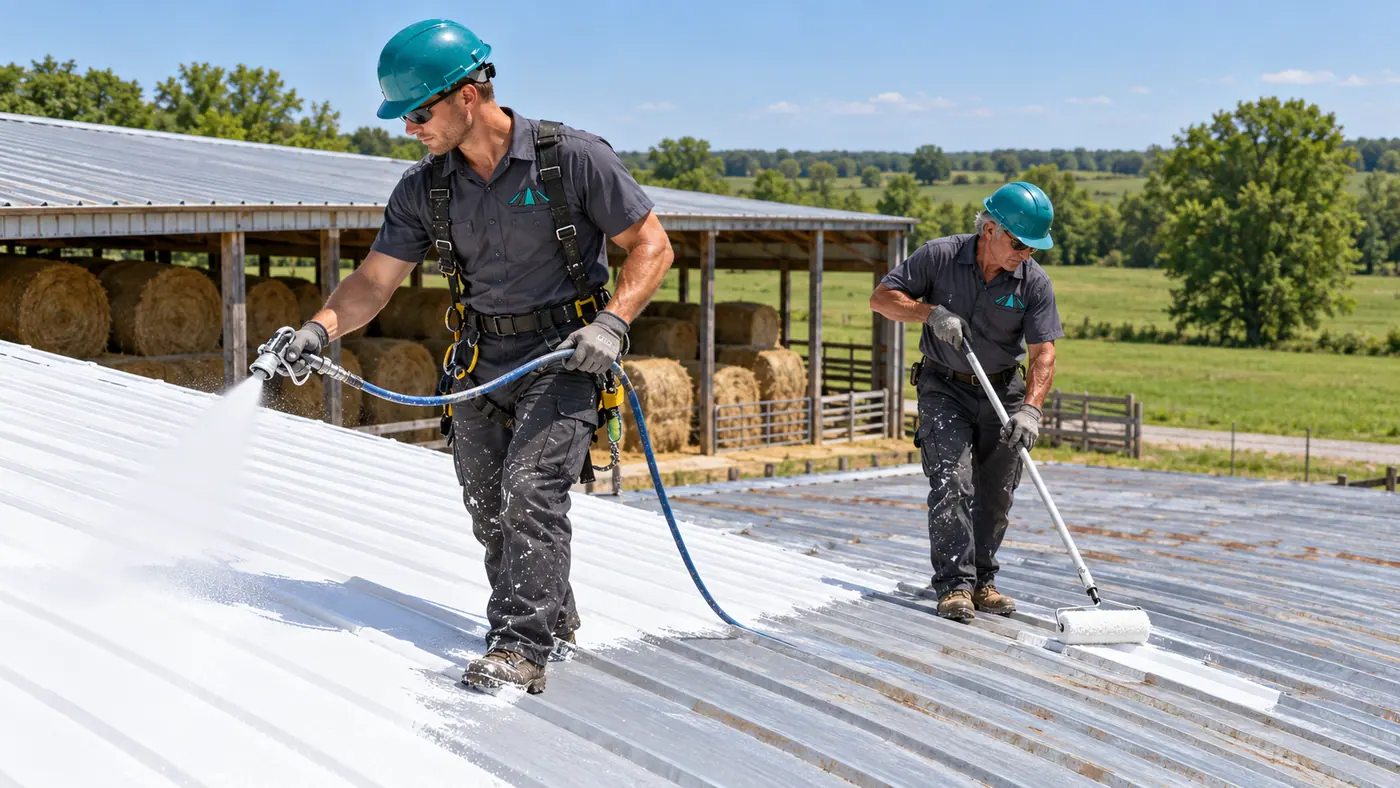
Coating made for asphalt shingles is applied across the field after valleys, ridges, and penetrations are detailed, then checked for even coverage.
Shingled fronts often sit beside metal or flat roofs. These systems cover those sections.
Add metal roof coating for a canopy, addition, or back shop with exposed-fastener panels and loose screws.
See metal roof coatingUse silicone coating on flat sections behind a shingled front where water sits after rain.
See silicone roof coatingPick acrylic coating for a pitched metal outbuilding on the same property that sheds rain quickly.
See acrylic roof coatingWhat owners of shingled commercial buildings ask before deciding on a coating.
Yes, on offices, churches, and strip centers whose shingles still lie flat and hold their granules. Curled, cracked, or bald shingles have little life left to protect, so coating them only delays a replacement.
Before any work, the shingle maker’s terms on coatings and the roof-space ventilation are checked. When both pass, the roof is cleaned and its ridge caps, valleys, and wall flashing are detailed first.
Some shingle makers restrict coatings in their terms, and a coating can affect coverage on the existing roof. Knowing the brand lets us read those terms before recommending anything. If the paperwork is gone, the shingle style and markings found on the roof walk help identify it.
Roof access, leak history, and building details make the visit faster.
Gather leak locations with dates and photos of interior stains, the ladder location, hatch, or lift space at the eave, original drawings or the shingle brand if known, past repairs, and any hail or wind claims on the current roof. Note rooftop units and skylights tenants rely on, too.
Yes, if there is one. Ventilation in the attic or roof space shapes how a coated shingle handles heat and moisture, so we look at vents, insulation, and any signs of moisture on the underside of the deck. Knowing where the hatch or access panel sits saves time on the visit.
It does. The coating covers the granule texture with a smoother, more even color, so the roof reads as one surface from the street. Color choice matters on churches and storefronts where the roof shows, and lighter colors reflect more sunlight. Product colors are shown to you before the job starts.
Look over the roof each spring and after heavy storms. Keep gutters and valleys clear, check ridge caps and flashing at walls, and call when you see a cut or a lifted shingle edge. Worn areas are cleaned and recoated before the shingles below lose more granules.
Request a free estimate with your roof size, or call to describe the shingles and any leaks you see.
Leave a name and number and we will call you back about your commercial roof. Or call now: (270) 236-5496.