Metal Roof Coating
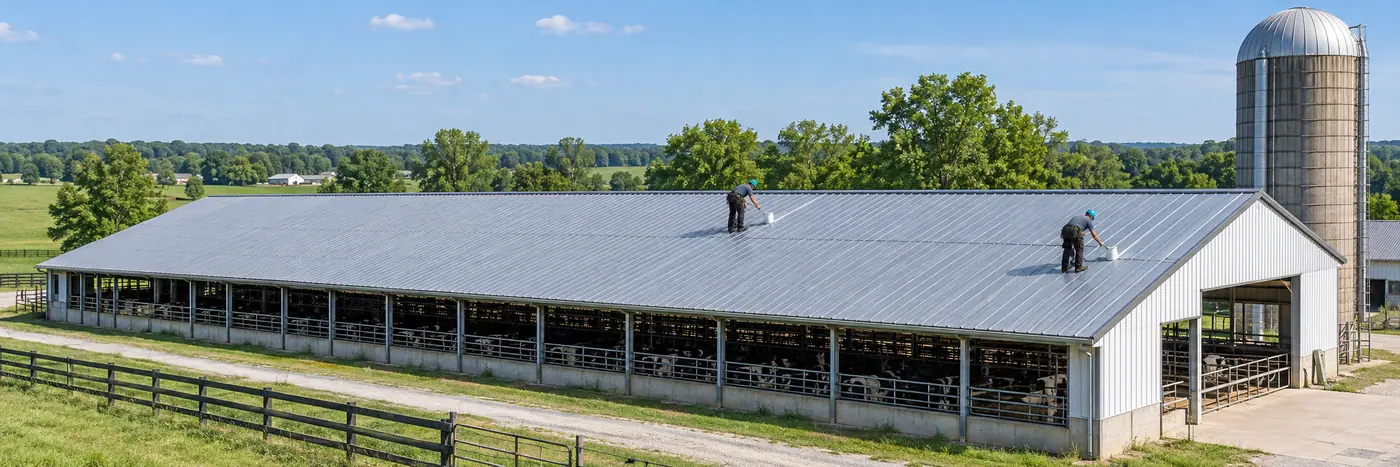
Screws, washers, and laps come first on R-panel and standing seam roofs, then a primer at the rust spots and a full coat over the panels. Shops, warehouses, and storage rows make up most of this work.
Commercial metal roof coating
We offer commercial roof coating services in Hopkinsville for metal, low-slope, foam, and shingle roofs. The roof walk decides which system goes on.
Each service starts from the same roof walk. The fit line on each card names the roof it suits.
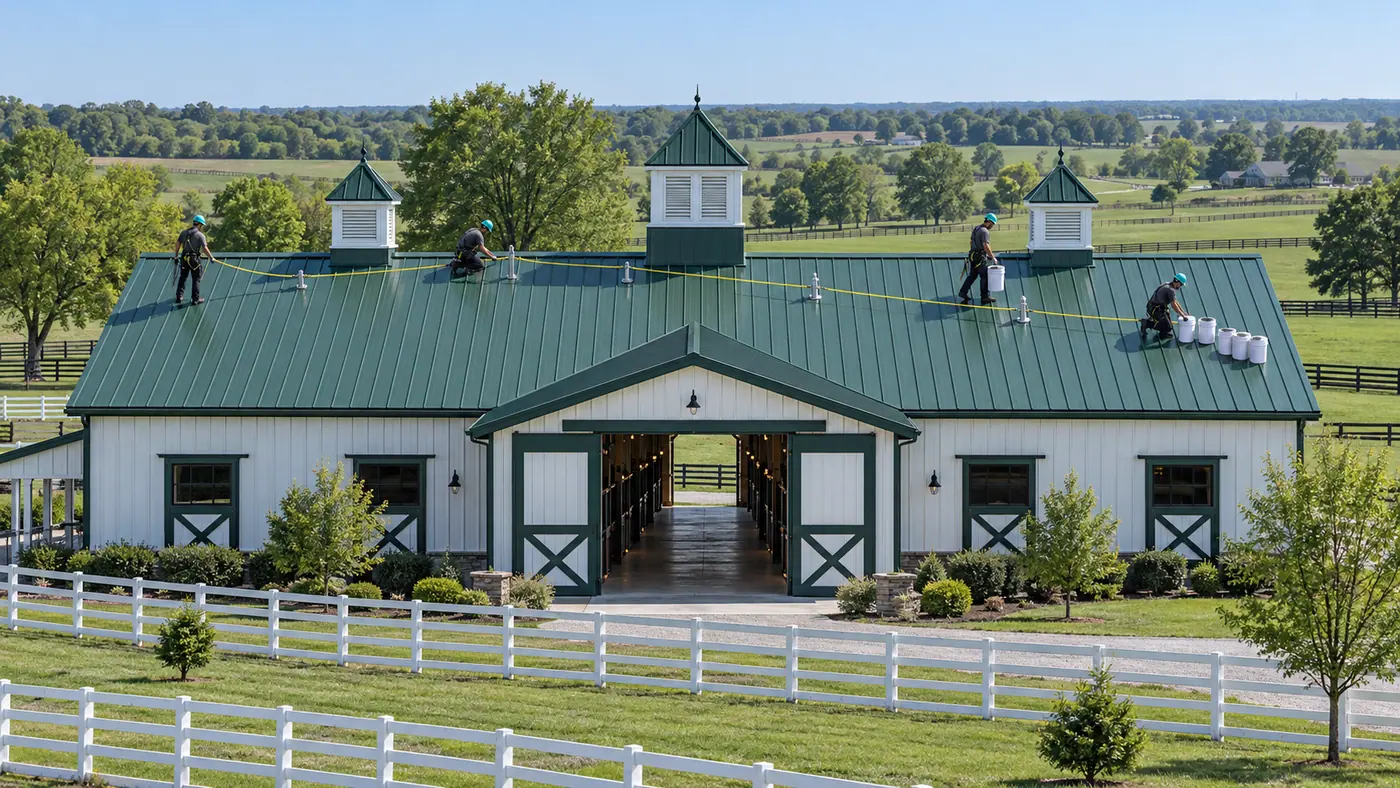
Screws, washers, and laps come first on R-panel and standing seam roofs, then a primer at the rust spots and a full coat over the panels. Shops, warehouses, and storage rows make up most of this work.
Commercial metal roof coating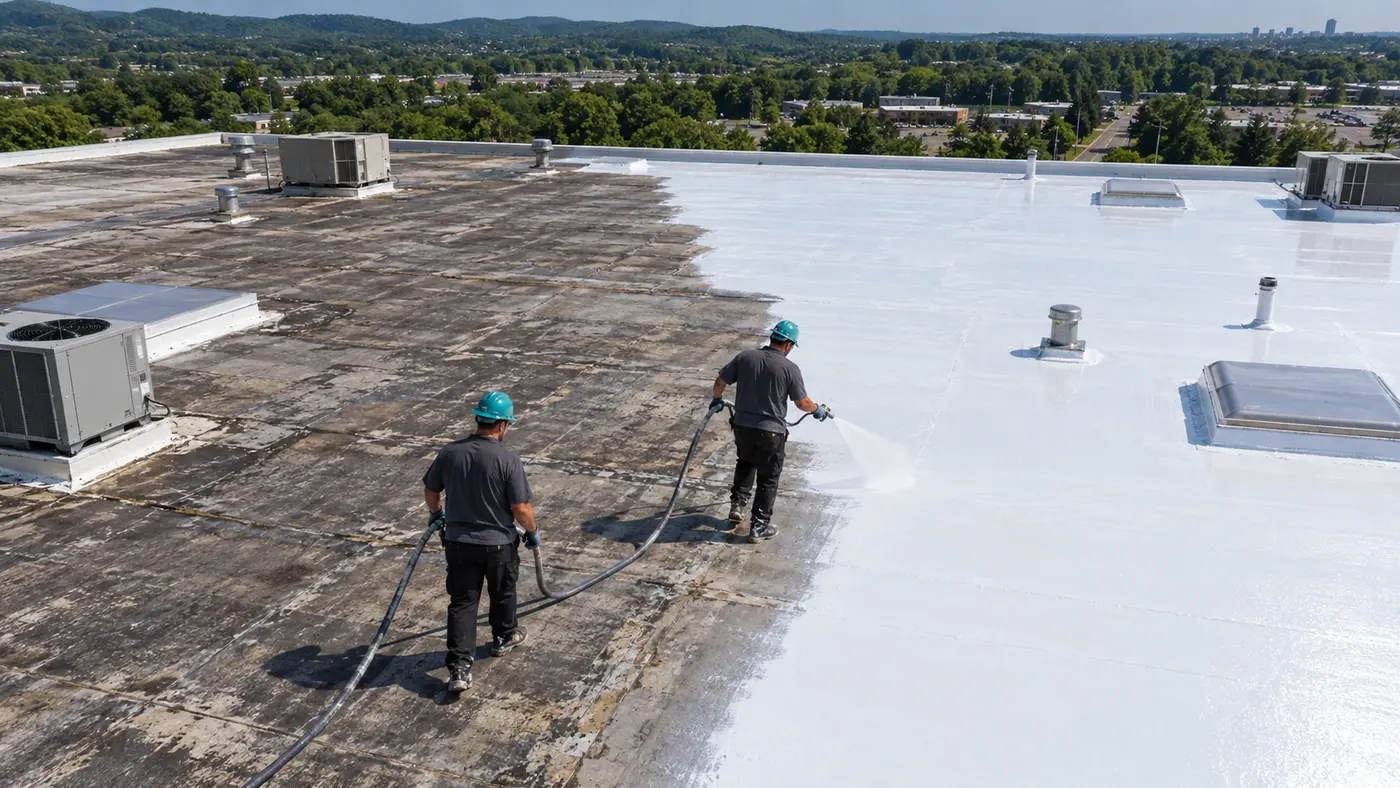
Built for the flatter sections of a building where rain lingers behind a curb or in a slow gutter. Later recoats are silicone over silicone, so the product choice carries through every future recoat.
Silicone coatings for low-slope roofs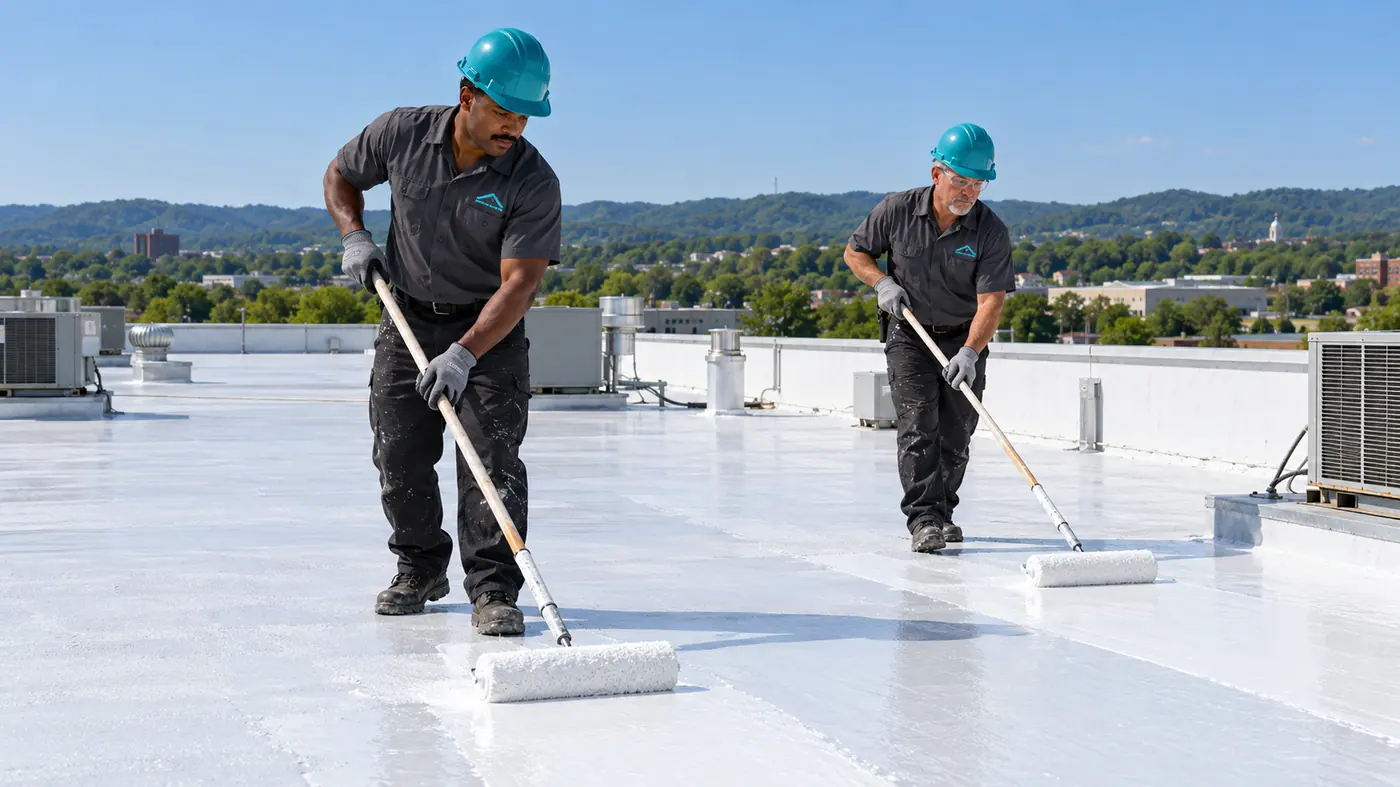
Water-based and mild in odor, it fits pitched panels that drain within minutes and accepts acrylic recoats years down the road. Low spots behind curbs get a reinforced detail first.
Acrylic coatings for pitched metal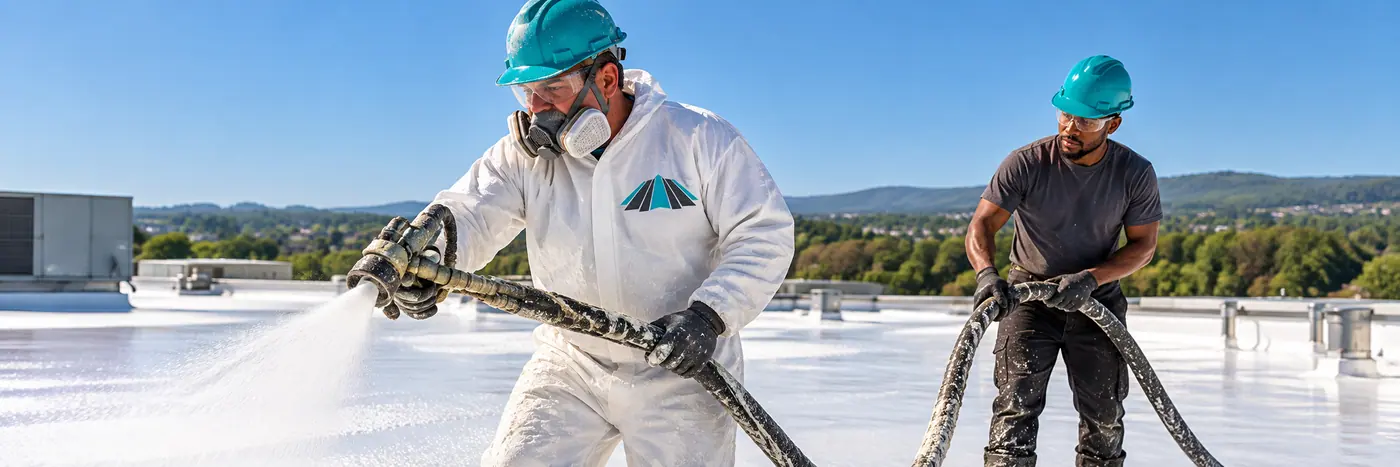
Sprayed straight over old steel, foam fills the ribs, adds insulation, and gets a protective topcoat that is checked and renewed over time. Gutter and trim heights are measured before spraying.
Spray foam over old metal panels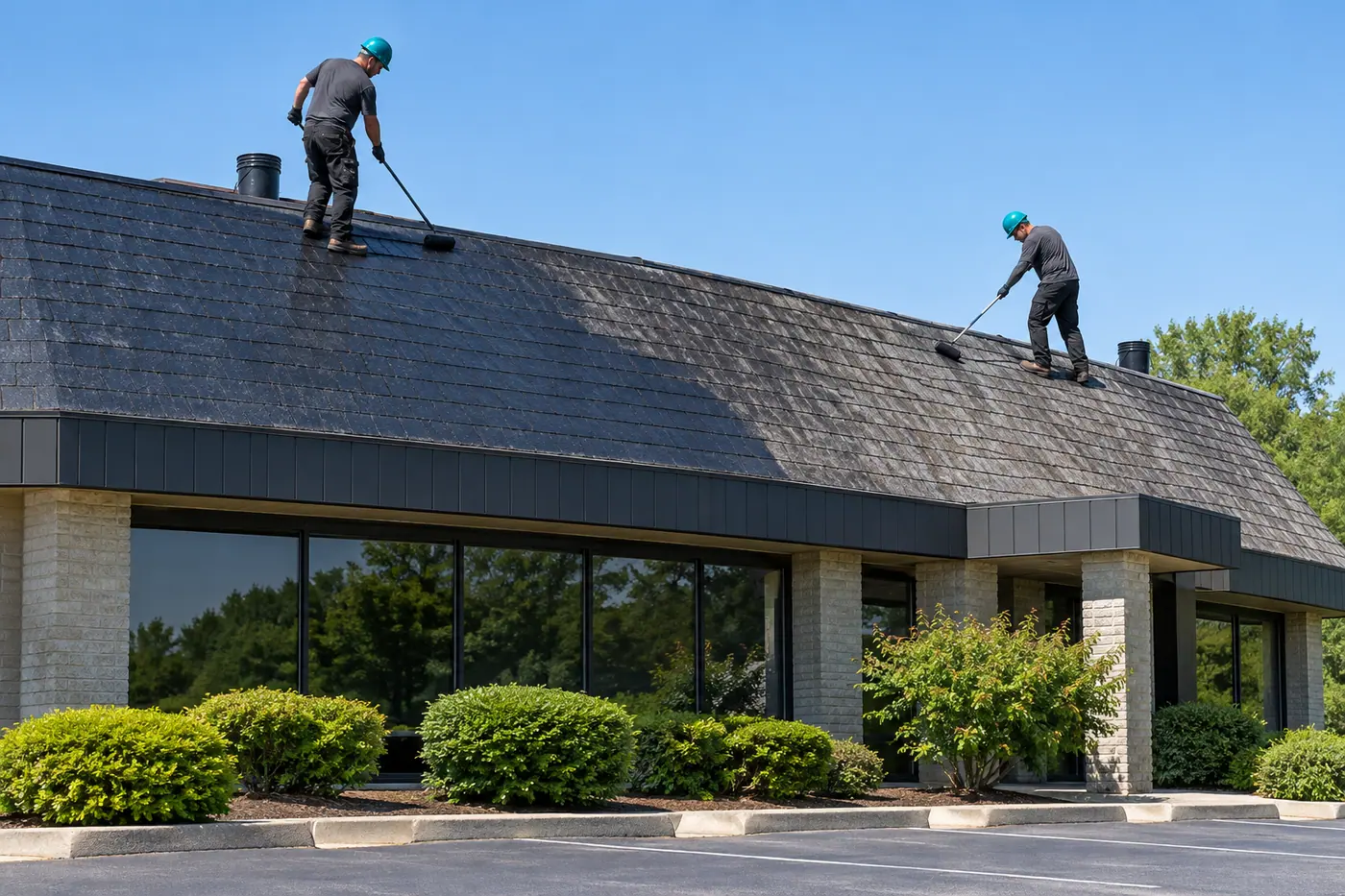
Offered only where the shingles lie flat, keep their granules, and the shingle maker and attic ventilation both allow a coating. Valleys, ridge caps, and wall flashing are detailed first.
Coatings for commercial shingle roofsA side-by-side view of the four coating systems we put over existing roofs. Metal roofs take silicone, acrylic, or foam.
| Factor | Silicone | Acrylic | Spray Foam | Shingle Coating |
|---|---|---|---|---|
| Roof it suits best | Low-slope metal and flat sections | Pitched metal that sheds water fast | Uninsulated metal shops and cold storage | Flat, granule-covered shingles |
| Water standing at gutters or curbs | Holds up in wet spots | Softens and wears where water sits | Needs slope worked into the foam | Shingle roofs should drain freely |
| Dirt on the surface | Collects more dust over time | Stays cleaner on steep slopes | Topcoat gets washed and checked | Washed before coating |
| Recoating later | Silicone again | Acrylic recoats bond easily | Topcoat renewed over the foam | Same product line again |
| Weather to apply | Wider window | Warmer, dry days to cure | Dry panels and calm air | Dry shingles and mild days |
| Insulation added | Very little | Very little | Yes, the foam layer insulates | Very little |
Rated reflectance values for coating products are listed in the Cool Roof Rating Council directory.
Call us with the building type and where the rust shows: at the laps, along the eave, or across the panel faces. Rust location tells us which coating plan to bring.
Call UsEvery system on this list goes on in the same order. What changes from roof to roof is how much repair the second step needs.
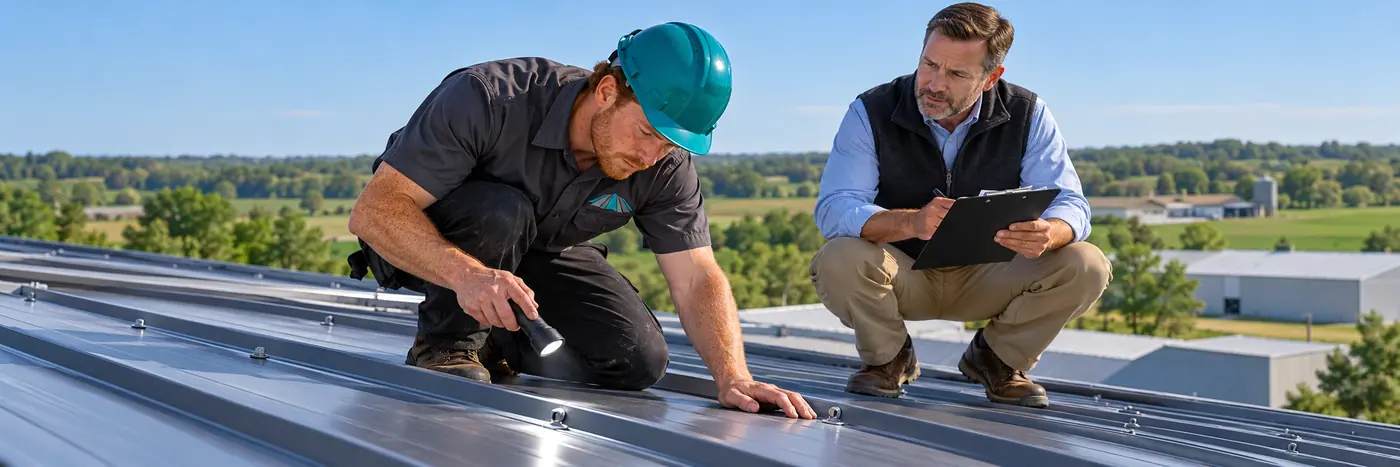
A full walk of the panels with photos of each problem area, then a marked roof plan. Interior drips are traced to the laps or curbs above them before any product is chosen.
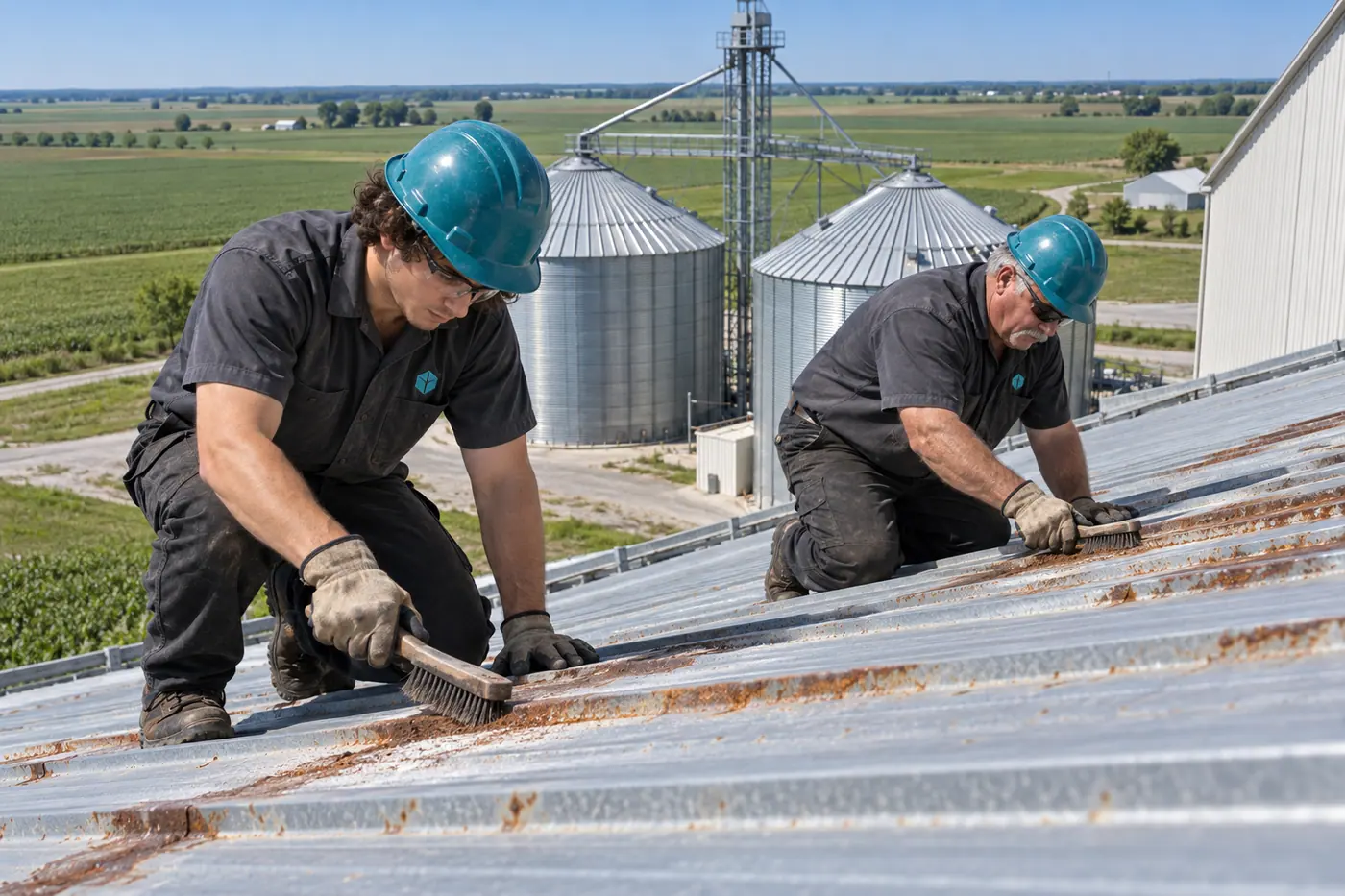
Rusted-through sheets, stripped screws, split pipe boots, and pulled gutter seams are repaired first. A coating bridges small gaps; it never holds a loose panel down.
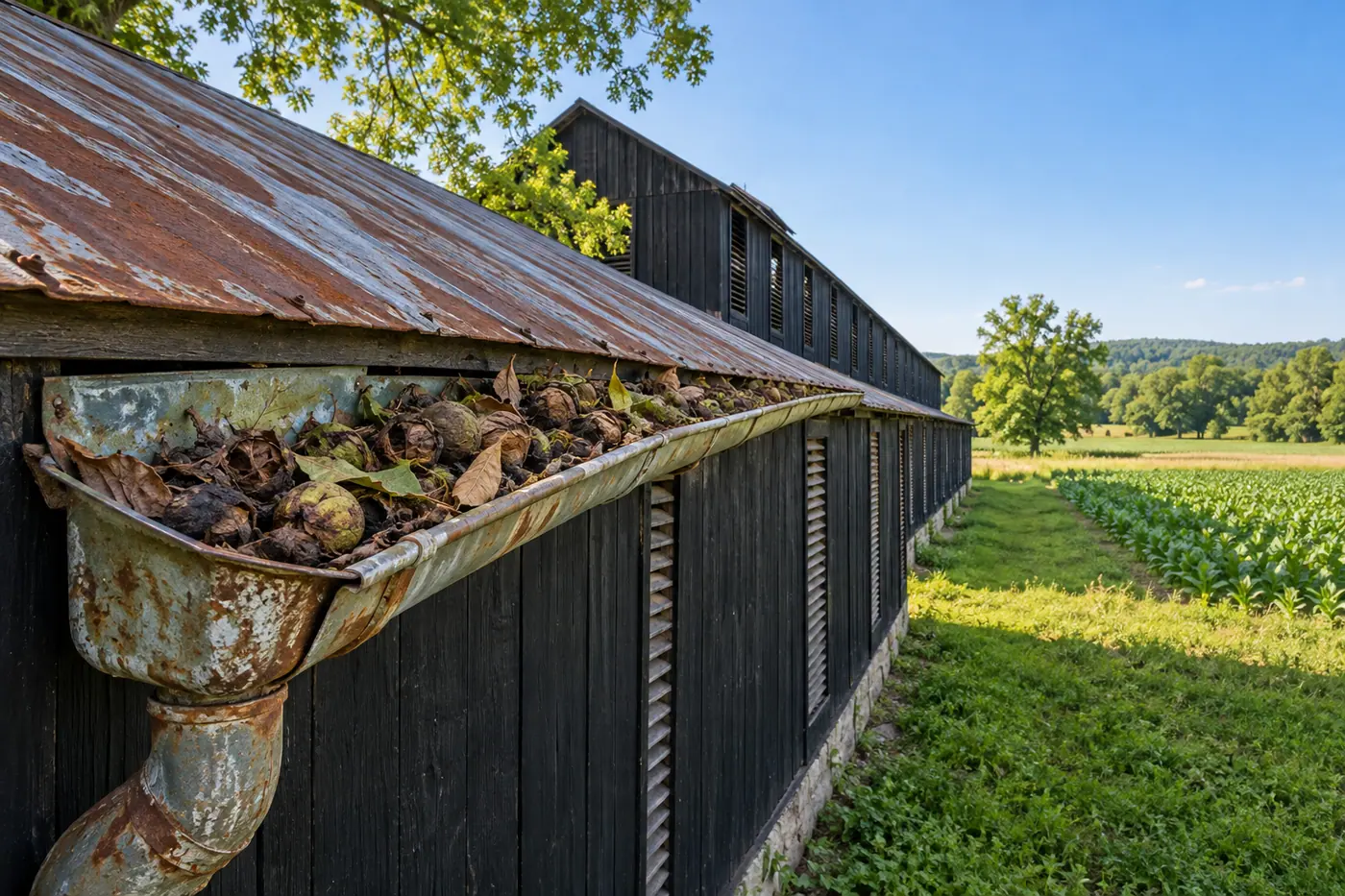
Gutters are emptied, then pressure washing strips chalk, grime, and mill oil from the panels. Steel has to dry completely before primer goes on, so wash days and coat days are kept apart.
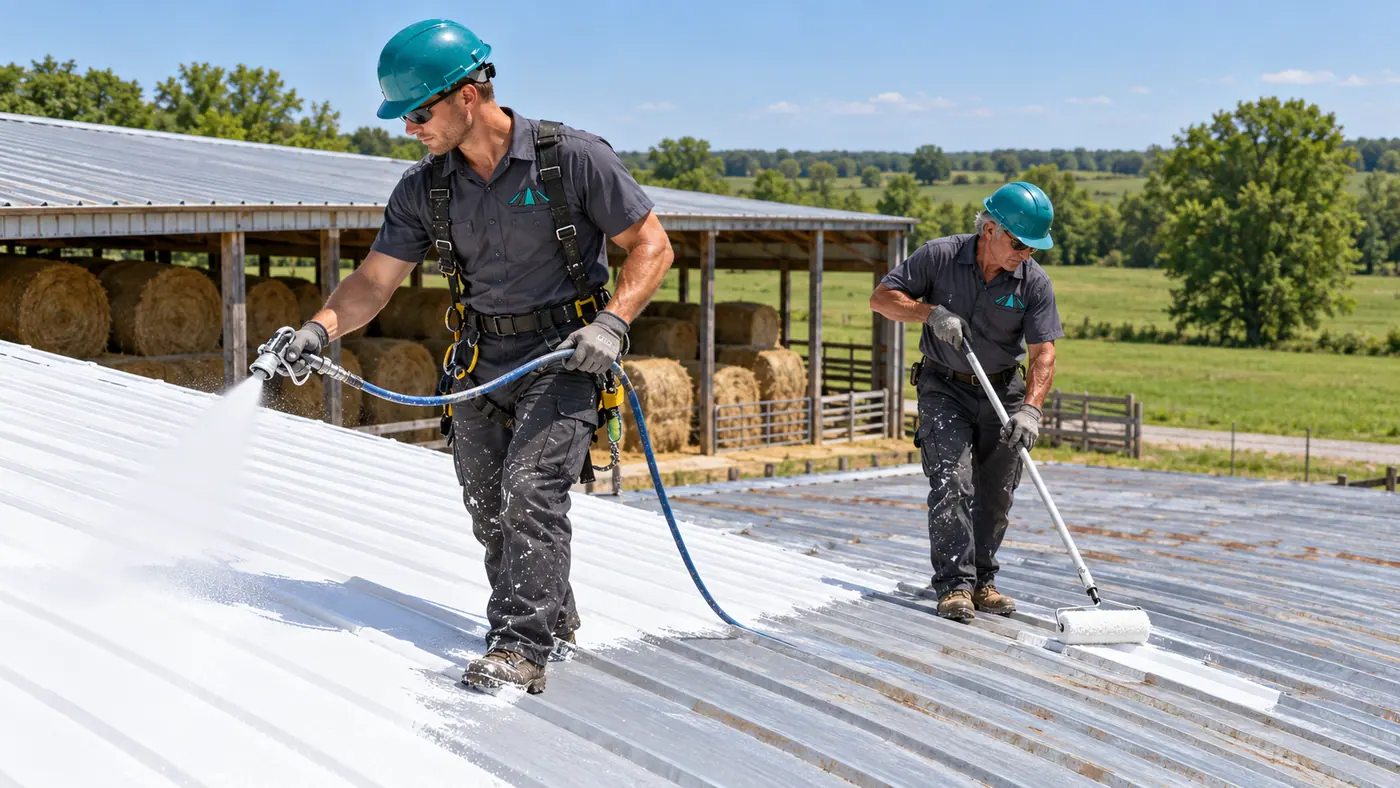
Rust-inhibiting primer covers ground spots, and fabric or seam sealer goes over laps, ridge caps, and curbs. Translucent skylight panels are masked so they keep passing daylight.
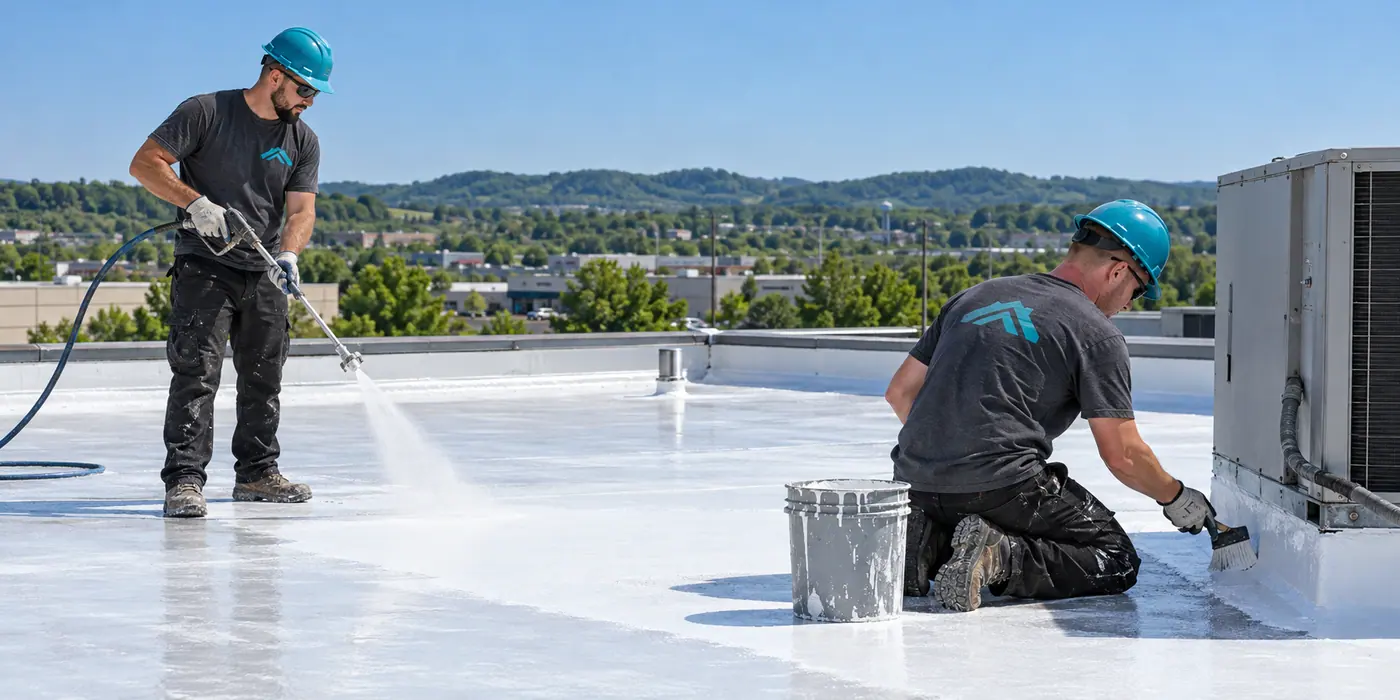
Silicone, acrylic, foam, or a shingle coating is sprayed or rolled to its specified thickness. Readings are taken across the field, and thin areas get a second pass.
What owners ask when choosing between the five services. More answers are on the metal roof coating FAQ.
How much solid steel remains, and whether the framing under it is dry, settles it. Surface rust and loose screws point to a coating. Open laps and red rust call for repairs, then a coat. Pinholes on a few panels mean patching or swapping those sheets first, and widespread rust-through or sagging purlins mean replacement.
Yes. A leak at one curb, skylight lap, or gutter seam can be repaired on its own, and we will say so after the roof walk. Owners often coat later, once the budget allows, and the repaired details are already in place when that day comes.
Inspection comes first, then repairs to panels, screws, flashing, and gutters. Next the roof is washed and dried, rust is ground and primed, and laps, curbs, ridge caps, and penetrations are detailed. The field coat goes on to its specified thickness, and the last step measures that thickness and touches up thin spots.
Water left in laps and screw holes ruins adhesion. Panels need to dry fully after pressure washing, and primer needs its own cure time before the topcoat. Spacing those days out, and watching the forecast for dew and rain, is how the coating ends up stuck to the steel instead of peeling at the laps.
Loose or cracked patches come off, along with the brittle mastic dabbed around old screws and laps. Firm, well-stuck repairs can stay after an adhesion check. Coating over crumbling mastic traps dirt and moisture under the new layer, so that cleanup is part of the repair step on most older roofs.
IRS Publication 946 lists roofs on existing nonresidential buildings as qualifying property. For tax years beginning in 2026, the limit is $2,560,000, phasing out once qualifying purchases pass $4,090,000. Residential rentals are excluded and timing rules apply, so check with your CPA. The roof work is documented so your accountant has what they need.
You receive the marked roof plan from the inspection, photos of the repairs before they were covered, and the product names and thickness readings for the coat. Keep them with the building files so a later owner, tenant, or insurer can see what was done to the panels and laps.
Tell us the roof size for a free ballpark range, or call and describe the slope, rust, and leaks you are seeing.
Leave a name and number and we will call you back about your commercial roof. Or call now: (270) 236-5496.