
Owner Questions

Hopkinsville Metal Roof Coating Questions

Straight answers to the metal roof coating questions Hopkinsville building owners ask, from rust and screws to permits in each nearby town.

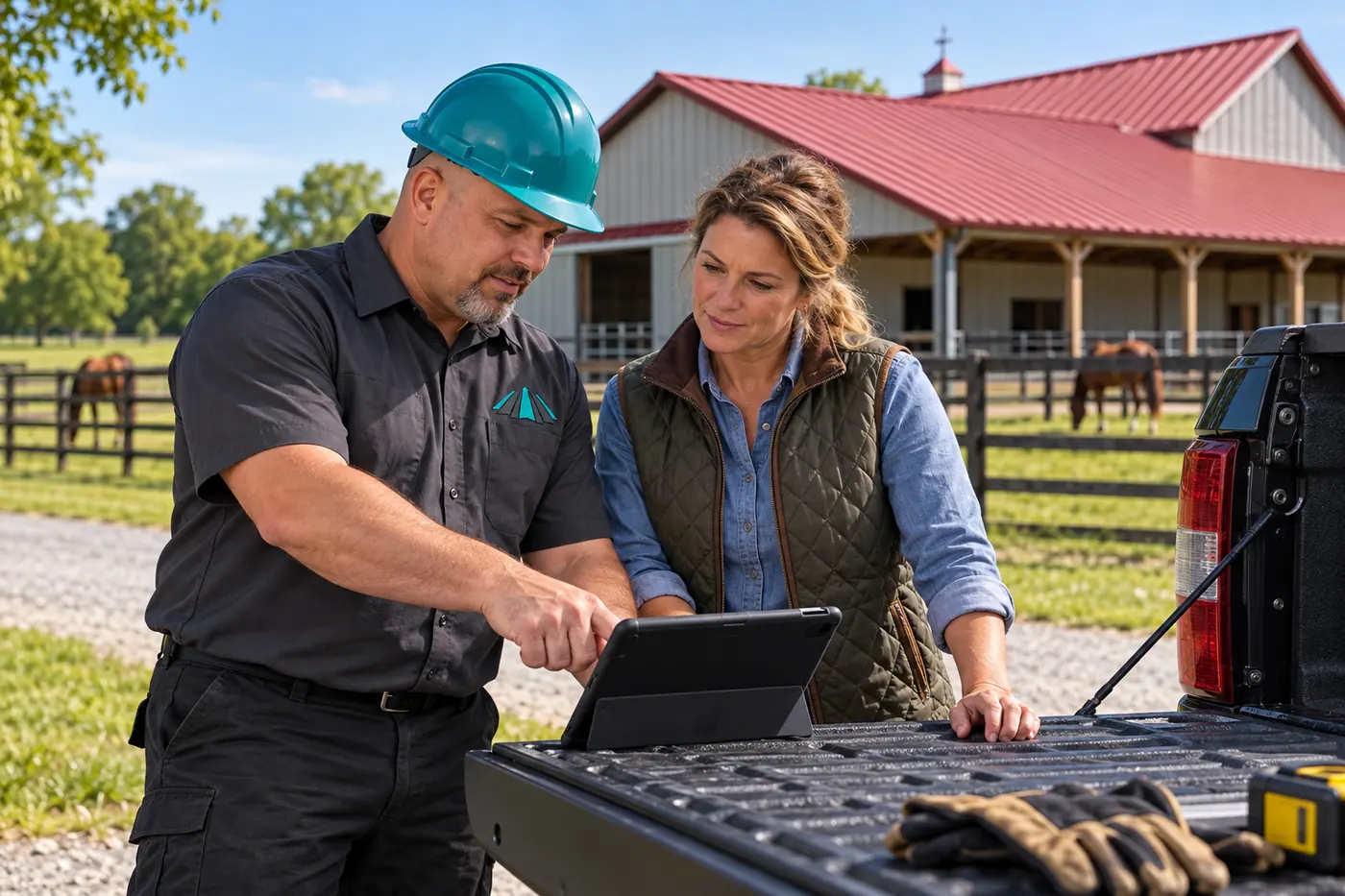
Roofer going over roof notes with a building owner

Hopkinsville Metal Roof Coating Questions By Topic

Metal roof coating is a fluid-applied membrane rolled or sprayed over steel roof panels, screws and seams to stop leaks and slow rust on an existing roof. Hopkinsville Metal Roof Coating coats commercial metal roofs in Hopkinsville, Christian County, Kentucky, and nearby towns, and also installs silicone, acrylic, spray foam and shingle roof coatings on commercial, industrial and farm buildings.

Metal Roof Coating Basics

What does a coating actually do on a commercial metal roof?

A coating forms one continuous rubber-like skin over the panels, fastener heads, side laps and end laps of a metal roof. Bare steel roofs leak at their joints far more often than through the middle of a panel, so the coating's main job is closing those joints.

Once cured, the membrane also:

  • Shields bare steel and cut edges from rain and humidity, which slows new rust.
  • Reflects sunlight when a white or light color is chosen, keeping the panels cooler.
  • Covers chalking, faded factory paint and scattered rust bloom with one fresh surface.

The panels stay in place, so the building keeps its structure, insulation and roof line while the weather surface is renewed.

Can you coat both standing seam roofs and exposed-fastener R-panel roofs?

Both styles take coatings well, but the prep work is different because each roof leaks in different places. An R-panel roof has thousands of screws through the face of the sheet, and each one is a possible leak. A standing seam roof hides its clips under raised seams, so the trouble usually starts at end laps, penetrations and trim.

Prep itemExposed-fastener R-panelStanding seam
Main leak pointsScrew washers, side laps, end lapsEnd laps, seam ends, curbs, trim
Fastener workBack out, replace or reseal every loose screwClips stay hidden; check seam caps and trim screws
Seam treatmentReinforcing fabric over lapsSealant at seam ends and transitions
MovementLower; panels fixed tightHigher; panels float, so details must flex

How do I know whether my metal roof should be coated, restored, re-paneled or replaced?

The answer comes down to how much solid steel is left and whether the deck framing under it is still dry. A roof with surface rust and loose screws is a coating candidate, while panels with holes rusted through across large areas need new metal first.

Roof condition seen on the roofCoatRestore (repair, then coat)Re-panel sectionsFull replacement
Chalking, faded paint, light rust bloomYesblankblankblank
Loose screws, open laps, red rust at lapsblankYesblankblank
Pinholes and rust-through on a few panelsblankYes, with patchesYes, for worst panelsblank
Widespread perforation, sagging purlinsblankblankblankYes

An inspection with a walk of the whole roof settles which column fits.

Rust, Fasteners And Seams

Can you coat over rust on a metal roof?

Coatings can go over rusted steel once the loose rust is removed and the remaining surface is primed. Flaking red rust is wire-brushed or ground off until the steel underneath is firm, and a rust-inhibiting primer goes on before any topcoat.

Light rust bloom across the panel face is common on older roofs and handles well with this method.

Problems start when rust has eaten through the panel, leaving pinholes or soft spots along the bottom edge of a lap. Those areas get a metal patch or a replacement panel before coating, because primer and coating alone will tear over an open hole. Coating straight over loose, flaking rust is a shortcut that leads to peeling.

What happens to the roof screws and washers before coating?

Each exposed fastener is checked, and screws that are backed out, stripped or missing their rubber washer are replaced or tightened. On many older R-panel roofs, sun and heat have hardened the washers until they crack, and water follows the screw shank straight into the building.

Typical fastener work includes:

  • Snugging loose screws so the washer seats flat on the rib.
  • Upsizing stripped screws to a larger diameter that bites fresh steel.
  • Sealing every screw head with a dab of compatible sealant or a coating "button."

After that, the field coating covers each head again. Fastener prep is often the single most time-consuming step on an exposed-fastener roof.

How are side laps, end laps and seams sealed?

Laps get extra material because they are where panels move against each other. Crews clean each side lap and end lap, then apply a reinforced detail, usually a polyester fabric bedded in a base coat or a flexible seam sealer, before the full field coat goes on.

End laps on long roof runs deserve the most attention. Water runs downslope across them, and a slight gap or a loose stitch screw there can feed a steady drip into the building.

On standing seam roofs, the seam itself rarely needs fabric, but seam ends at the eave and ridge and any field-cut seams are sealed. The goal is a lap detail that stretches as the panels expand on a hot afternoon and shrink on a cold night.

How do you handle skylight panels, ridge caps, gutters and curbs?

Every roof penetration and trim piece gets its own detail before the field coat. Translucent skylight panels are usually left uncoated so they still pass daylight, with their perimeter laps and fasteners sealed; brittle or cracked ones are swapped for new panels.

Other common details:

  • Ridge caps get their closure strips checked and their stitch screws resealed.
  • Rooftop unit curbs and pipe boots are wrapped with fabric where they meet the panel.
  • Gutters are cleaned out, and the drip edge and gutter seams are sealed where the coating ends.
  • Flashing at walls and parapets gets reinforced where the metal changes direction.

Skipping these spots leaves the most leak-prone parts of the roof unprotected.

Choosing A Coating

Should I pick silicone or acrylic for a metal roof?

Silicone is the stronger choice on low-slope metal where water lingers, and acrylic works well on steeper roofs that drain fast. Both reflect sunlight in white, and both need clean, primed steel underneath.

FactorSiliconeAcrylic
Standing water at gutters or curbsHolds upSoftens and wears where water sits
Dirt pickupCollects more dust over timeStays cleaner on steep slopes
Recoat laterNeeds silicone againAccepts acrylic recoats easily
Application temperatureWider weather windowNeeds warmer, dry days to cure
Typical use on metalLow-slope warehouses, flat-ish sectionsPitched shops, barns, steeper panels

Product reflectance values can be compared in the Cool Roof Rating Council directory before choosing a color.

When is acrylic the better choice over metal panels?

Acrylic fits metal roofs with good slope, solid panels and a budget that favors easy future recoats. On a pitched shop or equipment building where rain sheds off within minutes, water never sits long enough to challenge an acrylic film.

Acrylic also cleans up with water, has a mild odor during work over occupied spaces, and bonds well to itself when the roof is recoated years later.

Its weak points are slow cures in cool, damp weather and wear in spots that hold water, such as behind a rooftop unit curb or in a clogged gutter. For those mixed roofs, a common approach is acrylic on the field with a silicone or reinforced detail at the low spots.

Can spray foam be installed over an old metal roof?

Spray polyurethane foam can go directly over existing metal panels, filling the ribs and creating a new insulated roof surface topped with a protective coating. It suits buildings where the owner wants added insulation and a monolithic surface without tearing off the old steel.

QuestionSpray foam over metalCoating only
Adds insulationYes, the foam layer insulatesMinimal
Fills panel ribsYes, creates a smoother surfaceFollows the ribs
Added weight and heightSome; check edge and gutter heightsVery little
Best fitUninsulated shops, cold storage, noisy roofsInsulated buildings with a solid roof

Foam needs dry panels and careful edge detailing at gutters and ridge caps, and its top coating must be maintained.

Can you coat the asphalt shingle roof on a commercial building?

Shingle roof coating is possible on commercial buildings such as offices, churches and strip centers, but only when the shingles still lie flat and hold their granules. Curled, cracked or bald shingles have little life left to protect, so coating them only delays a replacement.

Two limits apply before any work starts:

  • Manufacturer terms on some shingle lines restrict coatings, so the existing shingle brand and any coverage on it are checked first.
  • Ventilation in the attic or roof space matters, because a coating changes how the shingle surface handles moisture and heat.

When both check out, the coating is applied after cleaning, with ridge caps, valleys and flashing at walls detailed first.

Climate And Weather In The Pennyrile

How does western Kentucky weather affect a coated metal roof?

Hot, humid summers and cold winter nights push metal panels through constant expansion and contraction, and that movement is what opens laps and loosens screws over time. A flexible coating with reinforced laps rides along with that movement instead of cracking.

Humidity also plays a part. Condensation on cold mornings and long wet stretches in spring keep moisture at the panel laps, where rust starts first.

Spring and early summer also bring severe thunderstorms to the region, and the National Weather Service office in Paducah issues the watches and warnings for Christian County and the surrounding counties. A coating system chosen for this area has to handle heat, freeze-thaw cycles and wind-driven rain at the laps.

Will a roof coating fix hail dents on metal panels?

Hail dents stay visible after coating, though a dented roof that still sheds water can be sealed. Most hail damage on steel panels is cosmetic, leaving dimples in the flat of the sheet without cracking the paint or the steel.

Where the impact cracked the factory finish, split a skylight panel or knocked a screw loose, those spots need repair before coating.

Owners should photograph the dents, check for broken skylights and washers, and talk to their insurance carrier before any coating work, since a coating changes how the roof looks during a later claim review. Dents in a ridge cap or gutter are checked for open seams too.

Does a white coating help keep a building cooler in Hopkinsville summers?

White or light-colored coatings reflect more sunlight than faded or rusted steel, lowering the panel surface temperature on sunny afternoons. The effect matters most on buildings without much insulation, such as shops, warehouses and farm buildings where the steel roof sits right above the work area.

The Cool Roof Rating Council publishes rated reflectance and emittance values for roofing products, so owners can compare products instead of relying on marketing claims.

Results depend on insulation, ventilation and how much of the roof faces the sun. Dirt and chalking reduce reflectance over time, so a light wash of the panels keeps the surface working. Specific energy savings are never promised.

Prep, Application And Downtime

What are the steps to coat a commercial metal roof?

Coating a metal roof follows a set order, and skipping a step is the most common cause of peeling. The usual sequence:

  1. Inspect your roof: walk every panel, mark loose screws, rust-through, open laps and damaged skylights.
  2. Repair: replace bad panels, tighten or upsize screws, fix flashing and gutters.
  3. Clean: pressure-wash dirt, chalking and mill oil, then let the steel dry fully.
  4. Treat rust: grind or brush red rust and apply rust-inhibiting primer.
  5. Detail: seal laps, fasteners, curbs, ridge caps and penetrations with fabric or sealant.
  6. Coat: spray or roll the field coat to the specified thickness.
  7. Check: measure thickness and touch up thin spots.

Can my business stay open while the roof is coated?

Most buildings stay open during coating because the work happens on top of the roof, outside the occupied space. Crews reach the roof by ladder or lift, and the noise is mostly pressure washers, grinders on rusted spots and screw guns at the fasteners.

A few things need planning:

  • Rooftop unit intakes are shut down or covered while spraying near them so odor and overspray stay outside.
  • Parking near the eave and gutter line is blocked off during spraying.
  • Dry days are required, since rain on fresh coating or wet panels ruins adhesion.

Weather sets the schedule more than anything else. Coatings need dry steel and temperatures inside the product's limits, so cold, damp months shorten the working window.

How is ponding water handled on a low-slope metal roof?

Ponding on metal roofs usually happens in small areas, such as behind a rooftop unit curb, at a sagging purlin or in an overloaded gutter. Silicone holds up best in those wet spots, and the underlying cause gets checked first.

Fixes vary with the cause:

  • Cricket flashing behind a curb pushes water around it.
  • Sagging framing is a structural repair before any coating.
  • Clogged gutters and downspouts are cleared and sized for the roof area.

Coating over a bent or sagging panel that holds water still leaves standing water against the membrane. Correcting the slope where possible gives the coating the best chance to last.

Question About Your Own Roof?

Call us and describe the panels, the leaks, and the building. Specific roofs get specific answers, and the call costs nothing.

Call Us

Cost, Value And Taxes

What drives the cost of coating a metal roof?

The biggest cost drivers are roof size, the amount of repair before coating and the number of details on the roof. A clean roof with few penetrations costs far less per square foot than a rusty one crowded with curbs and skylights.

Other factors:

  • Fastener count and condition on an exposed-fastener roof.
  • Rust severity, which decides how much grinding and primer are needed.
  • Coating type and the thickness specified.
  • Access, including roof height, lift needs and slope.
  • Panel replacement for rust-through areas.
  • Extras such as spray foam insulation or new gutters.

An on-roof inspection measures each of these before any number is discussed.

When does coating make more financial sense than tearing off the panels?

Coating pays off when most of the panels are still solid steel and the framing is dry and straight. In that case the owner pays for prep and coating rather than tear-off, disposal, new panels and the disruption of an open roof.

Replacement becomes the better spend when rust-through is widespread, purlins sag, or the building needs a new roof structure anyway.

A middle path is re-paneling the worst sections and coating the whole roof afterward. The deciding evidence comes from the roof itself: how many panels flex underfoot, how many laps show rust holes, and whether ceiling stains line up with panel seams or with deeper structural problems.

Can a commercial roof coating qualify for the Section 179 deduction?

Roofs on existing nonresidential buildings are listed as qualifying property under Section 179, according to IRS Publication 946. For tax years beginning in 2026, the deduction limit is $2,560,000, and it phases out once qualifying purchases pass $4,090,000.

Key points for owners:

  • Nonresidential only, so residential rental buildings are excluded.
  • Improvements to the roof of an existing building can count, which is how a coating project is often reviewed.
  • Timing and placed-in-service rules apply to the tax year.

Talk with a CPA before counting on the deduction. The roof work itself, from fastener replacement to the finished coat, is documented so the accountant has what they need.

Permits, Codes And Utilities

Do I need a permit to coat a commercial metal roof in the Hopkinsville area?

Permit rules for roof work depend on the jurisdiction, so the first call goes to the local building inspector listed by the Kentucky Department of Housing, Buildings and Construction for the property's city or county. Recoating in place differs from tearing off panels or changing framing, and inspectors treat the two differently.

TownCountyBuilding inspector listed by Kentucky DHBC
HopkinsvilleChristianLocal inspector for Hopkinsville and Christian County
Oak GroveChristianSeparate local inspector for Oak Grove
CadizTriggLocal inspector shared by City of Cadiz and Trigg County
PrincetonCaldwellState building inspector; no local building inspector listed
ElktonToddState building inspector; no Elkton inspector listed
GuthrieToddLocal inspector for City of Guthrie
Dawson SpringsHopkinsState building inspector; Dawson Springs not named

Panel replacement, structural repairs or added foam weight raise the odds that a permit applies.

Do Hopkinsville Electric System or Pennyrile Electric offer rebates for reflective roofs?

Neither utility's rebate offerings are confirmed for roof coatings, so owners should ask their utility directly before counting on any incentive. Hopkinsville Electric System serves customers in Hopkinsville, while Pennyrile Rural Electric Cooperative, headquartered in Hopkinsville, serves members in Christian, Todd, Trigg, Caldwell and five other western Kentucky counties.

Useful questions to ask the utility:

  • Does any commercial efficiency program cover reflective roof surfaces?
  • What documentation, such as product reflectance ratings, would a program require?
  • Is pre-approval needed before the work starts?

Utility coordination also matters when an overhead service drop or weatherhead is mounted near the roof edge, where crews and lifts work.

Questions By Town

Where do Hopkinsville property owners ask about roof permits?

Hopkinsville and unincorporated Christian County share the same local building inspector on the Kentucky DHBC contact sheet, working through the community development office that serves both. That makes the city a simpler call than towns where state and local roles split.

Before a coating job on a Hopkinsville warehouse or shop, owners can ask that office:

  • Does recoating panels in place need a permit?
  • Would replacing rusted-through panels or ridge caps change that answer?
  • Are there rules for lifts or staging on city streets near the building?

Keep the inspector's answer with the roof records so the next owner or tenant can see what was approved.

Which electric utility serves my Hopkinsville building, and why ask before coating?

Properties inside Hopkinsville are often on Hopkinsville Electric System, while many buildings outside the city fall under Pennyrile Rural Electric Cooperative. Knowing which one serves the meter tells the owner whom to ask about efficiency programs and who to call if crews need a service line protected.

That second point matters on older commercial buildings where the service mast passes through the roof panels or the eave.

The pipe flashing around that mast is a frequent leak point and gets detailed before coating. Crews never work on or move the service entrance; the utility or a licensed electrician handles anything electrical, and the coating crew seals around it afterward.

Does Oak Grove have its own building inspector separate from Hopkinsville?

Yes, Oak Grove has its own local building inspector on the Kentucky DHBC sheet, even though the city sits in Christian County alongside Hopkinsville. Owners of Oak Grove retail buildings, shops or storage buildings should contact that inspector rather than the Hopkinsville office.

That split catches people who own property in both places.

A permit answer for a Hopkinsville warehouse does not carry over to an Oak Grove storefront with a metal roof, even when the work is identical: same screw replacement, same lap fabric, same coating. Confirm with the Oak Grove office before panel replacement or any work that adds weight, such as spray foam.

Oak Grove is near the Tennessee line, so which state's rules apply to my roof?

Kentucky rules apply to any building located in Oak Grove, regardless of how close it sits to Tennessee. The Kentucky building code and the Oak Grove local inspector govern the work, and Tennessee permits or contractor rules have no bearing on a Kentucky address.

This comes up with owners and managers who run properties on both sides of the line. A metal-roofed building just over the border in Tennessee follows that state's process, while the Oak Grove building follows Kentucky's. Keep roof files separate for each property, including the panel style, fastener type and coating product, so each building's inspection history stays clear.

Who inspects roof work in Cadiz and Trigg County?

The City of Cadiz and Trigg County share one local building inspector on the Kentucky DHBC contact sheet, and a state building inspector is also listed for the county. For a metal roof inside Cadiz or out in the county, the same local office is the starting point.

That shared role is handy for owners with a downtown Cadiz storefront and a shop or storage building out toward the lake. One call covers both properties. Ask whether recoating, replacing rusted panels or adding roof curbs needs a permit, and note the answer with the roof records.

Do metal buildings near Lake Barkley in Cadiz need different prep?

Metal buildings near Lake Barkley see more moisture and condensation than buildings on dry upland ground, so prep focuses on mildew, damp laps and underside rust. Boat storage buildings, shops and marine service buildings around the lake often show rust starting at the end laps and along the eave first.

Prep changes for these roofs:

  • Cleaning includes a mildew wash, then a full dry-out before primer.
  • Panel undersides at the eave are checked from inside for rust that the top surface hides.
  • Ridge vents and closures are checked, since trapped humid air speeds rust.

Coating days are picked for dry weather, since morning dew off the water can delay the start.

Is there a local building office for Princeton roof projects?

For Princeton and Caldwell County, the Kentucky DHBC contact sheet lists a state building inspector but no local building inspector. Owners should call Princeton city offices first to confirm whether the city handles any roof permits, then follow up with the state inspector listed for Caldwell County.

That two-step check matters most when coating includes replacing rusted panels, adding a rooftop unit curb or installing spray foam over the metal. Simple recoating of an existing roof surface is a smaller scope, and the answer can differ. Keeping a written record of whom you spoke with helps if the property is sold later.

Can farm shops and equipment buildings around Princeton be coated?

Farm shops, machine sheds and equipment buildings in rural Caldwell County are common coating candidates, especially older ones with faded panels and loose fasteners. Many older farm buildings were roofed with nails or early screws, and those fasteners back out as the wood purlins dry and shrink.

Prep for these buildings:

  • Replacing nails with screws sized for wood purlins.
  • Checking purlins for rot at the eave and around old leak spots.
  • Sealing end laps over open bays where wind drives rain upward.

Pennyrile Rural Electric serves Caldwell County members, so owners can ask the co-op about any farm efficiency programs before the work.

Who should Elkton building owners call about roof permits?

The Kentucky DHBC sheet for Todd County lists no building inspector for Elkton, so owners there look to the state building inspector listed for the county. Guthrie, also in Todd County, has its own local inspector, which means the two towns follow different paths.

For an Elkton building, start with the Todd County judge-executive's office or Elkton city hall to confirm current practice, then contact the state inspector. Ask specifically about recoating panels in place, replacing rusted ridge caps or gutters, and adding weight with spray foam. Record the answers alongside the roof inspection notes.

What should Elkton owners check before a crew works near overhead power lines?

Owners should locate every overhead service drop, weatherhead and pole near the roof edge before coating starts, because crews and lifts work along the eave. Pennyrile Rural Electric serves Todd County members, and the utility is the right call if a line runs close to the roof.

On older buildings around the Elkton area, the service entrance often comes through the roof or attaches just under the gutter. Steps before work:

  • Mark the line location on the roof plan.
  • Ask the utility about covering or relocating a low line.
  • Plan lift positions to keep clear distance.

The coating crew seals around the service mast flashing after the utility signs off.

Which inspector covers a Dawson Springs roof in Hopkins County?

Dawson Springs is in Hopkins County, not Christian County, and the Kentucky DHBC sheet for Hopkins County does not name the city. The sheet lists a local building inspector for Madisonville and Hopkins County, along with a state building inspector covering the county.

Owners should contact Dawson Springs city offices first, then the Hopkins County local inspector or the state inspector. Ask about recoating metal panels, replacing damaged panels and flashing, and any rules tied to rebuilt structures. That last question matters here because many buildings in town were repaired or rebuilt after severe storm damage, and their records sit with different offices.

Can rebuilt or repaired metal roofs in Dawson Springs be coated?

Repaired metal roofs can be coated, but new and old panels need different prep before one coating covers both. The December 2021 tornado documented by the National Weather Service hit Dawson Springs hard, and buildings repaired since then often mix original rusted panels with replacement steel.

What changes on these roofs:

  • New panels carry mill oil and fresh paint, so they need a thorough cleaning and a compatible primer.
  • Original panels need rust treatment and fastener replacement.
  • Transitions between old and new panels get reinforced lap details.

Check for bent purlins and loosened ridge caps left from the storm, since a coating will not correct twisted framing.

Do Guthrie businesses call a city inspector or the state?

Guthrie businesses call the city first, because the City of Guthrie has its own local building inspector on the Kentucky DHBC contact sheet for Todd County. The state building inspector listed for Todd County covers places without a local office.

That setup differs from nearby Elkton, where no local building inspector is listed. Bring specifics to the Guthrie call: the roof area, whether any panels or ridge caps need replacing, and whether the plan includes spray foam. Those details let the inspector say quickly whether a permit applies to the coating work.

Can grain and farm-supply metal buildings around Guthrie be coated?

Grain-handling, seed and farm-supply buildings around Guthrie can be coated once grain dust, chaff and bird droppings are cleaned off the panels. Those residues hold moisture against the steel and prevent primer from bonding, so the cleaning step takes longer than on a typical warehouse.

Other prep points for these buildings:

  • Roof vents and dust collectors get sealed curbs and are protected during spraying.
  • Tall eaves need lifts sized for the height, which affects scheduling.
  • Gutters are cleared of packed grain residue that traps water.

Coating work is timed around harvest traffic so lifts and crews stay out of the way of trucks.

Getting Started

What happens during a metal roof inspection?

An inspection is a walk of the full roof surface with photos of every problem area. The inspector counts loose or missing screws, checks side laps and end laps, probes rusted spots for soft steel, and looks at skylight panels, ridge caps, gutters and curbs.

Inside the building, ceiling stains and drips are matched to the panel seams above them. The result is a marked roof plan that shows which panels need repair, where rust treatment is needed and whether the roof fits a coating, restoration, partial re-panel or replacement. Owners get a plain explanation of what was found before any work is scheduled.

What should I have ready before the roof inspection?

Having roof access, leak history and building details ready makes the inspection faster and more accurate. Useful items:

  • Leak locations, with dates and photos of interior stains.
  • Roof access details, such as a ladder location, roof hatch or lift space at the eave.
  • Original building drawings or the panel brand if known.
  • Past repairs, including any panels or ridge caps that were replaced.
  • Insurance claims from hail or wind on the current roof.

Also note any rooftop units, skylights or exhaust fans that tenants depend on, so the work plan protects them. To set up a visit, request a free inspection or call us at (270) 236-5496.

Ready To Have Your Roof Walked?

Schedule a free inspection, or call with the question these answers did not cover.

Call (270) 236-5496