Dust And Chaff Packed In The Ribs
- You See
- A tan film in the panel ribs that turns to paste after rain.
- What It Means
- Wet residue holds moisture on the steel and blocks primer. It is washed out of every rib before prep goes further.

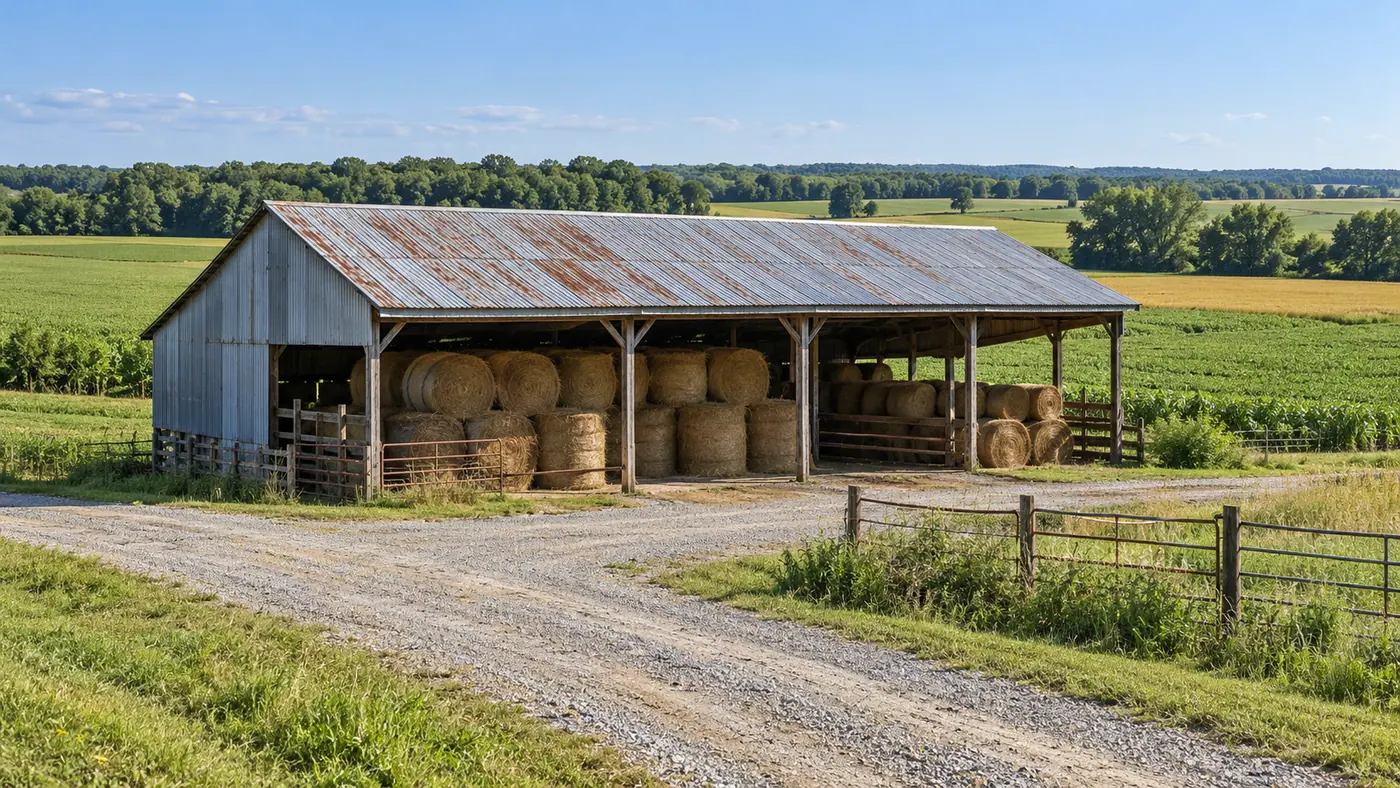
We do Guthrie metal roof coating on grain-handling, seed, and farm-supply buildings, starting with a cleaning that ordinary commercial roofs never need.
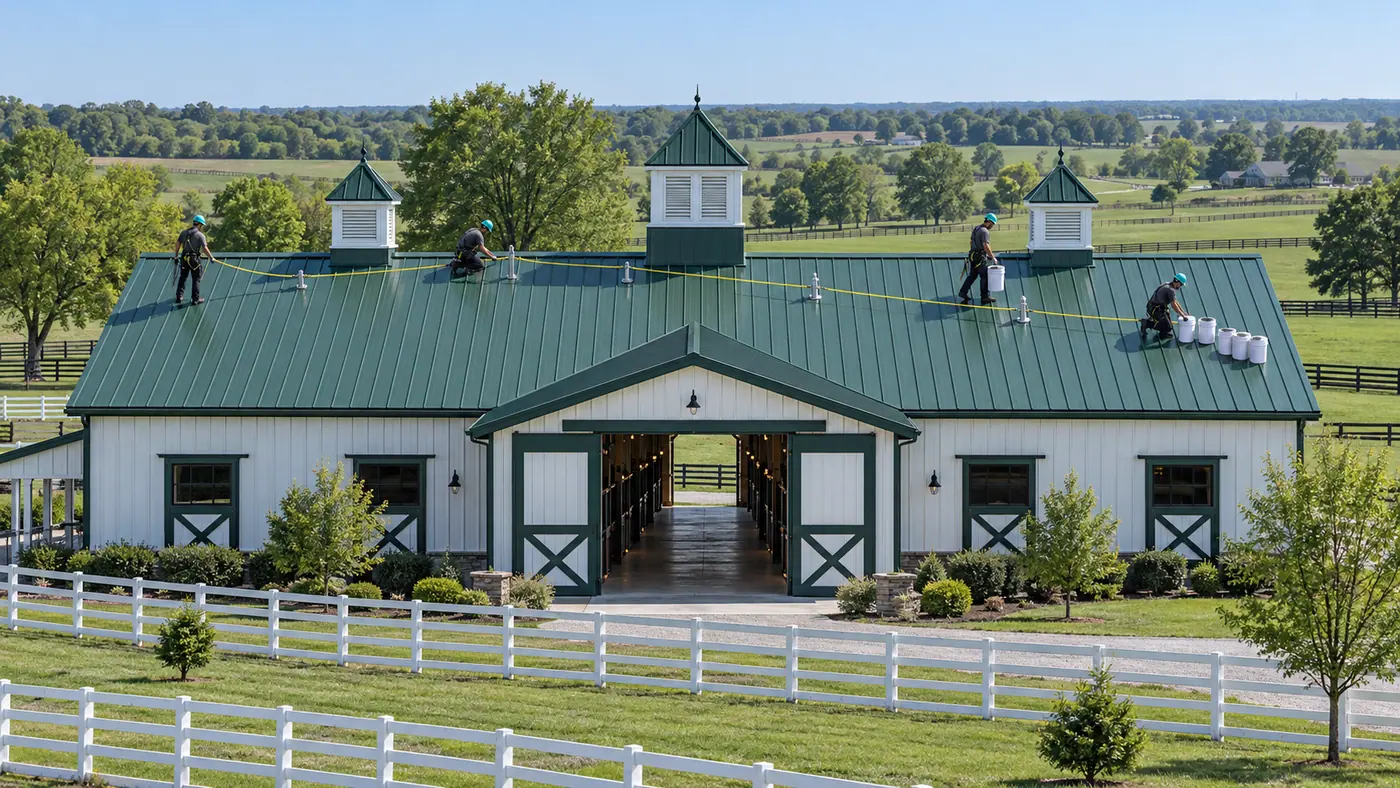
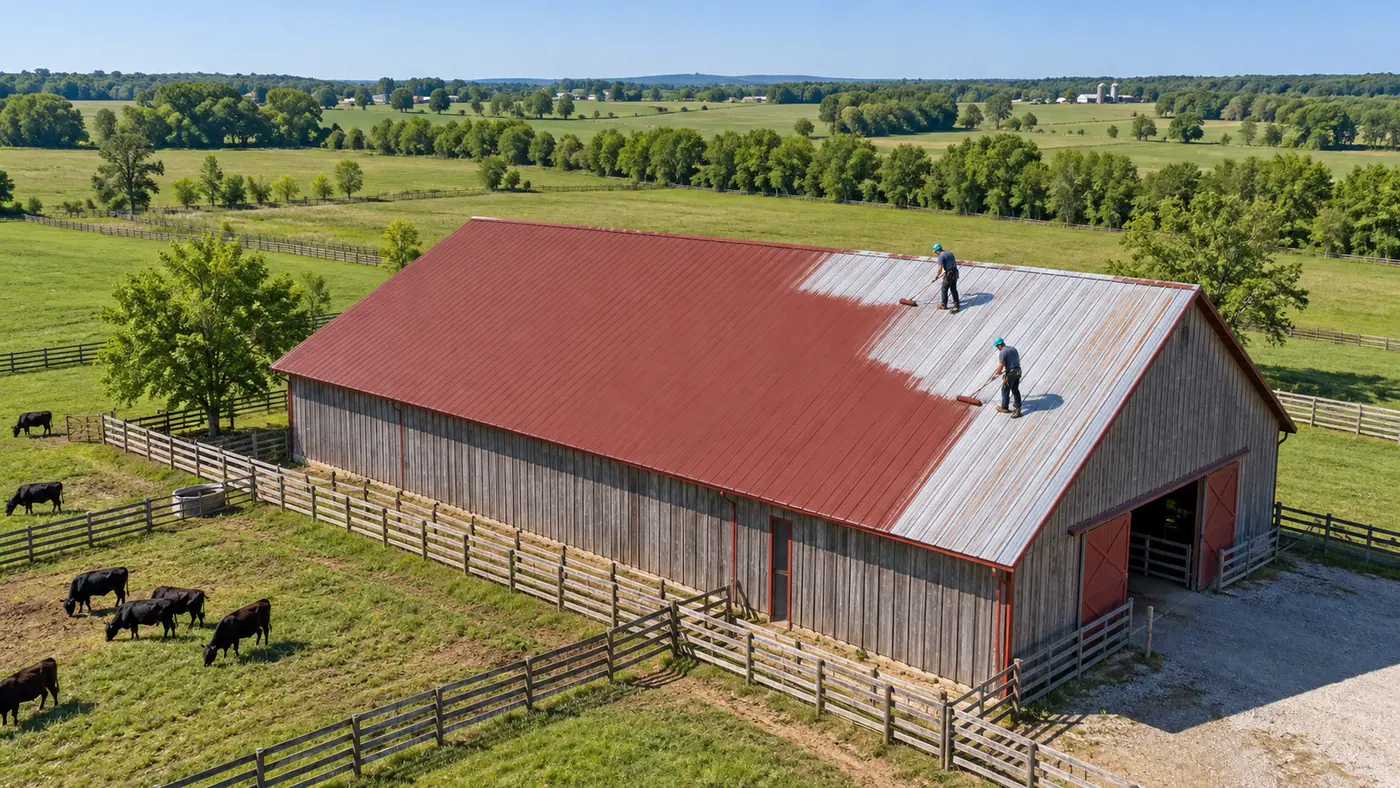
Grain-handling, seed, and farm-supply buildings around Guthrie can be coated once grain dust, chaff, and bird droppings are off the panels. Those residues hold moisture against the steel and keep primer from gripping, so cleaning runs longer than on an ordinary warehouse.
Roof vents and dust collectors get sealed curbs and protection during spraying. Tall eaves need lifts sized for the height, and coating days are timed around harvest traffic so lifts and crews stay out of the trucks’ way.
Residue, equipment, and height shape what goes wrong on these roofs. Here is what we look for in Guthrie.
For a Guthrie grain or farm-supply building, coating pays off in these ways.
With dust and droppings cleaned away, laps and screws are sealed under one coat, which keeps rain off stored seed and grain below.
Panels stay in place and work is scheduled around harvest, so loading and sales continue while the roof surface is renewed.
A coated surface keeps wet chaff off bare steel, so rust starts more slowly along the ribs and eaves.
Years later, a cleaned roof takes another coat of the same type, and the panels stay put.
These three systems fit most grain, seed, and farm-supply roofs around Guthrie.
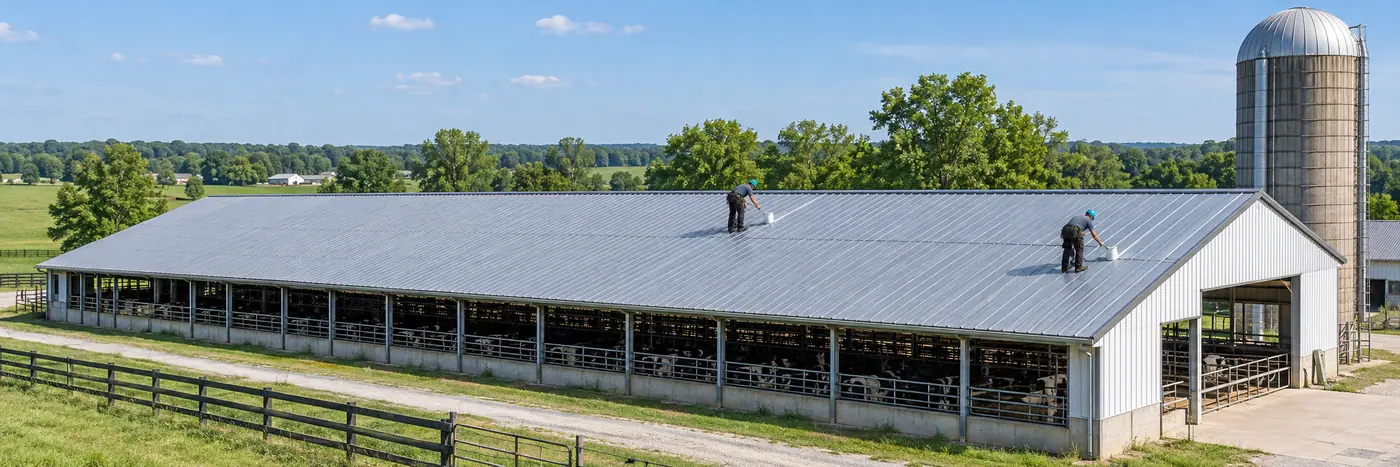
Exposed-fastener roofs on farm-supply buildings get screws, laps, and rust repaired, then a full coat across the cleaned panels and ridge caps.
Metal roof coating for farm buildings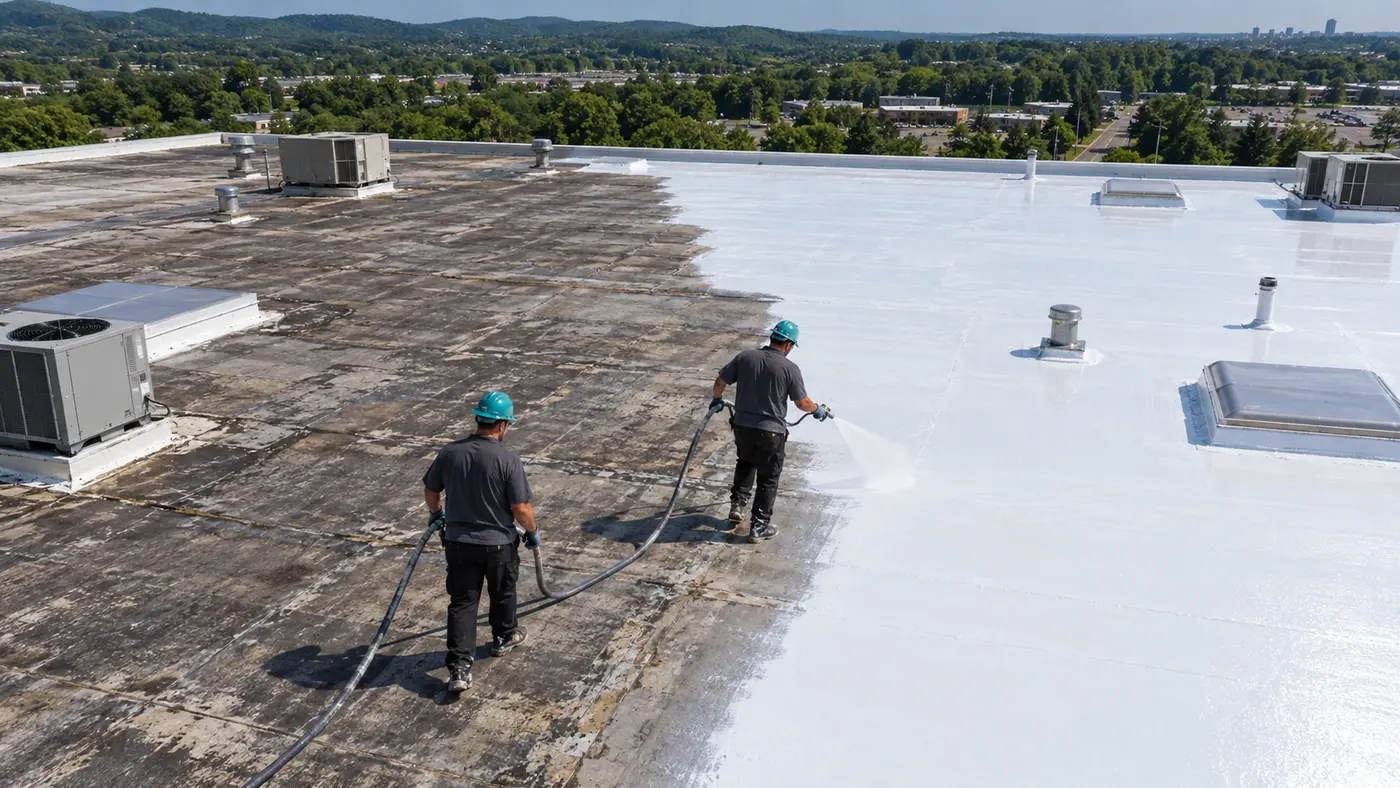
Low lean-to additions and loading canopies where water lingers get silicone, which holds up in wet spots better than acrylic.
Silicone coating for low sections
Seed storage or shop space under bare steel can take spray foam over the panels for insulation and a new surface, with edges detailed at the gutters.
Spray foam over farm building roofsCall us with your busy weeks and truck lanes. We plan lift positions and spray days so the roof work stays out of the way of loading.
Call UsFour steps for roofs that carry dust, chaff, and equipment curbs.
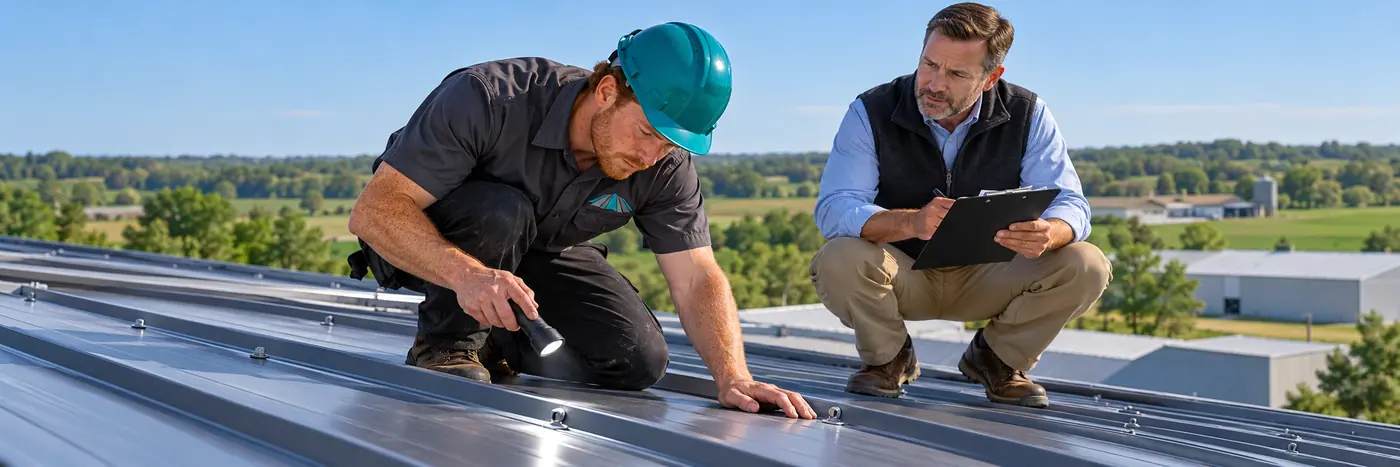
We walk the panels and note residue in the ribs, packed gutters, bird damage, and every vent and dust collector curb. Eave heights and truck lanes get measured for lift planning.
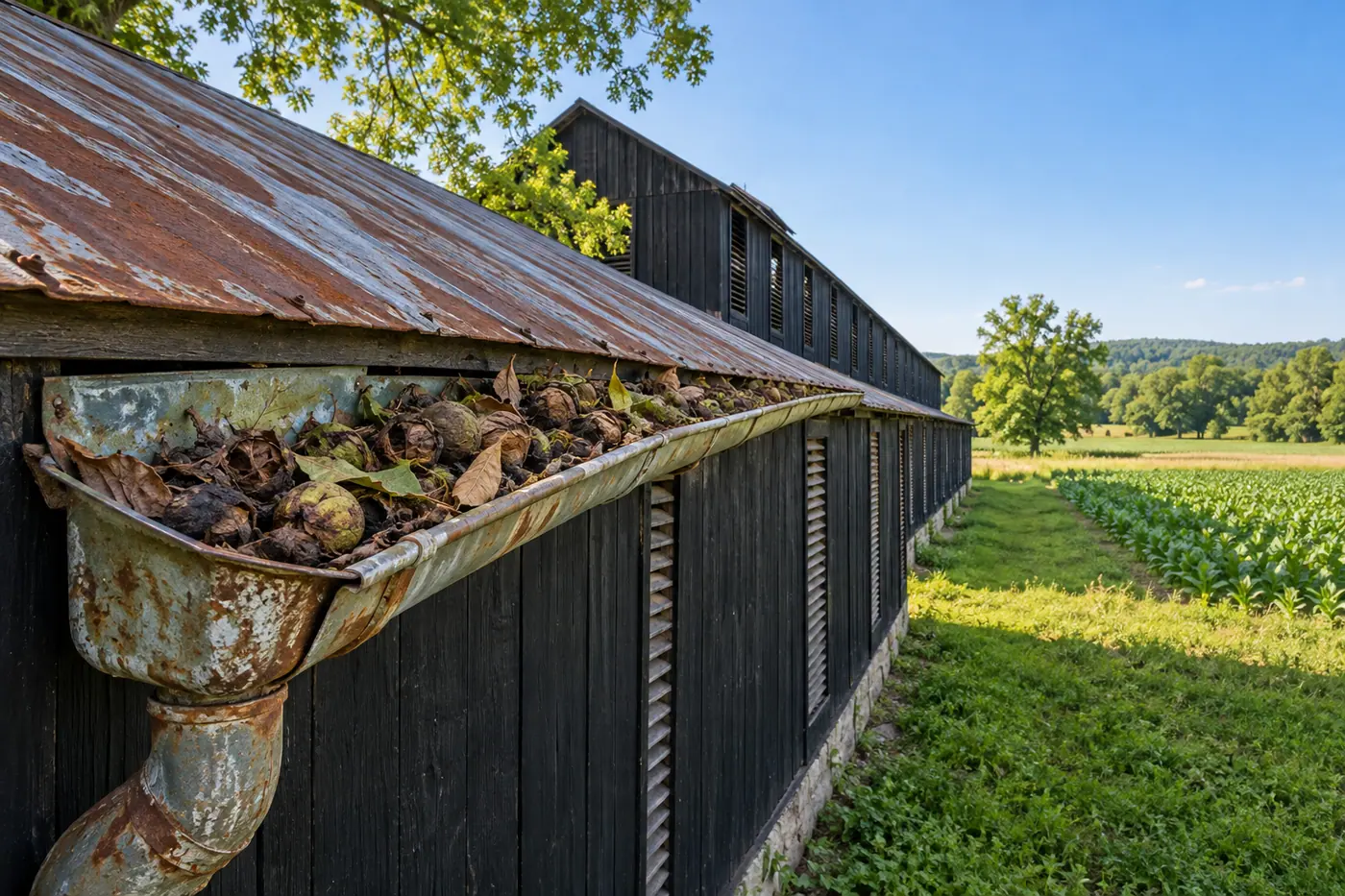
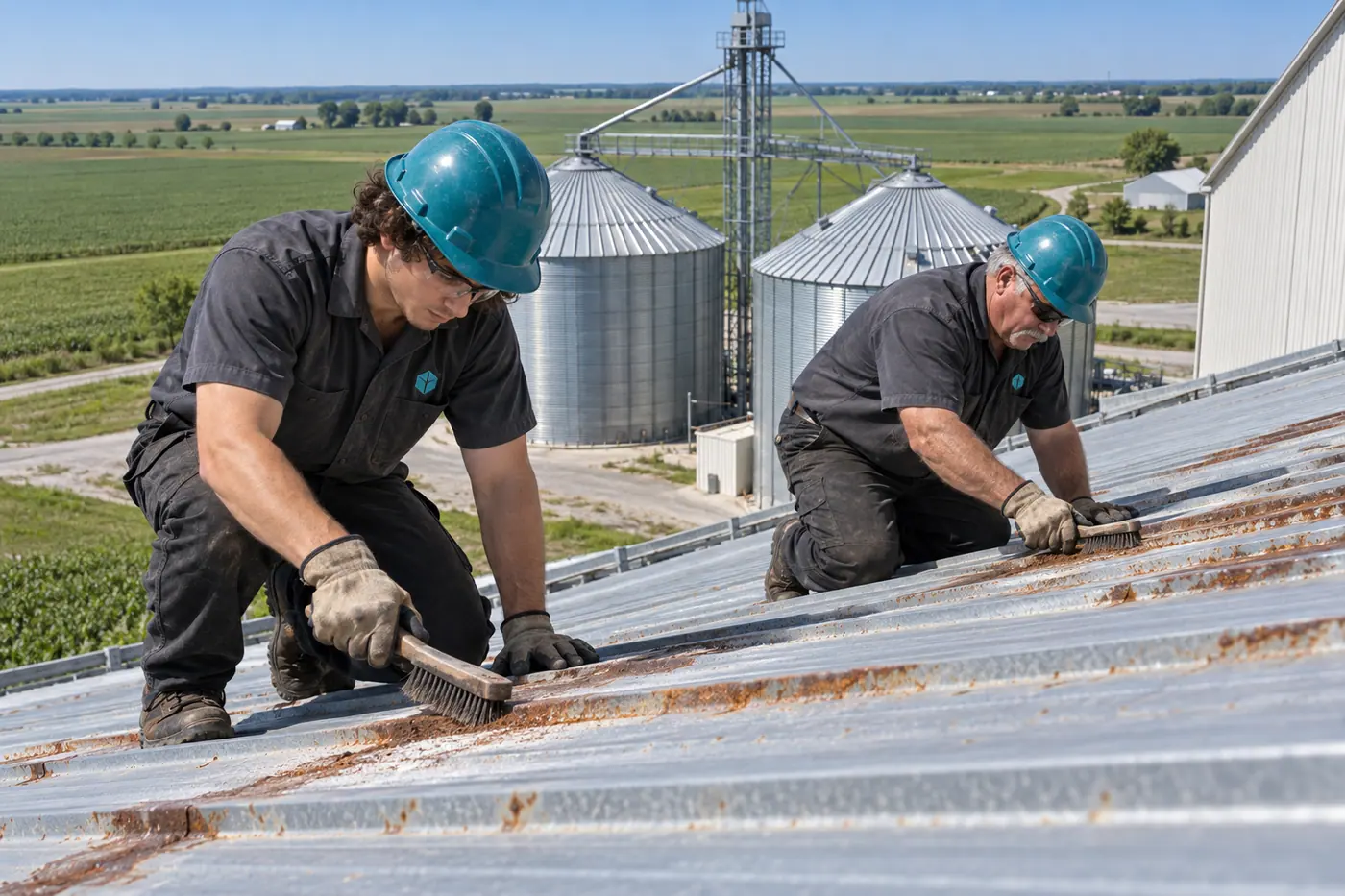
Dust, chaff, and droppings are scraped and washed out of every rib and gutter, then the steel dries completely before any primer touches it.
Vent and dust collector curbs get fabric where they meet the panels, rust spots get primer, and equipment openings are covered for spraying.
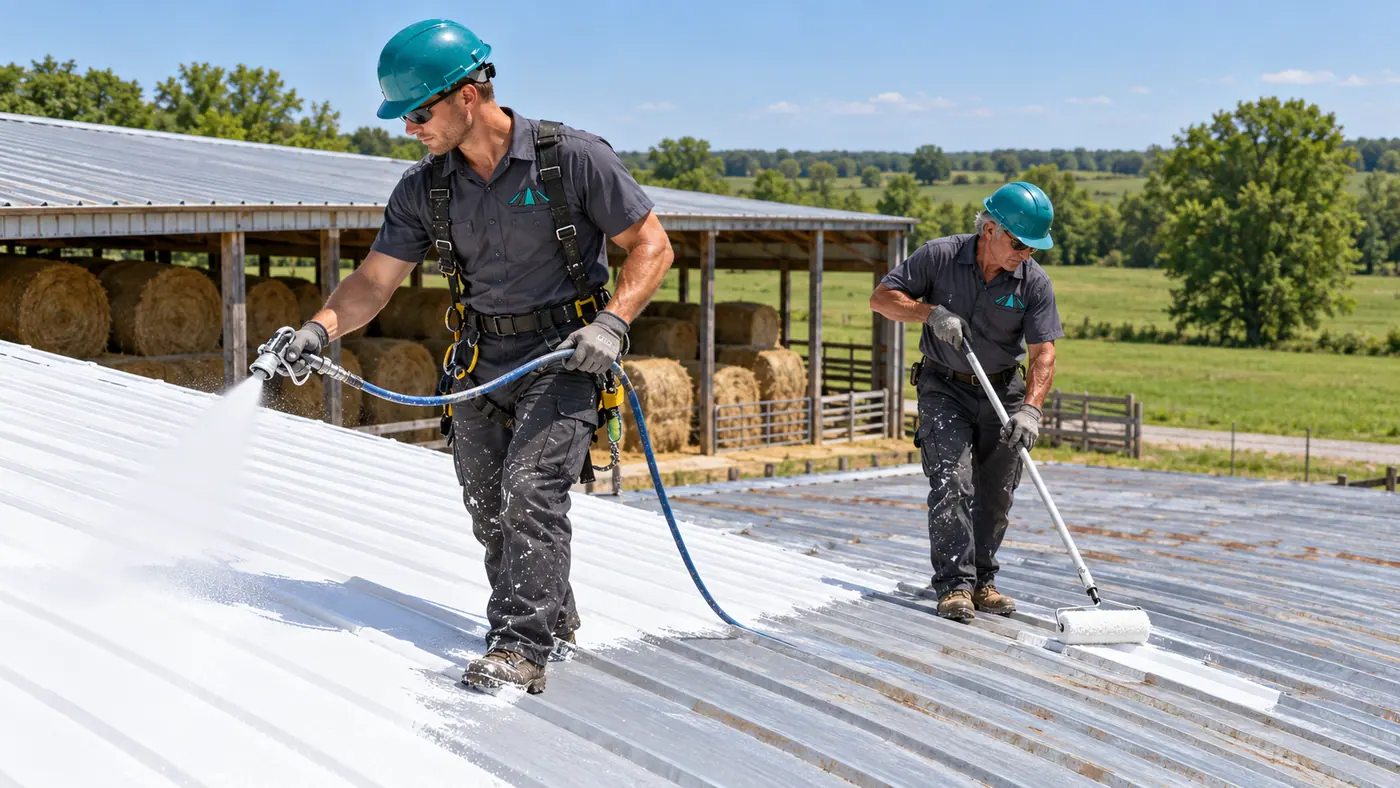
Lifts park outside harvest traffic, and the field coat goes on at the specified thickness. Covers come off the vents once the coat has set.
Building elsewhere in the Pennyrile? Call us or send us a message. Besides Guthrie, we coat commercial metal roofs in Hopkinsville and five more towns.
Metal shops in the county seat where hardened screw washers are often the first fix.
Strip centers where odor from spraying is kept out of the stores below.
Boat storage roofs where water behind curbs calls for silicone.
Older equipment buildings with purlin rot checked at every eave.
Shops weighing coating against tear-off once flexing panels are counted.
Roofs rebuilt after the storm, where replacement panels need mill oil cleaned off.
What Guthrie owners ask before coating ag and farm-supply roofs.
Yes, once grain dust, chaff, and bird droppings are cleaned off the panels. Those residues hold moisture against the steel and keep primer from bonding, so cleaning takes longer than on a typical warehouse.
Roof vents and dust collectors get sealed curbs and protection during spraying, tall eaves need lifts sized for the height, and gutters are cleared of packed grain residue.
It holds when the curb is detailed right. The collector housing and its curb get fabric where they meet the panels, and the area is covered during spraying. Dust that settles later should be washed off now and then, since residue on the coat lowers reflectance and holds moisture against it.
Call the city first. The City of Guthrie has its own local building inspector on the Kentucky DHBC contact sheet for Todd County, and the state inspector covers places without a local office, such as nearby Elkton.
Bring the roof area, whether any panels or ridge caps need replacing, and whether spray foam is planned, so the inspector can say quickly whether a permit applies.
It turns on the town and the scope. Recoating in place is treated differently from tearing off panels or changing framing. Guthrie and Oak Grove have their own inspectors, Hopkinsville shares one with Christian County, and Cadiz shares one with Trigg County.
Princeton and Elkton rely on state inspectors, and Dawson Springs owners start with city offices. Panel replacement, structural repairs, or foam weight raise the odds of a permit.
Outside harvest, on dry days with temperatures inside the product’s limits. Lifts and crews need room away from truck traffic, and coatings need dry steel to stick, so spring and summer stretches away from harvest are common windows, set with you around your own loading schedule.
Vents near the spray area are shut down or covered while the coat goes on, so overspray stays out of the building and off the fan. They reopen once that section has set. We plan which vents go down and when with you, so ventilation for stored grain is interrupted as little as possible.
Get a free ballpark number from the roof size, or call and tell us about your harvest weeks and eave heights.
Leave a name and number and we will call you back about your commercial roof. Or call now: (270) 236-5496.