Water Dammed Behind A Curb
- You See
- A dirt ring on the uphill side of a rooftop unit curb after the roof dries.
- What It Means
- The curb blocks flow. Cricket flashing behind it turns water around the unit before the silicone goes down.

We install silicone roof coating on low-slope commercial roofs in Hopkinsville, where water lingers at gutters, curbs, and sagging purlins after a rain.
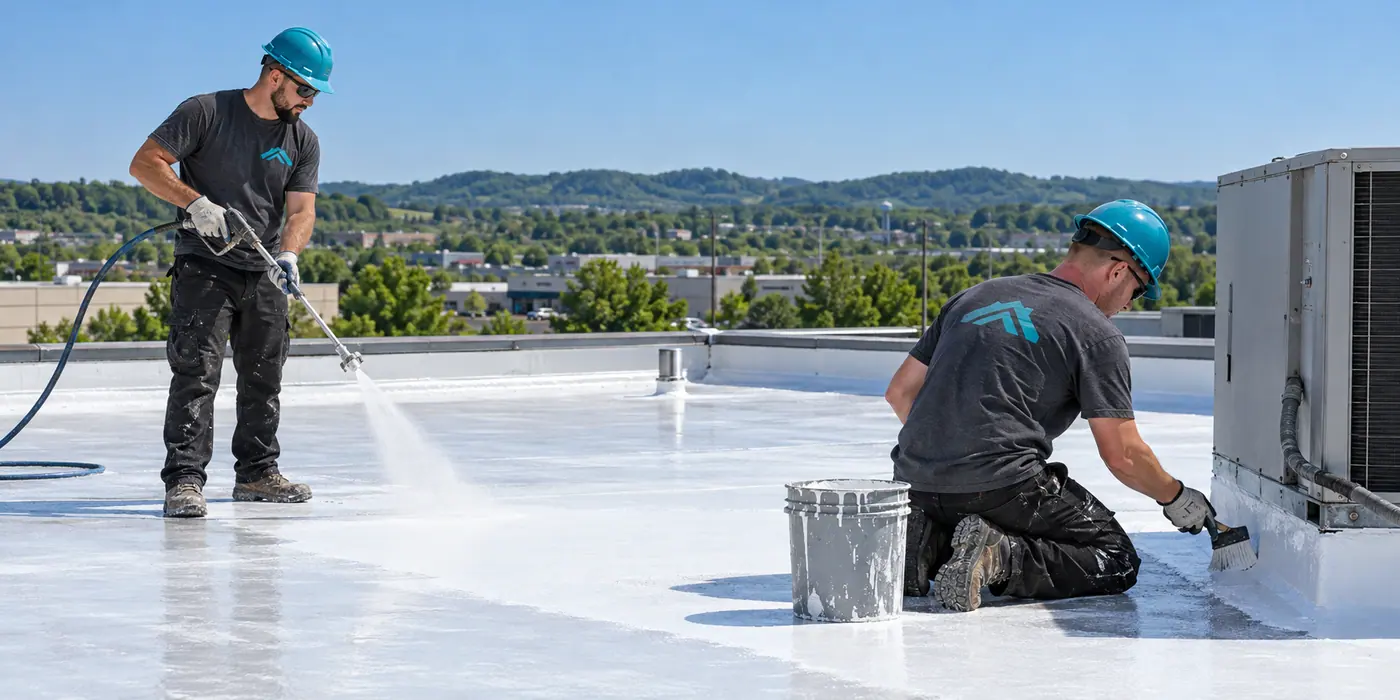
Silicone earns its place on roofs that hold water. These rows show when it fits now and when another repair comes first.
| What We Find | Silicone Fits | Fix First |
|---|---|---|
| Water for a day behind a curb | Yes, after a cricket check | Cricket flashing if the curb dams water |
| Slow gutters at a low eave | Yes, once gutters drain | Clear and size the gutter and downspout |
| A dip at a sagging purlin | After the framing repair | Straighten or reinforce the purlin |
| Firm old acrylic coating | Yes, with a primer test patch | Scrape off peeling areas |
| Old silicone coating | Yes, silicone over silicone | Wash off dirt pickup |
Silicone holds up in standing water, and the reason water stands is still checked first.
Low pitch slows drainage, so water finds the same few spots. Each one shapes how the silicone job is planned.
Silicone pairs with other work on low-slope roofs. These three combinations come up most.
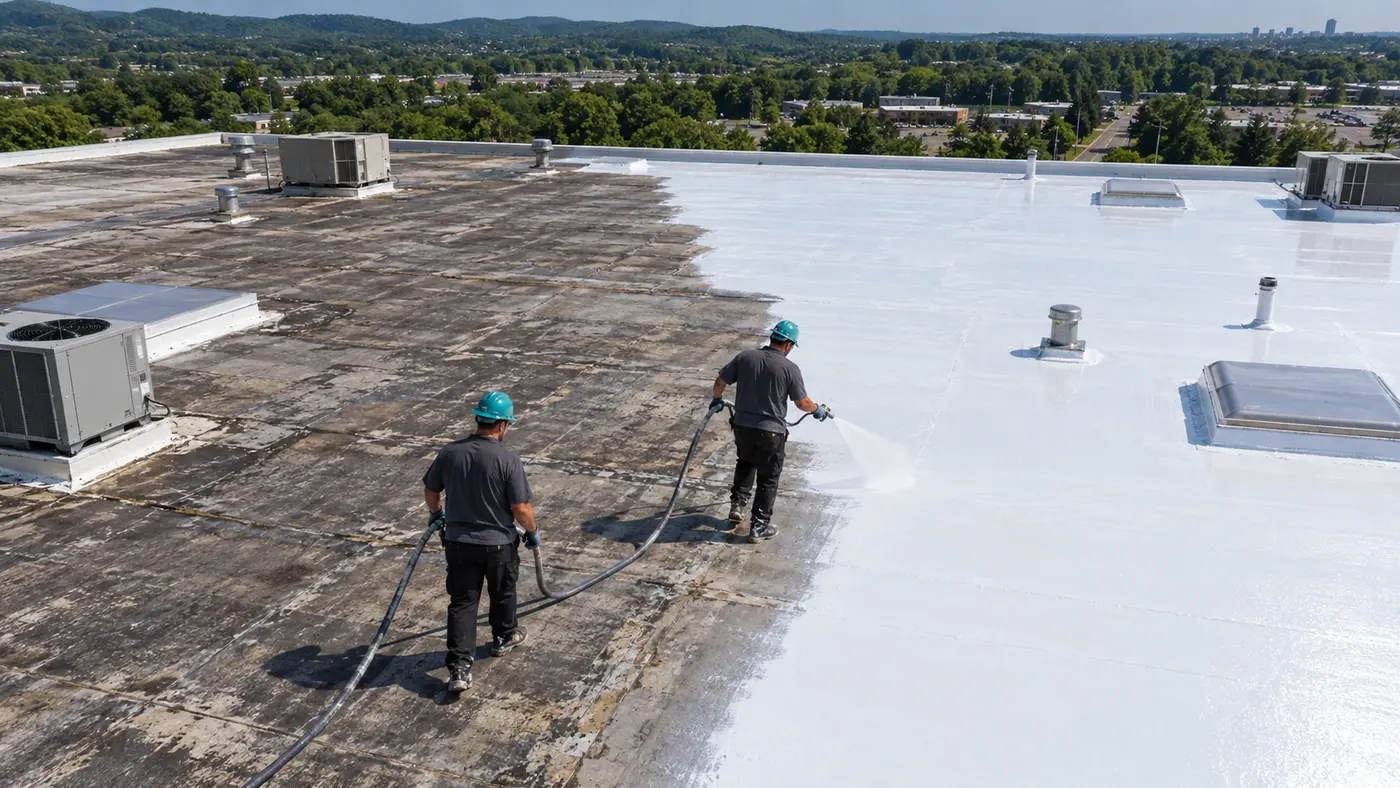
Low-pitch R-panel and standing seam sections get primed rust, fabric at every lap, and a silicone field coat that sheds lingering water. See metal roof coating for the panel prep.
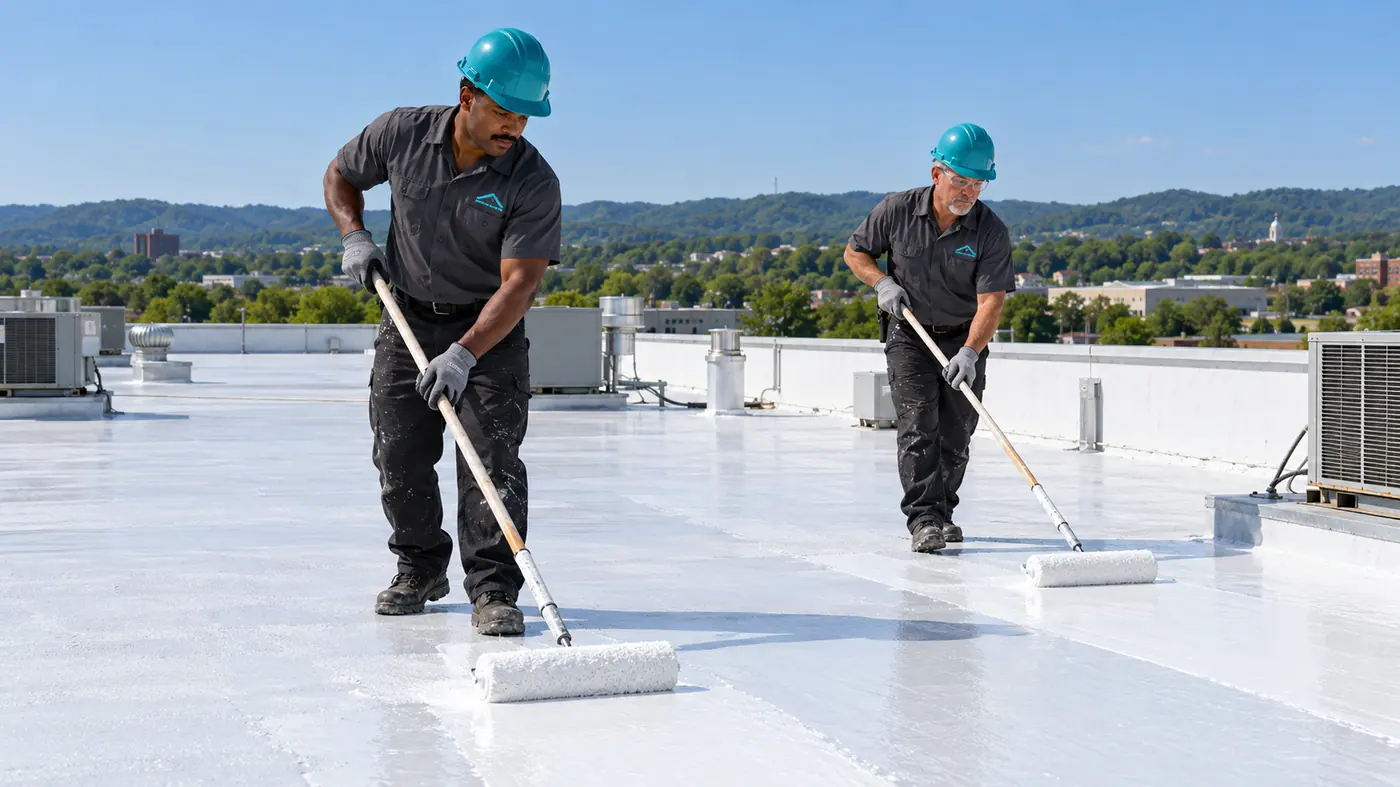
Mixed roofs can carry an acrylic field with silicone only where water sits, such as behind a curb or along a slow gutter. Each area is recoated with its own product later.
Acrylic roof coating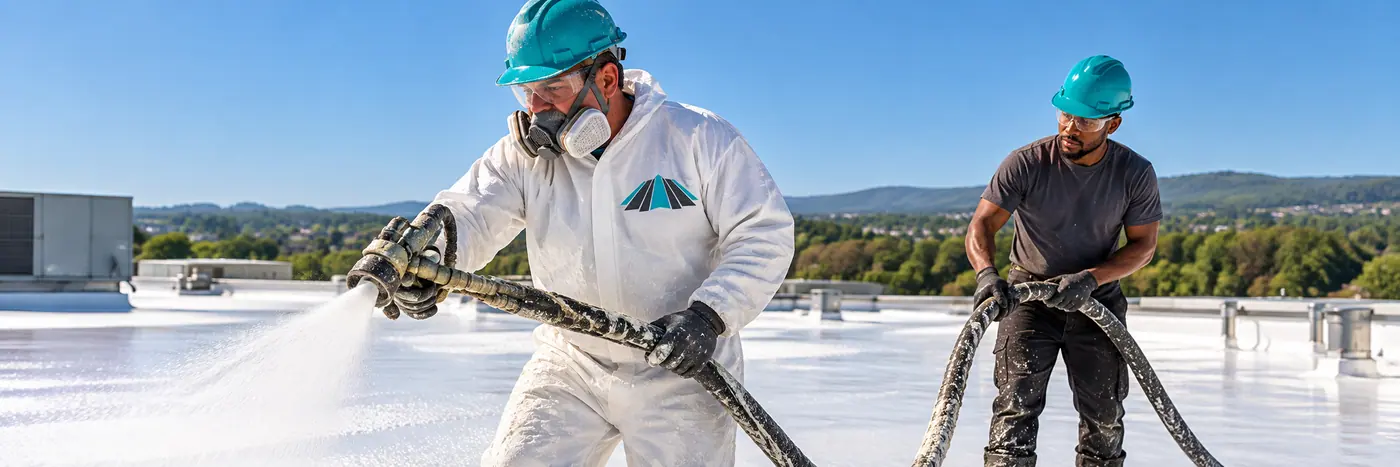
Spray foam roofs need a protective topcoat, and silicone is a common choice where the foam surface holds a little water near drains or curb flashing.
Spray foam roofingOn low-slope roofs, these gains depend on fixing why water stands before the coat goes on.
Silicone stays firm in the wet spots that soften and wear acrylic, such as the gutter line and the uphill side of a curb.
Application weather can be cooler and less settled than acrylic allows, which helps on a Kentucky roof where damp weeks shorten the coating season.
Years from now, a clean silicone surface takes another silicone coat with no tear-off, provided the panels and deck below are still dry.
White silicone reflects more sunlight than bare or rusted panels. Dirt pickup dulls it, so a light wash keeps the roof surface working.
Call us with where the water sits and how long it stays. A curb, a gutter, or a sagging purlin each needs its own repair before silicone.
Call UsFour stages, starting with the reason water stands on your roof.
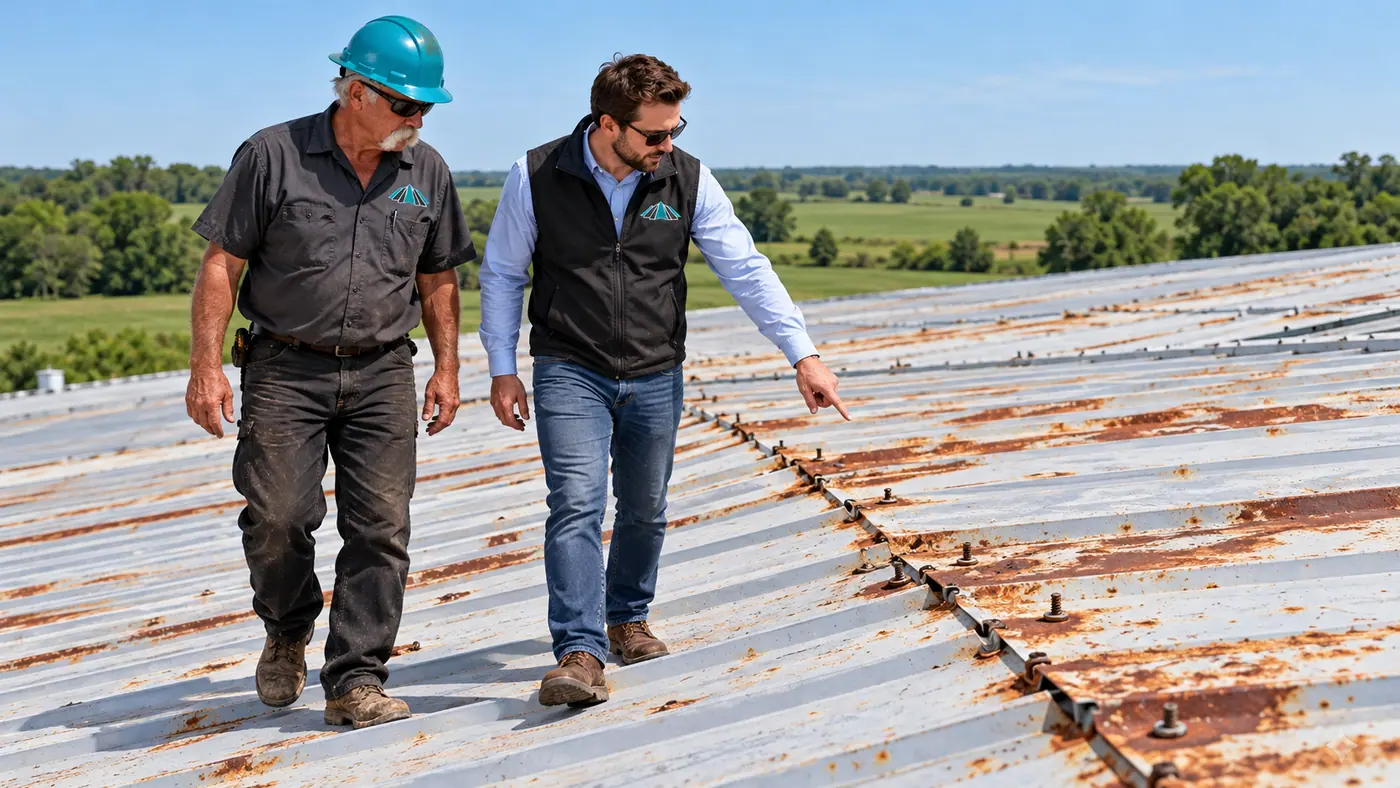
We walk the low runs after rain, mark where water lingers, and trace each wet area to a curb, a gutter, or a dip in the framing. Laps and screws are checked along the way.
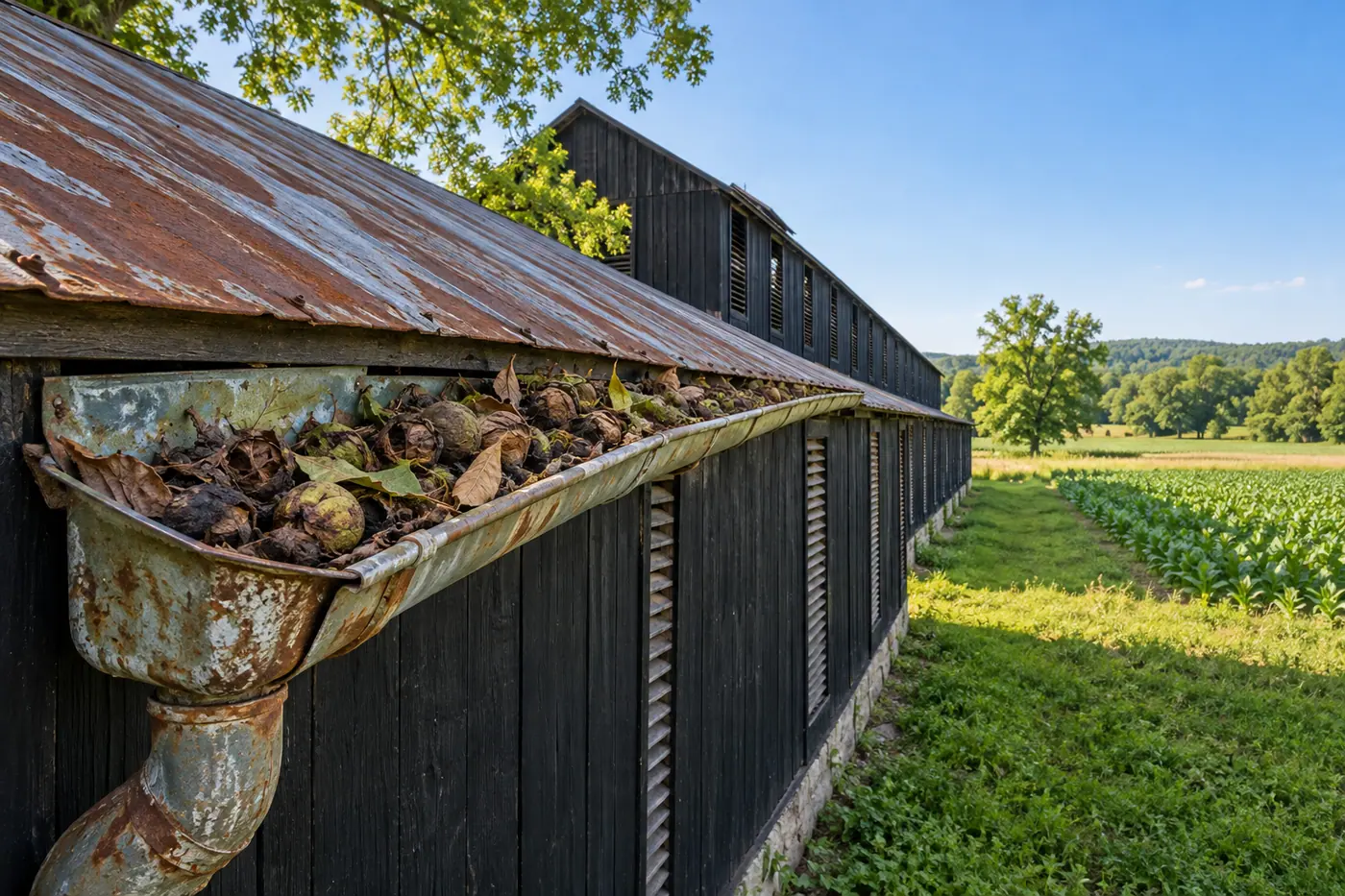
Gutters and downspouts are cleared and sized for the roof area. Crickets go in behind curbs, and sagging framing is repaired before anything covers it.
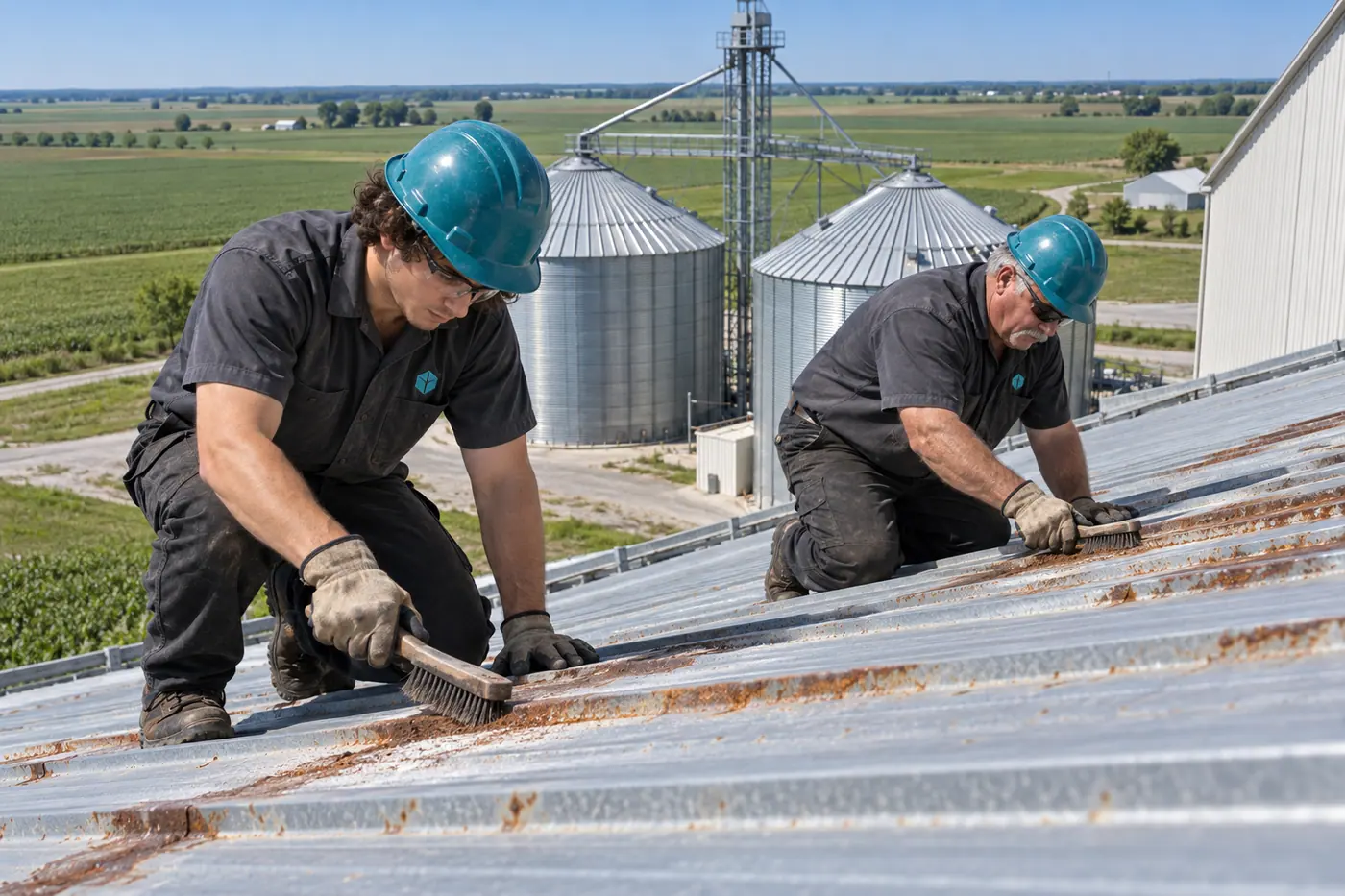
Panels are washed and dried, rust is primed, and every side lap and end lap gets fabric or seam sealer that stretches as the steel moves.
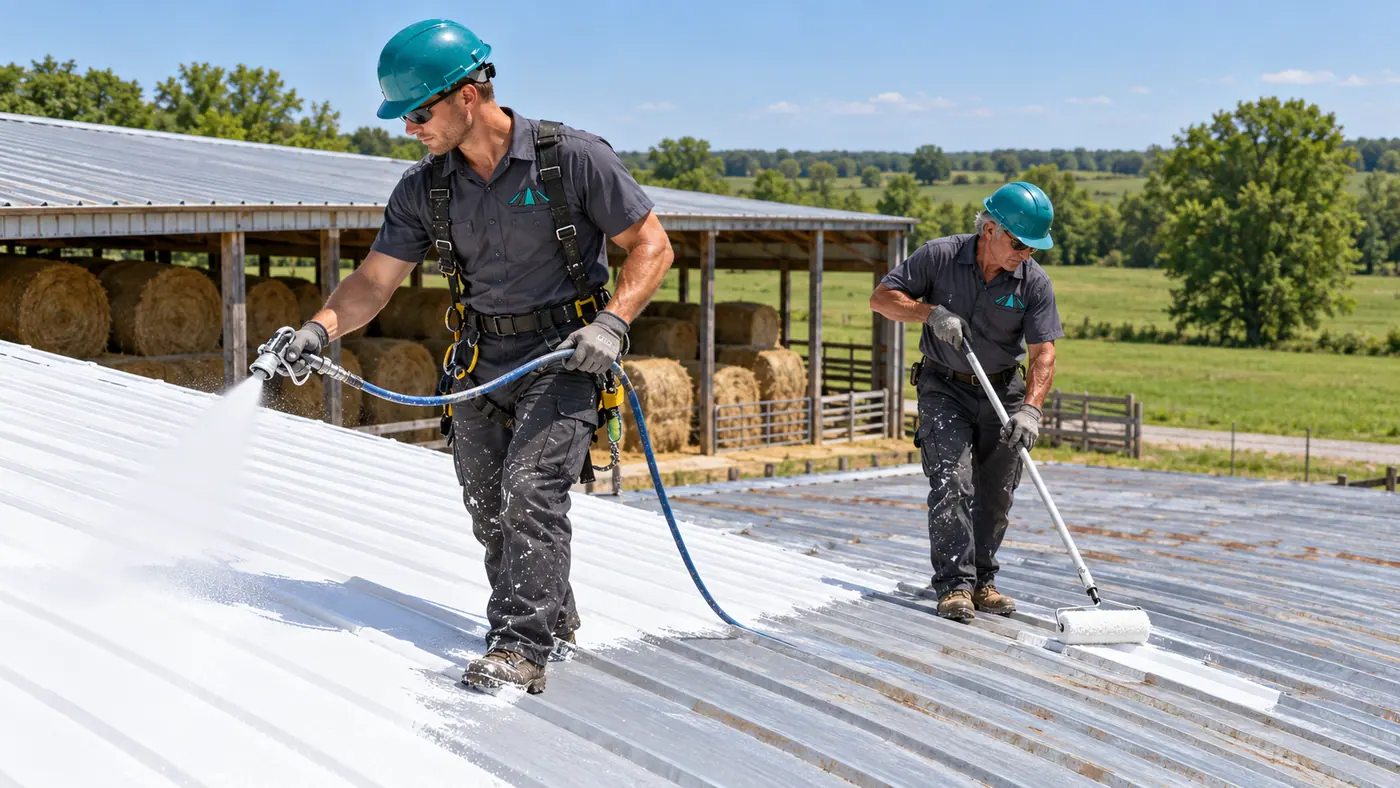
Silicone is applied to the specified thickness across the field and built up at the wet spots, then measured and touched up where it runs thin.
Low-slope roofs often share a building with other roof types. These systems cover the rest.
Start with metal roof coating prep if the roof has backed-out screws and red rust at the end laps.
See metal roof coatingPick acrylic for steeper sections that drain within minutes, so water never rests on the film.
See acrylic roof coatingChoose spray foam over the panels when the building needs insulation and a smoother surface over the ribs.
See spray foam roofingWhat owners of low-slope roofs ask before a silicone job.
Silicone fits low-slope metal where water lingers, and acrylic suits steeper roofs that drain fast. Both reflect sunlight in white, and both need clean, primed steel.
Silicone holds up in standing water and has a wider weather window; acrylic stays cleaner on steep slopes and takes acrylic recoats easily. Compare reflectance values in the Cool Roof Rating Council directory.
Often, once the old acrylic is tested. Firm acrylic is washed, and a small test patch with the right primer shows whether the silicone grips it. Peeling or chalky areas are scraped back first. Going the other way, acrylic over silicone, performs poorly, so later recoats on that roof stay silicone.
Laps get extra material because panels move against each other there. Each side lap and end lap is cleaned, then covered with polyester fabric bedded in a base coat, or with a flexible seam sealer, before the field coat.
End laps on long runs need the most care, since water crosses them downslope. On standing seam roofs, seam ends and field-cut seams are sealed.
Yes. Every curb, pipe boot, and exhaust fan base is wrapped with fabric where it meets the panel, and the uphill side of a large curb is checked for a cricket. Silicone then runs over those details as part of the field coat, and the wet side of each curb gets a thicker build.
Yes, wet silicone is slick underfoot. Anyone servicing rooftop units should use the same walk paths every visit, and walkway pads can be set along those paths during the coating job. That also keeps service traffic off the areas near curbs and drains.
Keep it clean and keep water moving. Silicone collects dust, so a light wash every few years brings back its reflectance. Clear gutters each fall, check curb flashing after heavy storms, and call when a cut or blister appears. Small damage is patched with silicone before water gets under the edges.
Enter your roof size for a free ballpark range, or call and tell us where water sits after a storm.
Leave a name and number and we will call you back about your commercial roof. Or call now: (270) 236-5496.