Oak Grove
Christian County address, but its own local inspector on the Kentucky DHBC sheet. A Hopkinsville permit answer for identical screw and lap work does not carry over.

We provide metal roof coating near Hopkinsville in six towns across Christian, Trigg, Caldwell, Todd, and Hopkins counties.
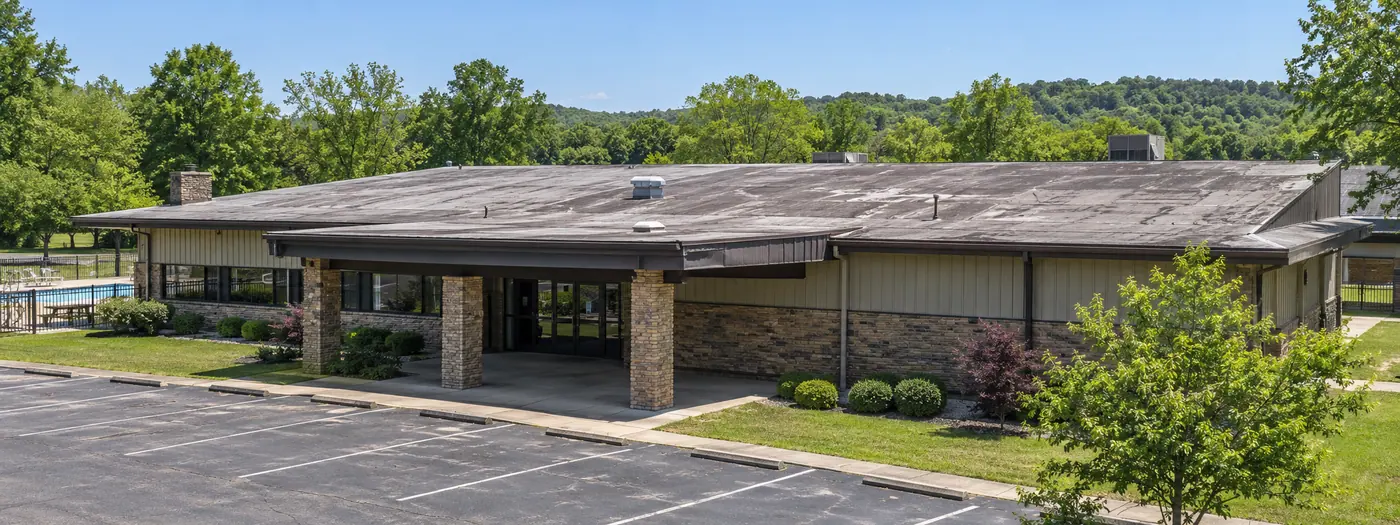
Is your building just outside these towns? Call us or send us a message and ask. We coat commercial metal roofs in Hopkinsville, Oak Grove, Cadiz, Princeton, Elkton, Dawson Springs, and Guthrie.
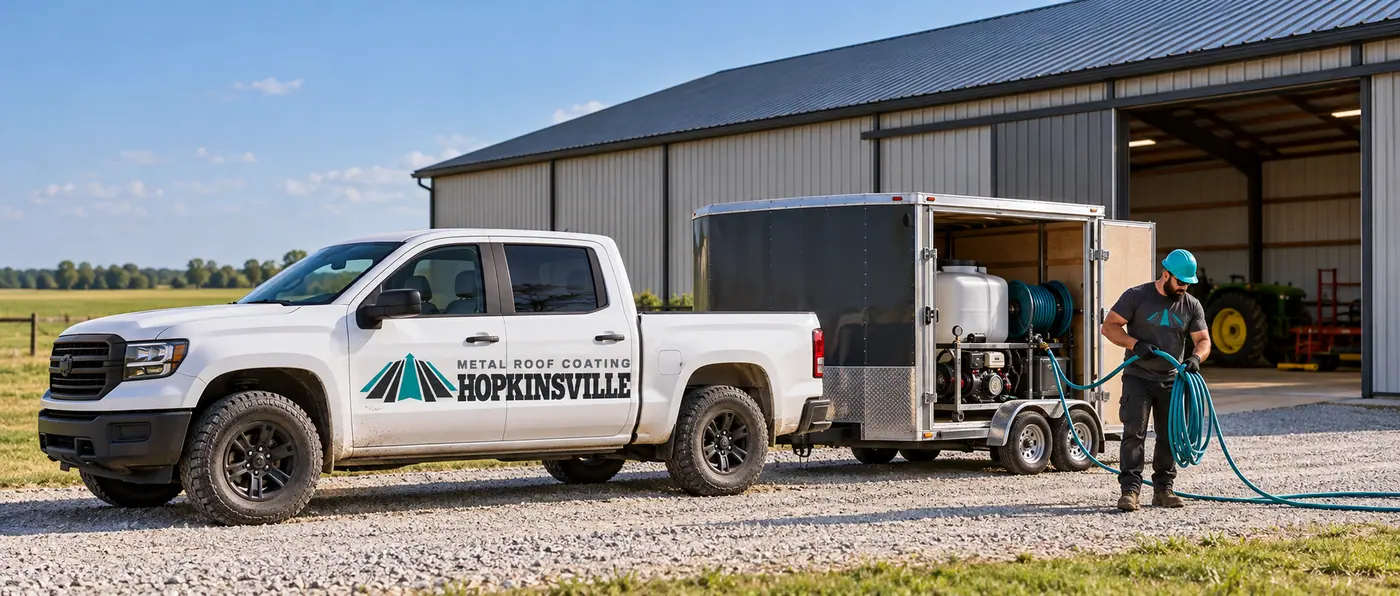
Warehouses, shops, churches, and storage rows in Hopkinsville, where the city and Christian County use the same local building inspector.
Storefronts and storage buildings near the Tennessee line that stay open during coating and follow Kentucky code through Oak Grove’s own inspector.
Boat storage, marine service shops, and downtown storefronts in Trigg County, where one shared office handles the city and county.
Machine sheds and equipment buildings around Caldwell County, often roofed decades ago with nails into wood purlins.
Todd County shops and commercial buildings, where owners check with the state inspector and decide between coating and new panels.
Hopkins County buildings repaired after the December 2021 tornado, with fresh steel sitting beside original rusted panels.
Seed, grain, and farm-supply buildings with tall eaves, where Guthrie’s city inspector is the first call.
Call us after wind or hail and describe what moved: ridge caps, rake trim, skylight panels, or gutters. Photos you take now help your insurance carrier too.
Call UsThe roof work is the same everywhere. The permit office, the power provider, and the buildings change, so each card notes what to check first.
Christian County address, but its own local inspector on the Kentucky DHBC sheet. A Hopkinsville permit answer for identical screw and lap work does not carry over.
City and Trigg County share one local inspector, so a downtown storefront and a lake shop are one call. Lake moisture adds a mildew wash and longer dry-out to the prep.
Caldwell County lists a state building inspector and no local one. Call city offices first, then the state inspector, especially before panel swaps or foam over the metal.
No Elkton inspector appears on the Todd County sheet, so owners start with city hall or the judge-executive’s office. Pennyrile Rural Electric is the call for low lines near the roof edge.
Hopkins County’s sheet names Madisonville and the county plus a state inspector; Dawson Springs itself is absent from it. Rebuilt roofs here need prep for both new and original panels.
Todd County again, yet Guthrie keeps its own local inspector. Grain residue on farm-supply roofs means a longer cleaning step before primer will bond.
Answers about permits, weather, and scheduling across the towns we cover.
Hopkinsville and unincorporated Christian County share one local building inspector on the Kentucky DHBC contact sheet, so the city is a simpler call than towns with split roles. Ask whether recoating in place needs a permit, whether new panels or ridge caps change that, and whether lifts on the street need approval. Keep the answer with your roof records.
Usually inspectors treat them differently. Recoating an existing surface is a smaller scope than tearing off panels, changing framing, or adding the weight of spray foam. Those larger jobs raise the odds that a permit applies, so the question to the local office should name exactly which work is planned.
Keep it with your roof records, along with the name of the person you spoke with and the date. The next owner, tenant, or insurer can then see what was approved for the panels, ridge caps, or foam, and a later recoat starts from a known record instead of a guess.
Hot, humid summers and cold nights push panels through constant expansion and contraction, which opens laps and loosens screws. Condensation and wet springs keep moisture at the laps, and severe storms come through each spring, with the National Weather Service office in Paducah covering Christian County. A flexible coat with reinforced laps rides along with that movement.
Dry stretches with mild nights in late spring, summer, and early fall give the widest windows. Acrylic needs warmer, dry days to cure, while silicone tolerates more of the calendar. Screw and panel repairs can happen in colder months so the coat is ready to go on once the weather turns.
It changes the prep more than the coating. Buildings on damp ground see more condensation, mildew, and rust on panel undersides at the eave, so cleaning includes a mildew wash and a longer dry-out before primer. Coating days are picked when morning dew has burned off the steel.
Yes. Owners with a shop in Princeton and storage in Cadiz, for example, get one roof walk per building and a combined plan. Each building keeps its own permit check, since the offices differ by town, and the coating days are grouped by weather and travel between the sites.
Call and ask. We list the towns where we coat commercial roofs regularly, and a building just past one of them is often close enough. Give us the address and the roof type, and we will tell you plainly whether it is in reach.
Send the building’s roof size for a free estimate range, or call with the town and what the panels look like today.
Leave a name and number and we will call you back about your commercial roof. Or call now: (270) 236-5496.