R-Panel And Standing Seam

Hopkinsville Commercial Metal Roof Coating

Commercial metal roof coating in Hopkinsville for exposed-fastener R-panel and standing seam roofs. Every screw, lap, and rust spot is repaired before we coat the panels.

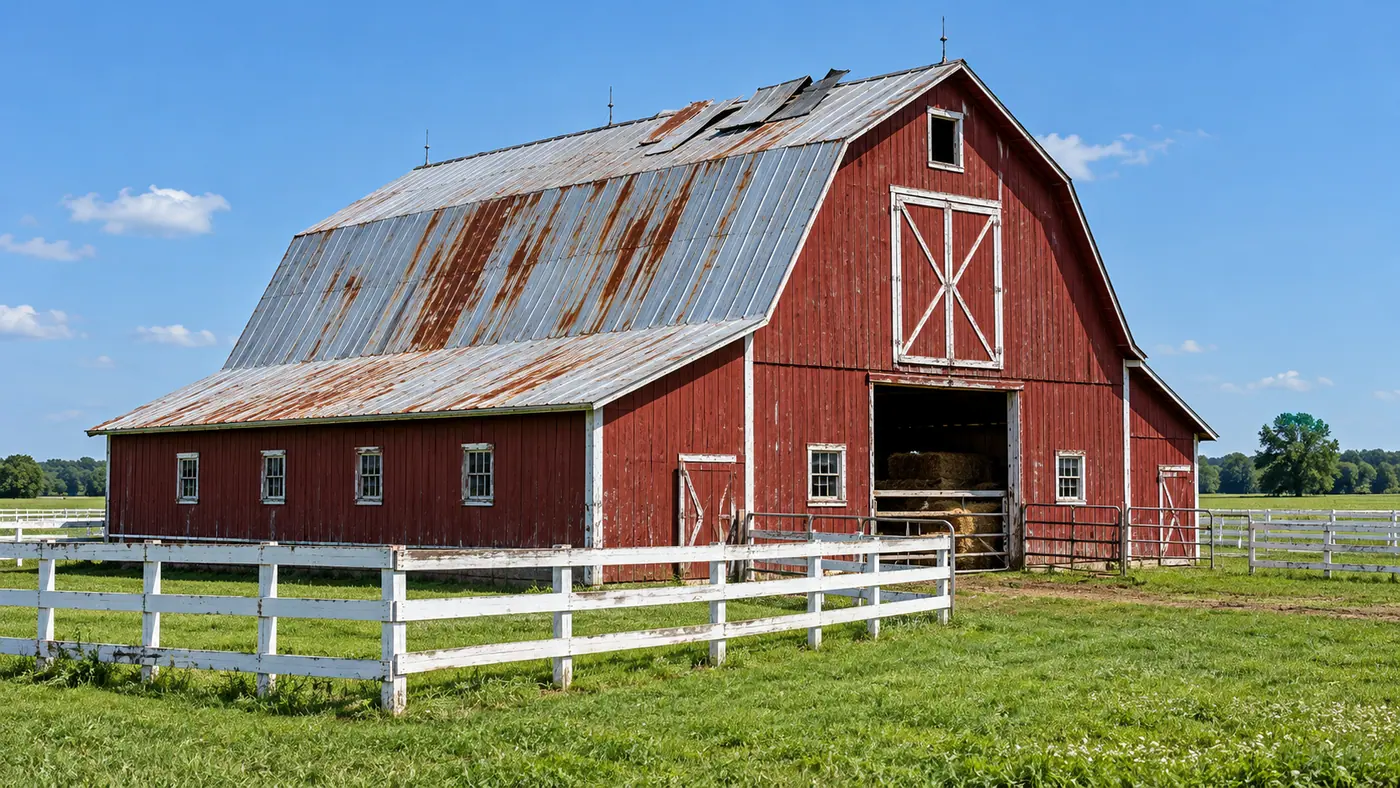
Roofer sealing the seams on a metal barn roof
  • Every screw checked
  • Laps reinforced with fabric
  • Rust ground to firm steel
  • Panel-by-panel roof walk

Is This Roof A Fit?

Two panel styles cover most metal roofs we see. They leak in different places, so the prep list changes with the panel.

Prep ItemExposed-Fastener R-PanelStanding Seam
Main leak pointsScrew washers, side laps, end lapsEnd laps, seam ends, curbs, trim
Fastener workTighten, upsize, or replace loose screwsClips stay hidden; trim screws get checked
Seam treatmentReinforcing fabric over the lapsSealant at seam ends and transitions
Panel movementLower; panels are fastened tightHigher; panels float on clips
Ready to coat whenSteel is firm under surface rustSeam caps and trim are tight

Rust holes along the bottom edge of a lap, or panels that flex underfoot, move a roof from coating to panel replacement first.

Metal Panel Problems We Fix Before Coating

These conditions show up on R-panel and standing seam roofs across Christian County. Each one is repaired before a coat touches the panels.

Sun And Heat

Hardened Washers Under Screw Heads

You See
Rubber washers that are cracked, flattened, or missing under the screw head.
What It Means
Water follows the screw shank down into the building. Each screw is snugged, upsized to bite fresh steel, or replaced, then sealed.
Panel Movement

Side Laps Gapping Open

You See
A dark line of dirt along the side lap and drips that follow the panel rib inside.
What It Means
The overlap opened as panels grew and shrank. Laps are cleaned and covered with fabric bedded in a base coat.
Moisture

Rust Holes At The End Laps

You See
Pinholes or soft steel along the bottom edge where an upper panel overlaps a lower one.
What It Means
Primer and coating alone will tear over an open hole. These spots get a metal patch or a replacement panel first.
Equipment

Gaps Where Standing Seams End

You See
Sealant pulled away where standing seams stop at a curb, the ridge, or the eave.
What It Means
Seam ends and transitions are where a standing seam roof leaks. They are resealed with a flexible detail before the field coat.
Age

Brittle Skylight Panels

You See
Yellowed translucent panels with cracks spreading out from their fasteners.
What It Means
Cracked panels are swapped for new ones. Intact panels stay uncoated to pass daylight, with their laps and screws sealed.

Commercial Roof Coating Options for Hopkinsville

Metal panels take three systems well. The slope of the roof and where water sits decide which one we put down.

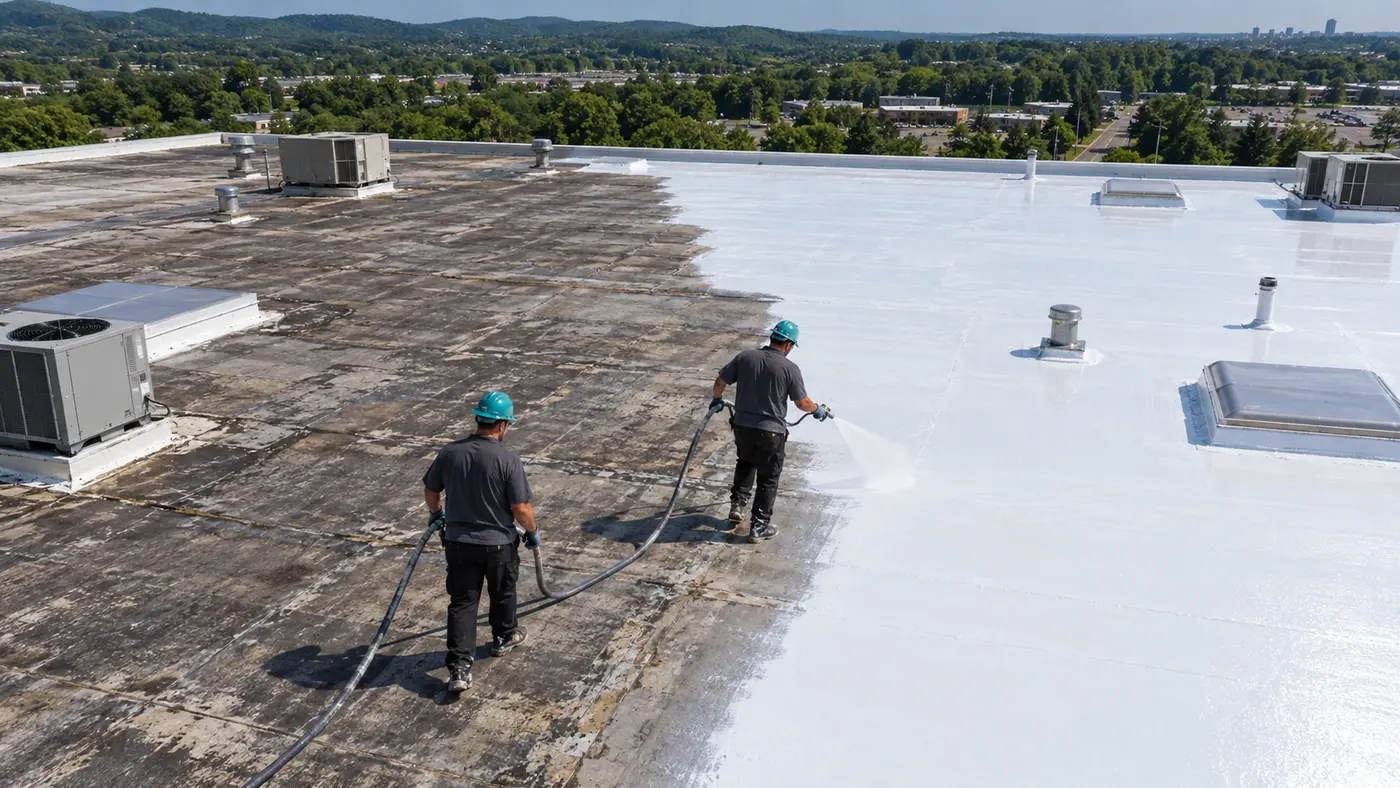
Aerial view of a white silicone coating on a low-slope commercial roof

Silicone Over Low-Slope Panels

Low-pitch metal sections that hold water at gutters or behind curbs get silicone, which holds up where water lingers. Later recoats on those roofs are silicone as well.

Silicone roof coating
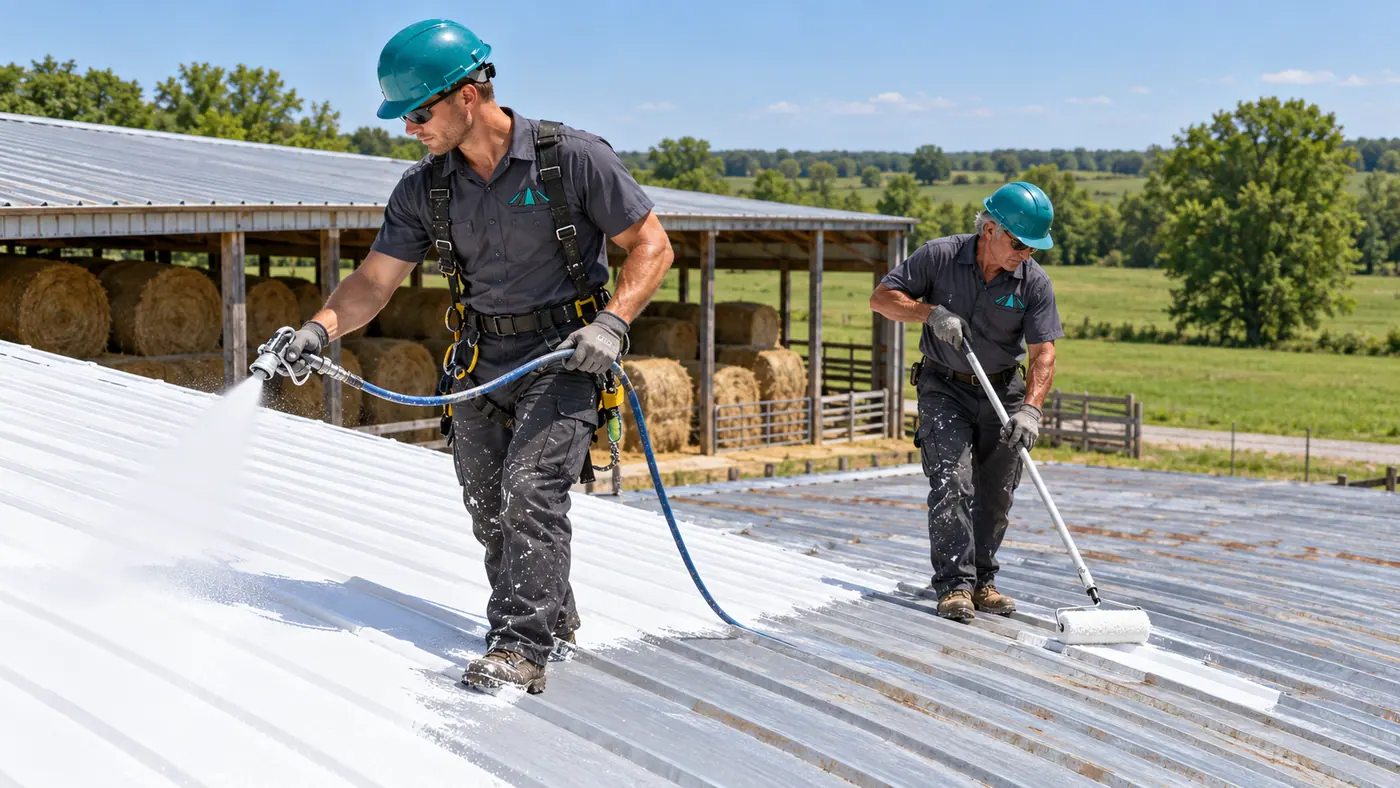
Crew applying acrylic coating to a pitched metal roof

Acrylic Over Pitched Panels

Steeper R-panel shops and barns shed rain within minutes, so an acrylic coat fits them. It cleans up with water and accepts acrylic recoats years later.

Acrylic roof coating
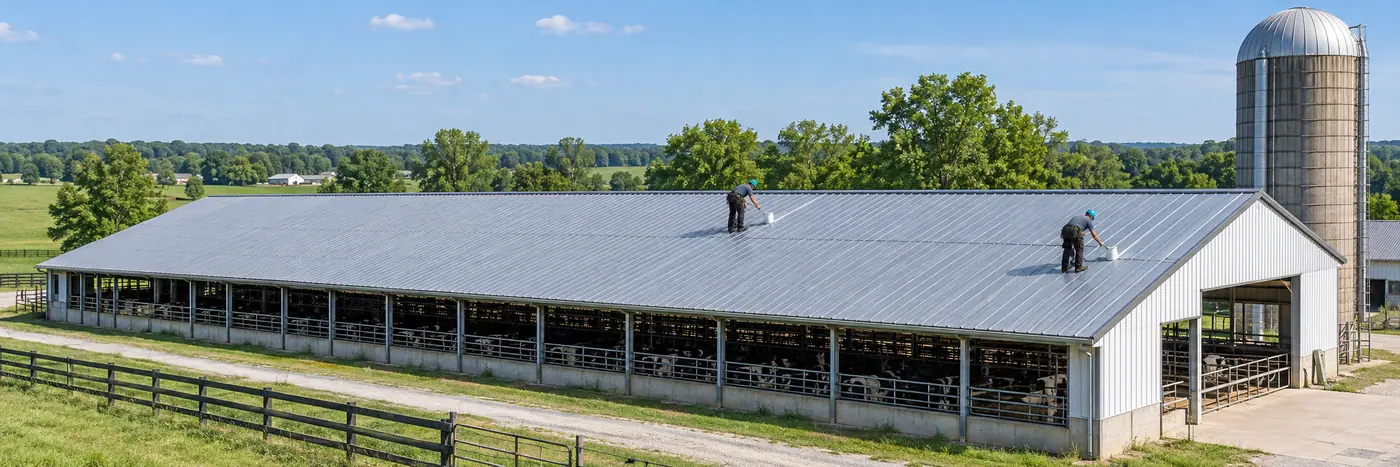
Crew spraying foam over a commercial roof

Foam Over Uninsulated Steel

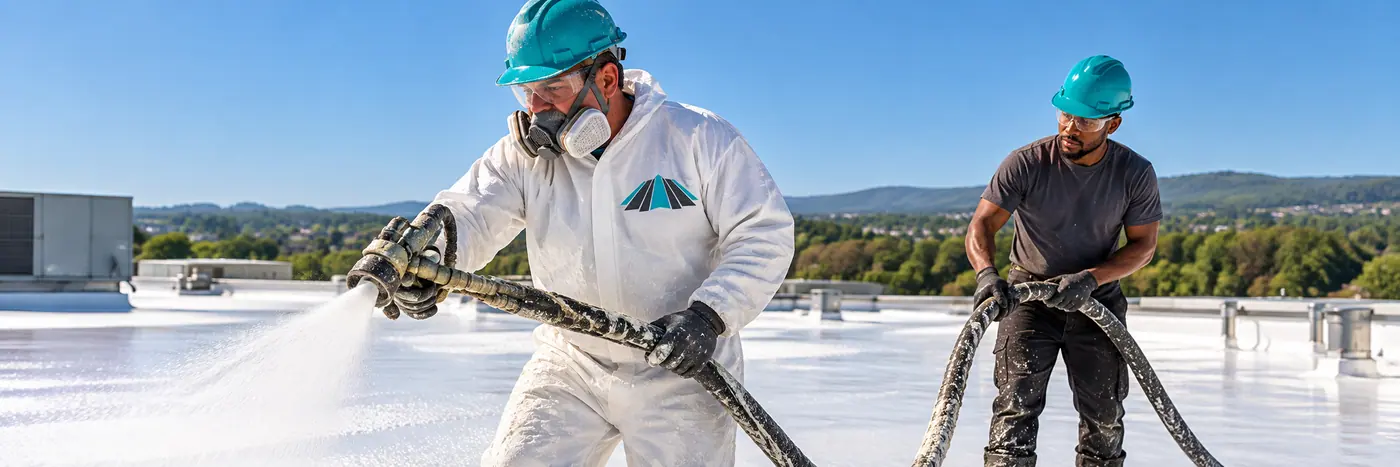
Spray foam fills the panel ribs and insulates the building under a protective topcoat. Owners pick it for shops and cold storage with bare steel overhead.

Spray foam roofing

Benefits of Coating Your Roof

These gains hold on metal roofs where the steel is still solid and the purlins are dry.

  • R-Panel Shops
  • Standing Seam Warehouses
  • Equipment Buildings
  • Storage Buildings
  • Machine Sheds

Fewer Leak Points

Thousands of screw heads and every lap sit under one membrane, so the joints that leak most on an R-panel roof are covered at once.

A Roof That Can Be Recoated

When the coat wears thin years from now, it is cleaned and recoated instead of torn off, as long as the steel below stays firm.

Steel Stays On The Roof

Owners pay for prep and coating rather than tear-off, disposal, and new panels, and the building keeps working while the surface is renewed.

Rust Slowed At Cut Edges

Primed rust spots, scratched paint, and panel cut edges stay dry under the coat, so fresh rust starts more slowly.

Screws Backing Out Of Your Panels?

Call us and say roughly how many screws stand proud and where the drips show inside. Loose fasteners are the first repair on most R-panel roofs.

Call Us

Order Of Work On A Metal Panel Roof

Four stages take an R-panel or standing seam roof from bare steel to a finished coat.

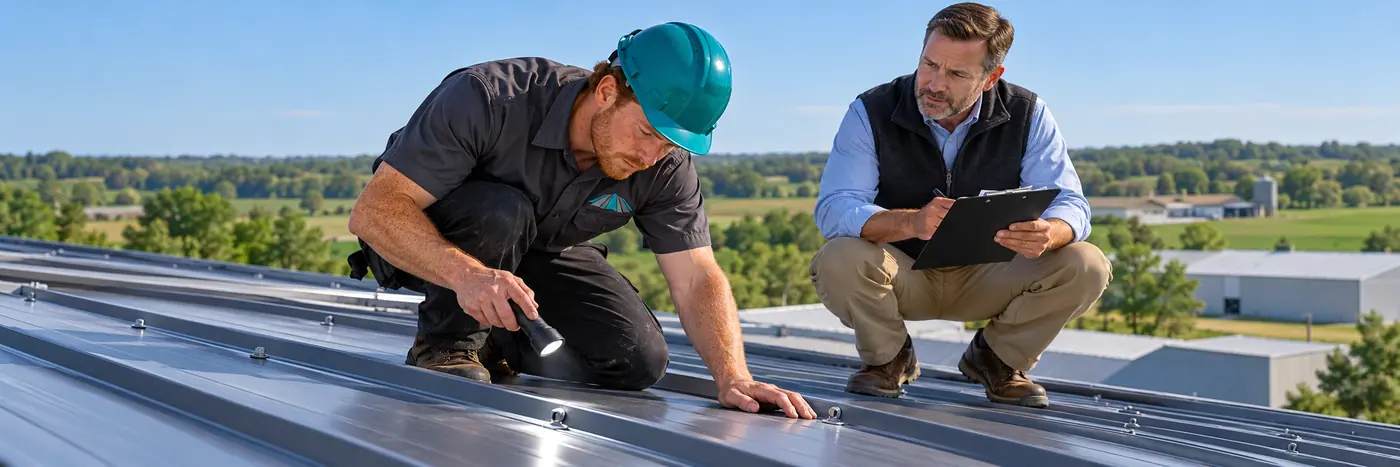
  1. Roofer inspecting metal roof panels and fastener rows

    Step 1: Inspect Your Roof

    We count loose or missing screws, check every side lap and end lap, and probe rusted spots for soft steel. Ceiling stains inside are matched to the seams above them.

  2. Crew preparing a metal barn roof before coating

    Step 2: Fix Fasteners And Rust-Through

    Stripped screws are upsized to bite fresh steel, and cracked washers are replaced. Panels with holes rusted through get a metal patch or a new panel before any primer.

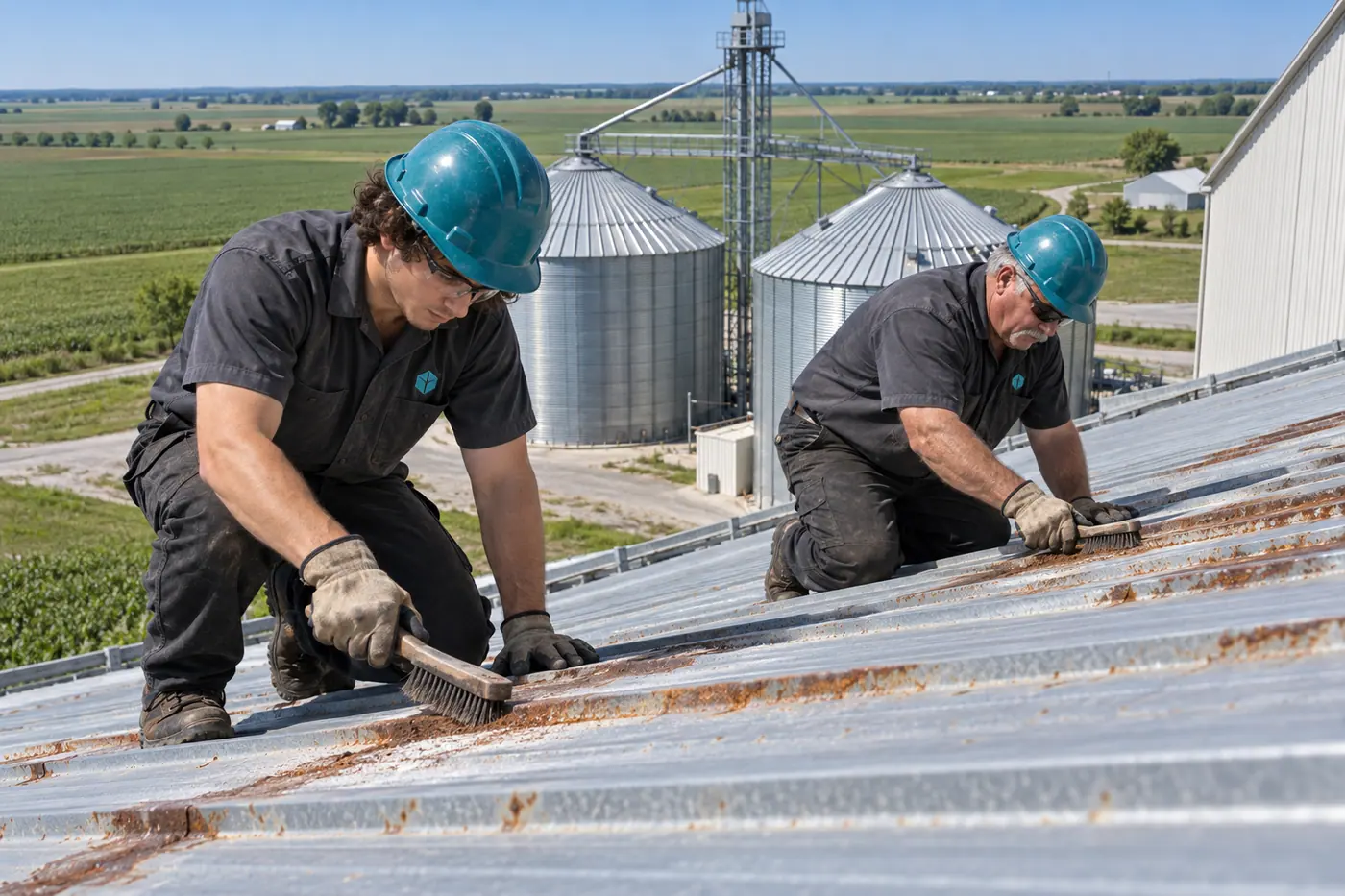
  3. Faded and rusted metal panels on an older farm building roof

    Step 3: Clean, Prime, And Detail

    Pressure washing strips chalk and mill oil. Red rust is ground to firm metal and primed, then laps, ridge caps, and curbs get fabric or seam sealer.

  4. Roofing crew applying coating to a commercial metal roof

    Step 4: Apply The Field Coat

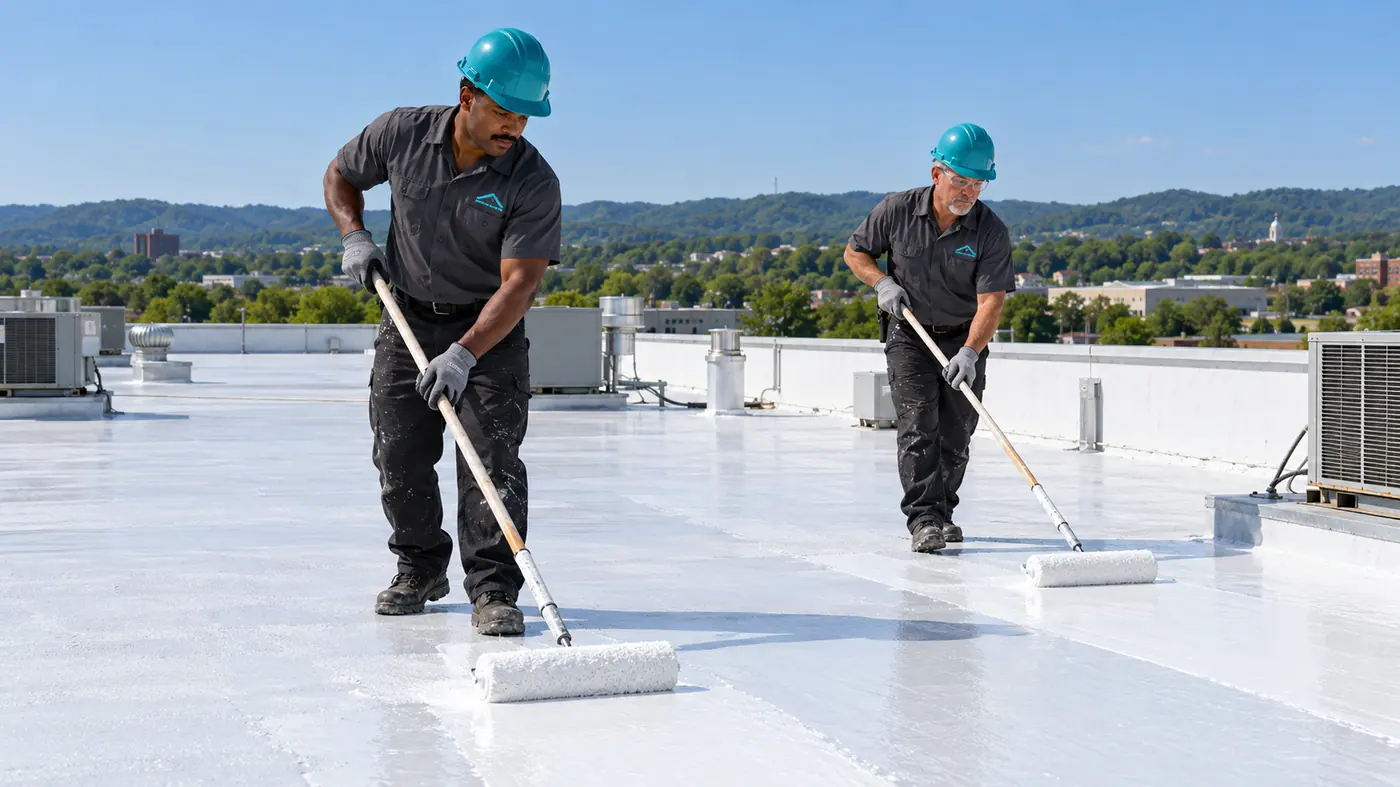
    Coating is sprayed or rolled over the whole roof to the specified thickness. Screw heads are covered again, and thin spots are measured and touched up.

Other Systems For Metal Roofs

Some metal roofs call for a different system. These three pages explain when.

Commercial Metal Roof Coating Questions In Hopkinsville

Answers about panels, screws, and rust on the metal roofs we coat.

Panels And Fasteners

Can you coat both standing seam and exposed-fastener R-panel roofs?

Yes, both coat well, but the prep differs because each leaks in different places. An R-panel roof has thousands of screws through the sheet face, and each washer is a possible leak.

A standing seam roof hides its clips under raised seams, so trouble starts at end laps, penetrations, and trim. Its panels also float more, so the details must flex.

Should every screw be replaced before coating?

Only the ones that need it. Screws that are backed out, stripped, or missing their washer get tightened, upsized, or replaced.

Tight screws with good washers stay, and every head is then sealed with a dab of compatible sealant before the field coat covers it again. On older R-panel roofs, that fastener work is often the longest part of the job.

Rust And Steel

Can you coat over rust on a metal roof?

Coatings go over rusted steel once the loose rust is removed and the surface is primed. Flaking red rust is wire-brushed or ground until firm metal shows, then a rust-inhibiting primer goes on before any topcoat.

Light rust bloom across a panel face handles well this way. Pinholes or soft spots at a lap edge need a patch or new panel first.

How do you tell surface rust from rust-through?

We probe it. Surface rust scrapes off to firm, gray steel, and the panel stays stiff under a screwdriver tip.

Rust-through leaves a hole, a crust that crumbles, or steel that flexes when pressed, most often at the bottom edge of an end lap or along the eave. Those panels are marked on the roof plan for patching or replacement.

Planning The Job

Does a coating move with the panels as they expand?

A flexible coating moves with them. Steel grows on hot afternoons and shrinks on cold nights, which is what loosens screws and opens laps over time. Reinforced lap details stretch with that movement, and the field coat bridges small gaps at screw heads. Standing seam panels move more, so their seam ends get extra sealant.

Can a coating fix a sagging metal roof?

Sagging is a framing repair first. A coating covers the weather surface and adds no strength to purlins or panels.

When steel dips between supports or flexes underfoot, the purlin or the panel is repaired or replaced, and the coat goes on afterward. Coating over a dip leaves standing water against the membrane in that same low spot.

Price Your Metal Roof Coating

Enter the roof size for a free ballpark range, or call and describe the screws, laps, and rust you see.

Call (270) 236-5496