Loose Ridge Caps And Closures
- You See
- Ridge caps lifting at the ends and foam closures that have shrunk or blown out.
- What It Means
- Wind drives rain up under the cap. Closures are replaced and stitch screws resealed before the acrylic.

We apply acrylic roof coating to pitched commercial metal roofs in Hopkinsville: shops, barns, and equipment buildings where rain runs off within minutes.
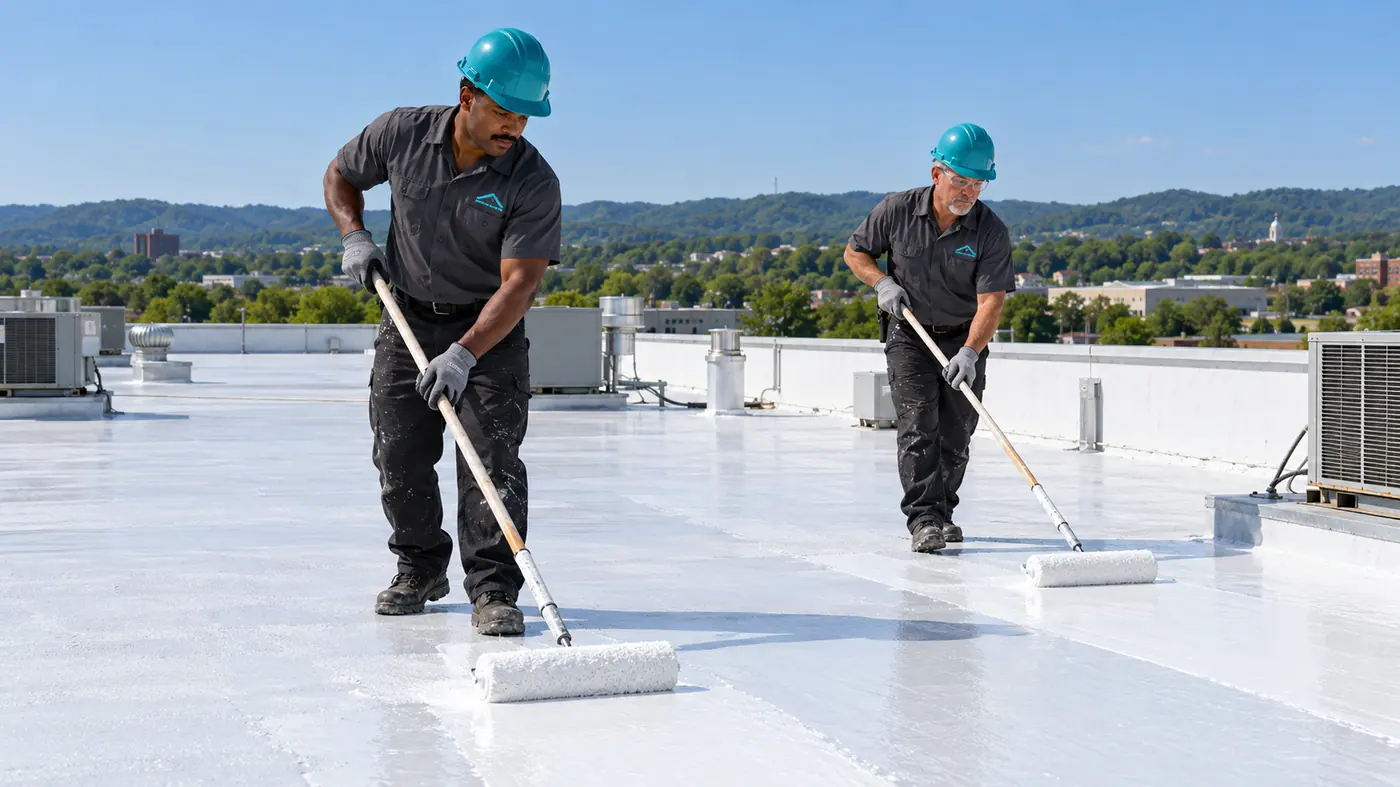
Acrylic suits roofs that drain fast and stay dry between rains. This comparison shows where it fits next to silicone.
| Factor | Acrylic | Silicone |
|---|---|---|
| Standing water at gutters or curbs | Softens and wears where water sits | Holds up |
| Dirt pickup | Stays cleaner on steep slopes | Collects more dust over time |
| Later recoats | Accepts acrylic recoats easily | Needs silicone again |
| Application weather | Needs warmer, dry days to cure | Wider weather window |
| Typical metal roof | Pitched shops, barns, steeper panels | Low-slope warehouses, flat-ish sections |
Mixed roofs often take acrylic on the field with silicone or a reinforced detail at the few low spots.
Steeper panels shed water well, so their trouble starts at trim, ridges, skylights, and fasteners.
Acrylic works alone on fast-draining roofs and alongside other systems on mixed ones.
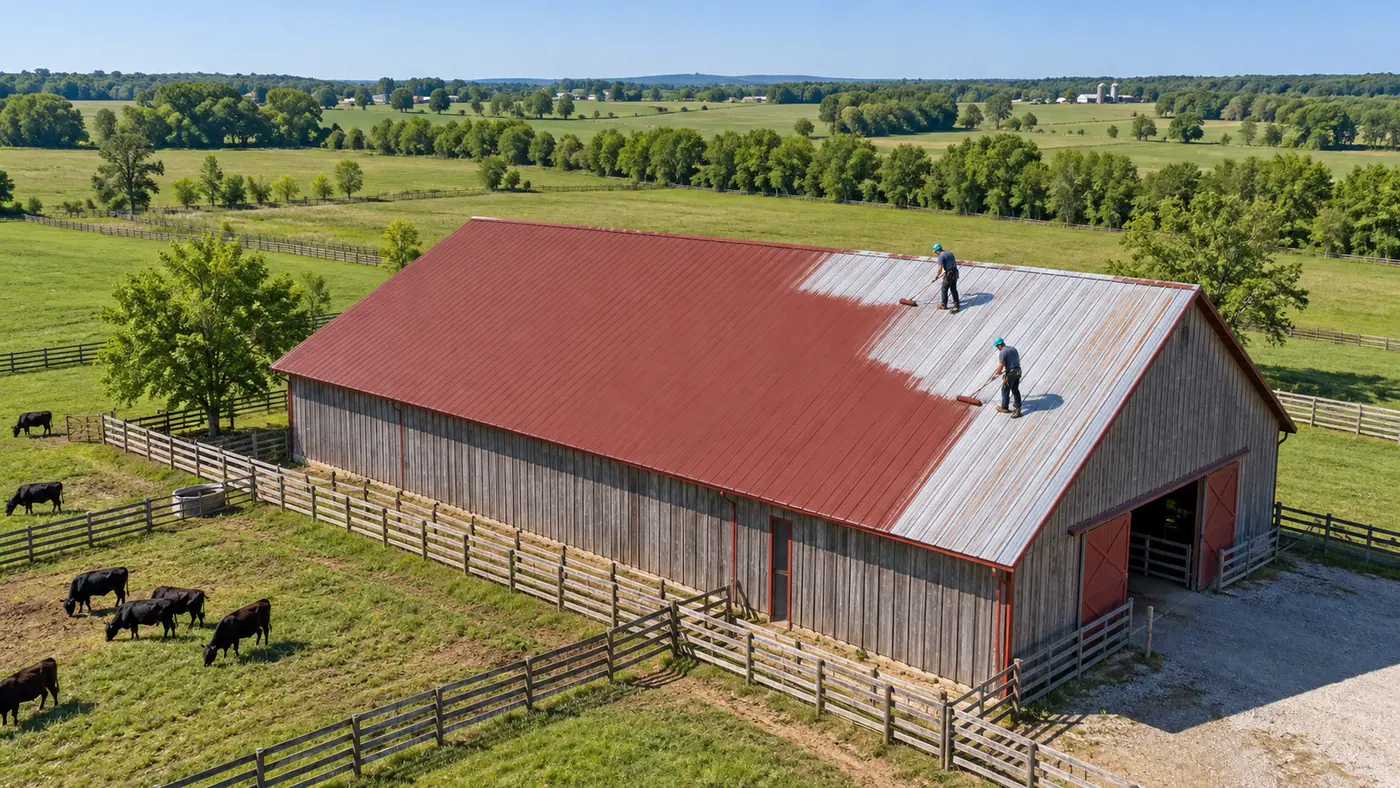
Pitched exposed-fastener roofs get screw work, primed rust, and fabric at the laps, then an acrylic base coat and topcoat in a light color. The metal roof coating prep comes first.
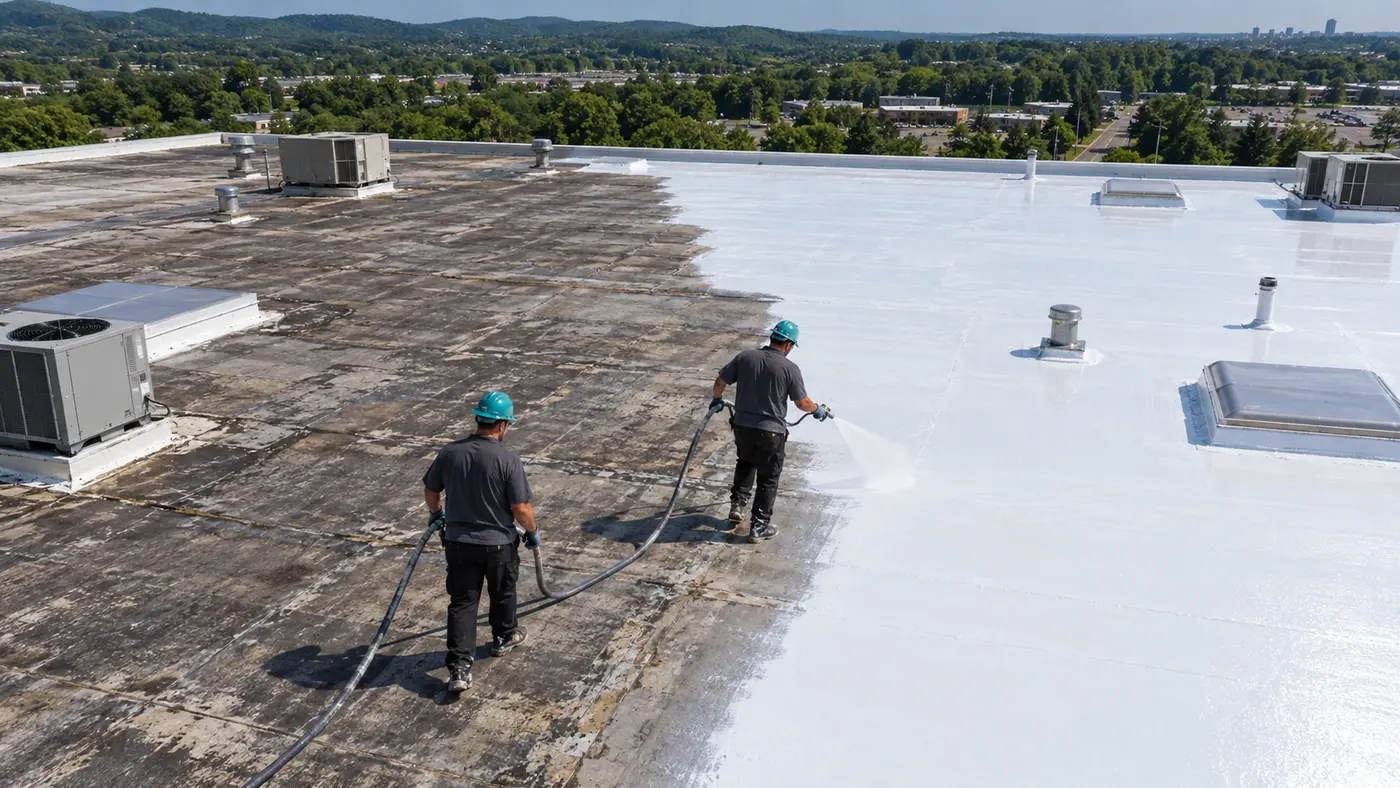
Roofs with a flat addition or a curb that dams water take acrylic on the sloped field and silicone at the low areas, each recoated with its own product later.
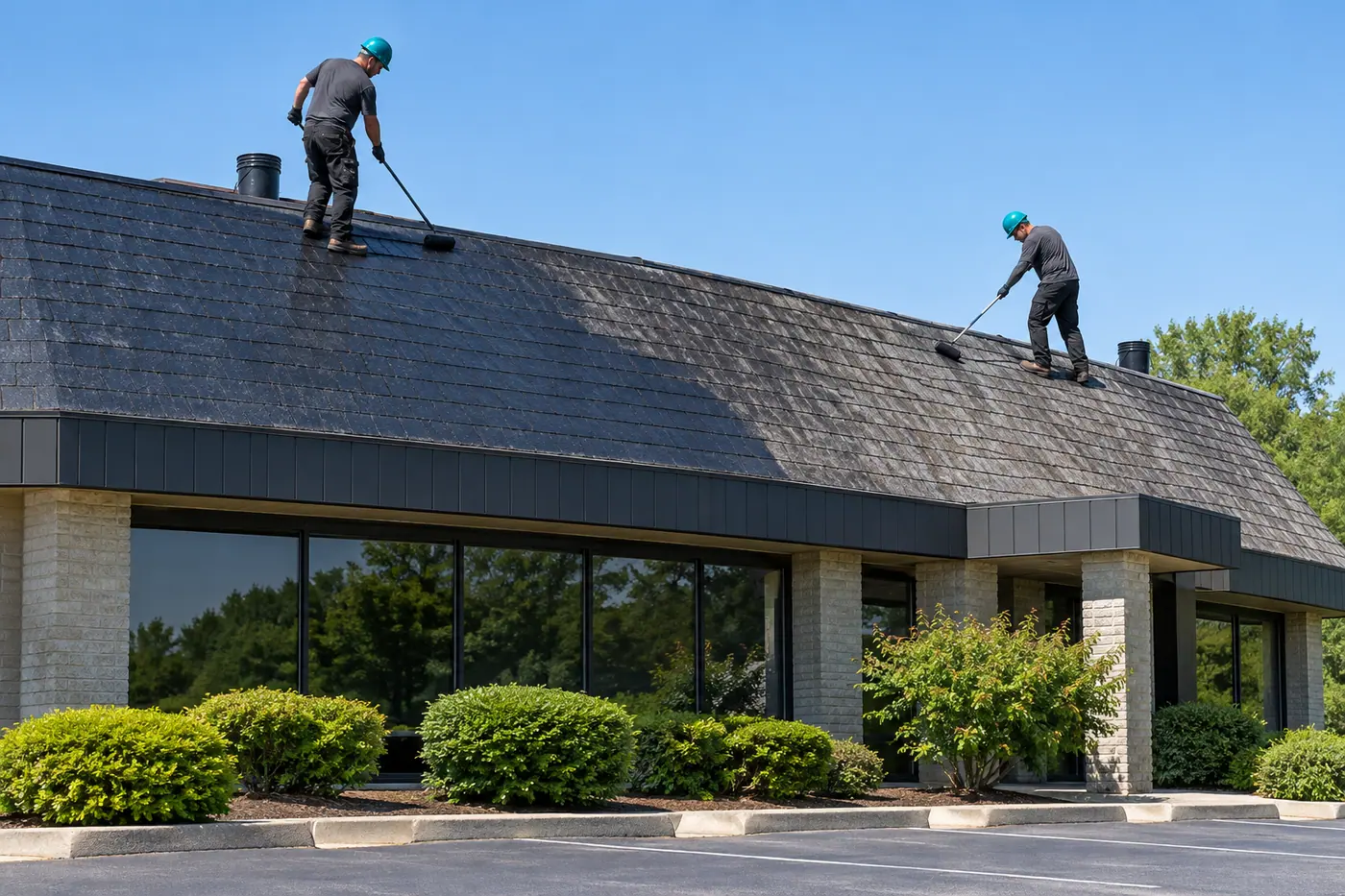
Commercial shingle roofs whose shingles still lie flat can take a coating too, once maker terms and roof-space ventilation are checked.
Shingle roof coatingOn steeper metal roofs, acrylic delivers these gains when the steel underneath is firm.
Acrylic cleans up with water and has a mild odor, which matters over offices, shops, and halls that stay in use while the panels are coated.
Fresh acrylic grips an older acrylic coat well, so a worn roof is cleaned and recoated years later instead of stripped back to steel.
Light-colored acrylic reflects more sunlight than faded steel, lowering panel temperature over work areas with little insulation. Steep slopes shed dirt, so the color stays brighter.
Every lap and screw head sits under the base coat and topcoat, closing the joints where pitched metal roofs leak most.
Call us with how many translucent panels the roof has and which ones drip. Brittle panels are replaced before the acrylic goes on.
Call UsFour stages, planned around the warm, dry days acrylic needs to cure.
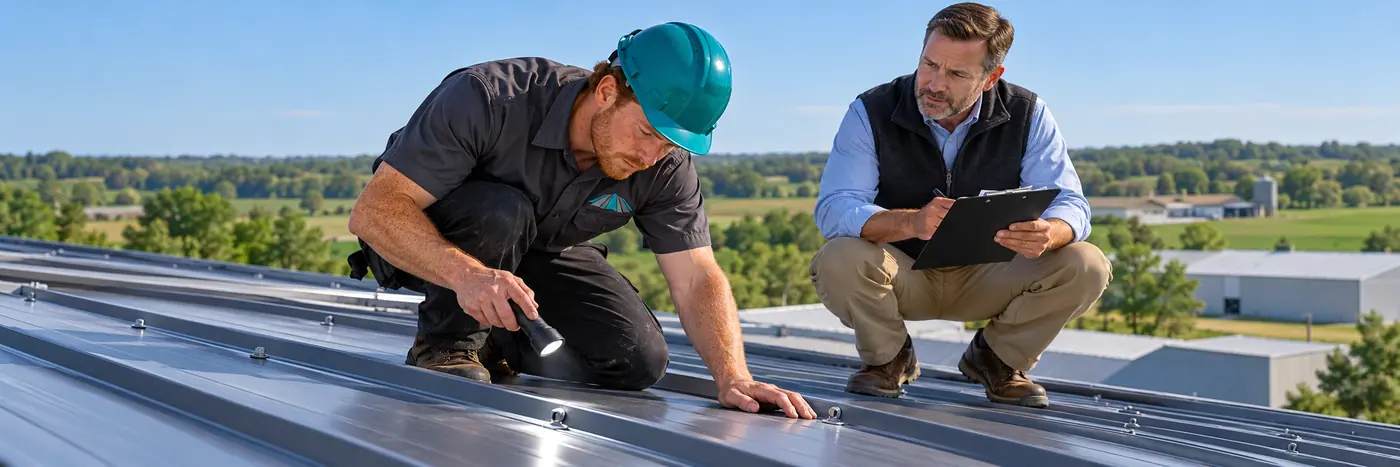
We check ridge caps, closures, skylight panels, gutters, and every fastener row, and we mark the few low spots where water slows on an otherwise steep roof.
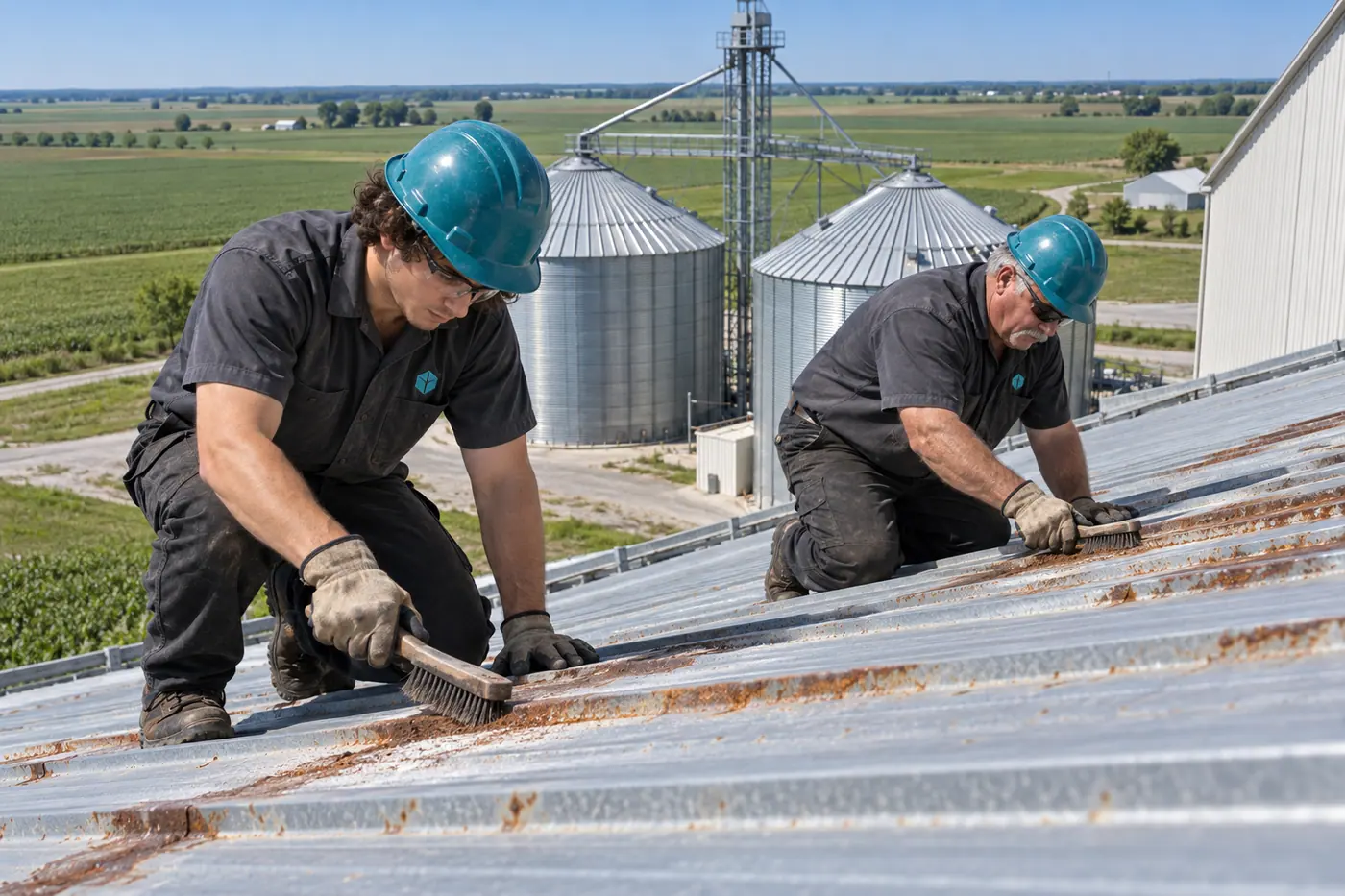
Loose ridge caps are reset, stitch screws resealed, and cracked skylight panels swapped. Backed-out screws are tightened or upsized so washers seat flat on the rib.
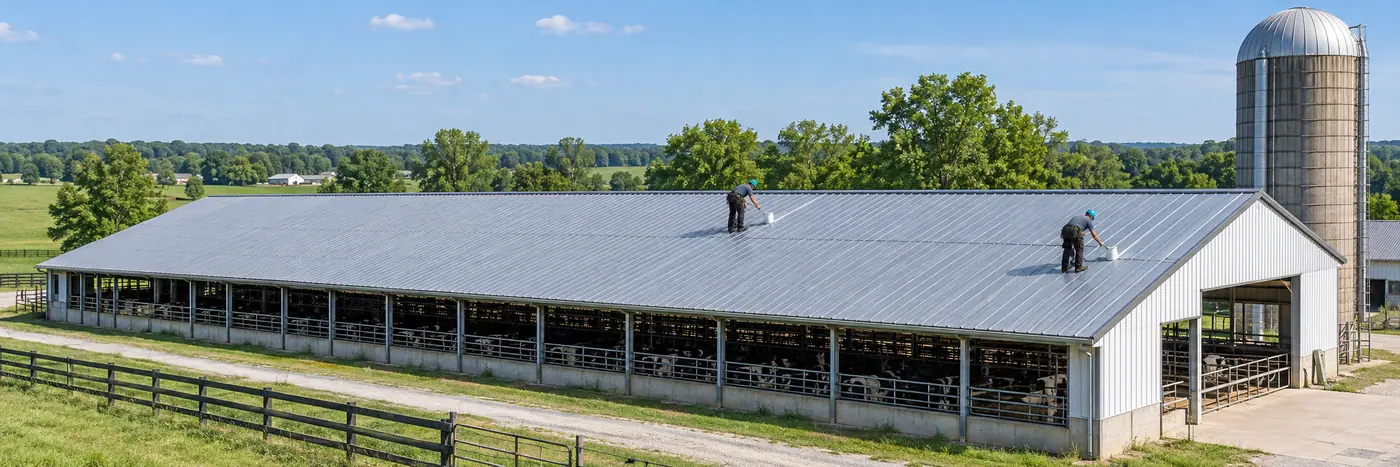
Panels are washed free of chalk and dried. Rust spots get primer, laps get fabric, and low spots behind curbs get silicone or a reinforced detail.
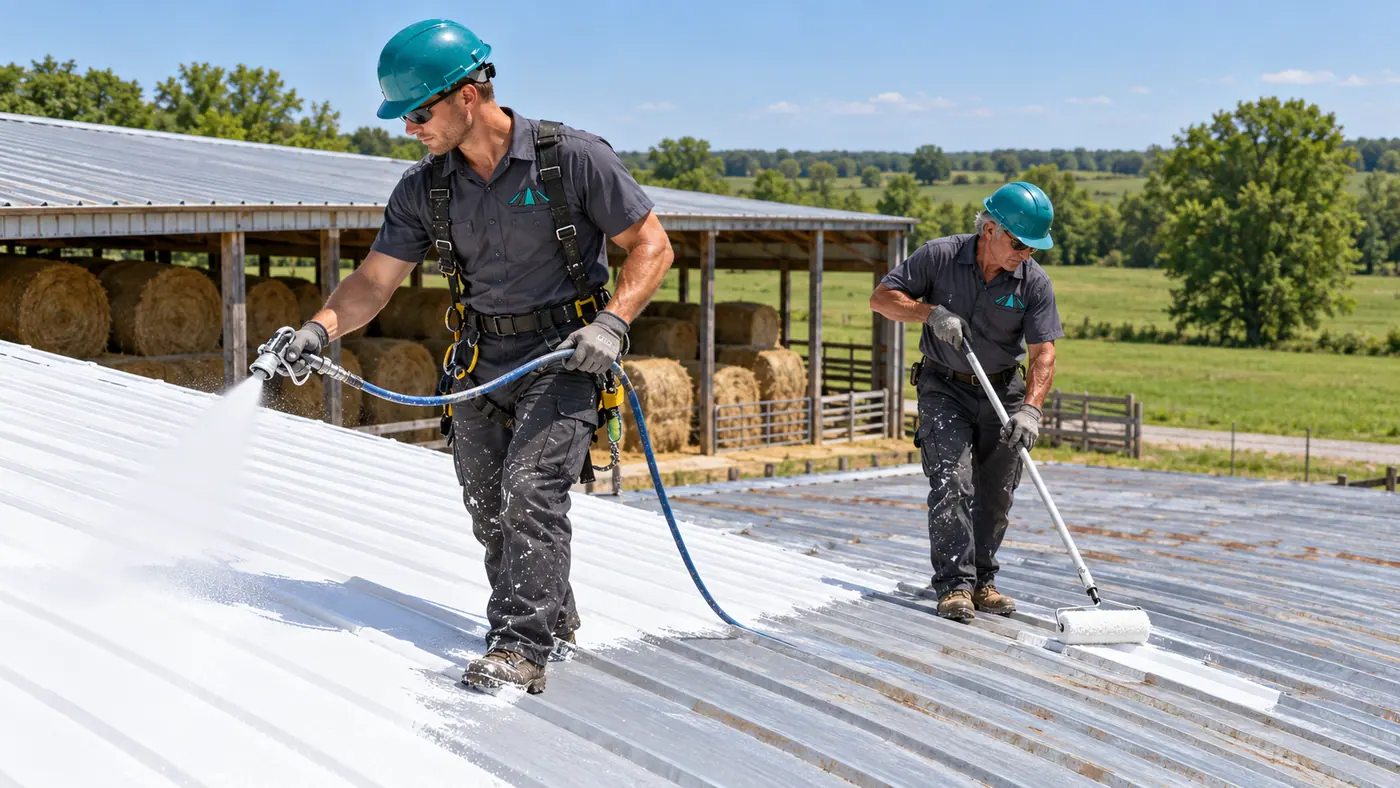
A base coat and topcoat go on during a stretch of warm, dry days, so each one cures before rain or a cold night. Thickness is measured as the work goes.
Pitched roofs often have neighbors that need something else. These three cover them.
Read about metal panel prep for roofs with rust at the end laps or washers cracking under the screw heads.
See metal roof coatingUse silicone for low-slope sections where water sits for a day or more behind curbs and gutters.
See silicone roof coatingAsk about foam over metal panels for an uninsulated shop where the steel sweats on cold mornings.
See spray foam roofingAnswers on pitched roofs, curing weather, and the details that come before the coat.
Acrylic fits metal roofs with good slope, solid panels, and a budget that favors easy future recoats. On a pitched shop where rain sheds within minutes, water never sits long enough to wear the film.
It cleans up with water, has a mild odor over occupied space, and grips itself well at recoat time. Its weak points are slow cures in cool, damp weather and wear where water collects.
Only on the parts that drain. A low-slope section that holds water at the gutter line or behind curbs wears an acrylic film in those spots, so those areas take silicone or a reinforced detail. A roof that ponds across most of its area is a silicone job from the start.
Each one gets its own detail before the field coat. Translucent skylight panels are left uncoated to pass daylight, with perimeter laps and screws sealed; cracked ones are replaced.
Ridge caps get new closure strips where needed and resealed stitch screws. Curbs and pipe boots are wrapped with fabric, gutters are cleaned and their seams sealed, and wall flashing is reinforced where the metal turns.
White and light colors are common because they reflect the most sunlight and keep panels cooler. Darker shades exist for buildings where the roof shows from the street, though they run warmer. Rated products and their reflectance values are listed in the Cool Roof Rating Council directory, which helps when comparing colors before the job.
It cures as its water evaporates. Cool, damp weather slows that, and rain or heavy dew on a fresh coat can wash it off or leave it soft. We watch the forecast and schedule each coat for a stretch of warm, dry days, which narrows the working window in the cold, damp months.
In most cases, yes. The work happens on top of the roof, so equipment and stored materials inside stay put. Open bays under the eave are kept clear while the coat is sprayed, and vehicles parked along the drip line are moved for overspray. The mild odor of acrylic helps where people work below.
Enter your roof size for a free ballpark range, or call and describe the pitch and the skylight panels.
Leave a name and number and we will call you back about your commercial roof. Or call now: (270) 236-5496.